
Menu
University research directory
Research labs at
Duke University.
Compare 5 listed faculty-led profiles, explore their research interests, and follow the evidence in their selected work. These listings are a starting point for discovery and do not establish recruiting availability.
Explore the research before reaching out
Review each lab’s official website and recent publications. Compare the methods used, the questions being asked, and the practical requirements of any published opening. Unclaimed profiles are independently curated; the university has not approved or endorsed them.
How to compare research labs ↗Official university website ↗5 research-led lab profiles
Browse labs by their listed college affiliation Independently curated · Unclaimed
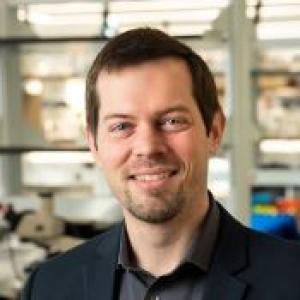
Anita Disney Research Group
Duke University
Anita Disney · Assistant Professor of Neurobiology
How do neuromodulators like acetylcholine and serotonin specify functional connectivity to support flexible behavior? The lab measures when and how acetylcholine and serotonin determine information flow into primary visual cortex using neurophysiology, pharmacology, and neuroanatomy. Researchers combine electrophysiological and electrochemical recordings with pharmacological manipulations during task-based behavioral control to link neuromodulation, neuronal activity, and behavior. The group applies mass spectrometry-based proteomics and metabolomics to analyze neurochemical changes across menopause and in pre-clinical late-onset Alzheimer’s disease. The lab conducts comparative cortical anatomy at light and electron microscopic levels to map neuromodulatory system structure.
 Independently curated · Unclaimed
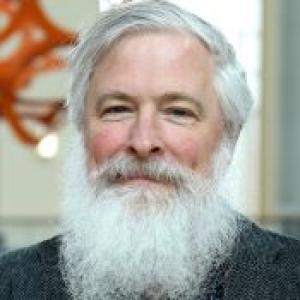
John Pearson Research Group
Duke UniversityJohn Pearson · Associate Professor of Neurobiology
What algorithms and analysis tools will let researchers interpret terabyte-scale neural recordings to discover principles of brain function? The lab builds modeling and analysis pipelines for large-scale brain data and implements algorithms to interpret terabyte-scale neural datasets. Researchers design and implement dynamical-systems-inspired methods and engineering pipelines to link models with experimental data and suggest new hypotheses. The group collaborates with experimentalists to validate models against neural recordings and naturalistic behaviors like foraging and movie stimuli. The lab develops open software and data-sharing practices to enable reproducible analysis and community scrutiny of computational tools.
 Independently curated · Unclaimed
Marc A. Sommer Research Group
Duke UniversityMarc A. Sommer · Professor of Biomedical Engineering
How do frontal cortex circuits coordinate with other brain areas to enable stable visual perception and behavior? The lab studies circuits for corollary discharge and their impact on visual processing using psychophysics, neural recordings, and computational robotics. Researchers apply single-neuron and population-level electrophysiology, optogenetics and genetic methods to dissect circuit function in behaving animals. The group tests and improves viral vector technologies for reliable gene delivery in non-human primates using directed evolution and serotype comparisons. The lab studies effects of transcranial magnetic stimulation on single neurons and circuits to establish principles for rational clinical design.
 Independently curated · Unclaimed
Nicholas S. Heaton Research Group
Duke UniversityNicholas S. Heaton · Minnie Geller Distinguished Professor of Research in Genetics
How do respiratory viruses establish infection in the lung, spread locally, and trigger harmful inflammation? The laboratory studies how viruses establish infection in the respiratory tract and the resulting host immune responses. Researchers investigate how the lung returns to homeostasis after infection by measuring inflammatory and tissue-repair processes. The group aims to develop new interventions to limit viral and inflammatory lung diseases, translating findings toward therapies. Investigations draw on molecular genetics, microbiology, and integrative immunobiology through multidisciplinary experiments and analyses.
 Independently curated · Unclaimed
Wilkins Aquino, Ph.D. Research Group
Duke UniversityWilkins Aquino, Ph.D. · Professor in the Thomas Lord Department of Mechanical Engineering and Materials Science
How can computational inverse methods reveal material properties and sources from measured acoustic and vibration data in engineering systems? The group develops finite element and inverse-problem formulations to identify viscoelastic and structural material properties from vibroacoustic experiments. Researchers construct reduced-order models and adaptive sampling methods to enable efficient uncertainty quantification for PDE-constrained inverse problems. The lab couples chemo-mechanics and electrochemistry-mechanics models to study stress–reaction interactions in materials and corrosion processes. They apply computational acoustics and acoustics–structure interaction simulations to design diffuse acoustic fields and to support sensor placement and active source identification.
Showing 1–5 of 5 labs