
Menu
Research labs across colleges and universities
Find a lab
worth exploring.
Browse faculty research, publications, teams, and contact details. Unclaimed listings are independently curated from public sources and do not imply endorsement or recruiting availability.
About listings, corrections, and removal ↗541 research-led lab profiles
Browse labs by their listed college affiliationAaron Quinlan Research Group
University of Utah
Aaron Quinlan · Professor and Chair of Human Genetics
Which changes in a genome matter for disease, and how can researchers find them efficiently? The group combines genetics and genomic technologies with computer science and machine learning to analyze genetic variation. Researchers develop software for identifying candidate variants in rare familial disease and detecting structural changes such as deletions, duplications and inversions. Another direction examines genomic changes involved in cancer evolution, treatment resistance and relapse. The lab also maintains practical tools for manipulating and comparing large sequencing datasets, including BEDTOOLS, GEMINI and LUMPY.
 Independently curated · Unclaimed
Abigail S. Hackam Research Group
University of Miami
Abigail S. Hackam · Professor of Ophthalmology
Can activating Wnt signaling pathways protect photoreceptors from degeneration and promote axon regrowth after optic nerve injury? The lab tests canonical and non-canonical Wnt signaling activators to identify photoreceptor protective factors and their receptors. Researchers investigate how innate immunity signals, glial-secreted cytokines, oxidative stress levels, and specific receptors regulate Wnt neuroprotection and photoreceptor survival. They characterize optic nerve regeneration mechanisms by assessing Wnt ligand-induced retinal ganglion cell axon growth, identifying key receptors and signaling proteins, and testing virally delivered axonal growth factors. The group uses a Muller glia-photoreceptor culture system and dietary models such as ketogenic and lyophilized grape supplement to screen compounds and environmental influences that delay vision loss.
Action Lab
Northeastern University, US
Dagmar Sternad · University Distinguished Professor
How do people learn to control their movements when the body and surrounding objects create complex dynamics? The Action Lab combines behavioral experiments with mathematical models of movement and nonlinear control. Researchers investigate single-joint and coordinated movements, manipulation tasks and locomotion, including experiments in virtual environments. Measurements of motion and force are complemented by muscle and brain electrical recordings. The work also studies older adults and people with neurological conditions such as Parkinson's disease, connecting movement coordination with questions about learning and impairment.
AcTIVE Lab
University of Colorado Denver/Anschutz Medical Campus
Judith Regensteiner · Distinguished Professor of Medicine
Why can diabetes affect cardiovascular health and physical function differently in women and men? Judith Regensteiner investigates the cardiovascular consequences of diabetes, with a particular focus on women with type 2 diabetes, and also studies peripheral arterial disease. Her AcTIVE Lab brings together physicians, scientists, and exercise physiologists to examine physical activity and function. Research connects sex differences with cardiovascular risk and quality of life, offering a focused setting for interests in exercise physiology, diabetes, and inclusive clinical research.
Adam Leaché Research Group
University of WashingtonAdam Leaché · Professor
How do genomic datasets and analytical methods reveal species boundaries and evolutionary relationships in reptiles and amphibians? The Leaché Lab uses genome-scale SNP and sequence-capture data to infer phylogenies and test competing tree-building approaches across herpetological groups. Researchers develop and validate species delimitation and phylogeographic methods through simulations, analytical tool development, and bioinformatics pipelines to assess lineage divergence. The group integrates field-collected samples with Burke Museum specimens and genetic resources to link contemporary populations with historical material for temporal biodiversity studies. The lab applies genomic workflows and computational frameworks to clarify taxonomic trends and evaluate gene flow in species-tree estimation.
Adriana D. Briscoe Research Group
University of California, IrvineAdriana D. Briscoe · Distinguished Professor, Ecology & Evolutionary Biology
Can genetic changes in opsins and photoreceptor expression explain color vision evolution and behavioral responses in butterflies? The lab studies gene duplication and functional diversification of visual pigment genes to link molecular sequence changes to physiology and behavior. Researchers map spatial expression of photoreceptors and colored filters in butterfly eyes and test consequences for predator avoidance and mate detection using behavioral and physiological assays. The group documents co‑evolution of UV receptors and UV‑yellow wing pigments in Heliconius via comparative genomics and spectral sensitivity measurements. They also investigate digestive enzyme expression in the proboscis to characterize feeding physiology.
Aga Laboratory for Environmental Research & Testing
University at BuffaloDiana S. Aga · Henry M. Woodburn Professor of Chemistry, SUNY Distinguished Professor
Where do environmental contaminants go, and how effectively can treatment remove them? Aga investigates pollutants including pesticides, pharmaceuticals, endocrine disrupting chemicals, and engineered nanomaterials. Her laboratory develops analytical methods using chromatography and mass spectrometry to study contaminants in complex samples. Research also examines antibiotic residues and resistance in wastewater, chemical accumulation in organisms, and the performance of treatment processes. These projects connect environmental chemistry with exposure and water quality, tracing chemicals from their transport through the environment to their potential biological effects.
Ahmad Alsharif Research Group
University of Alabama
Ahmad Alsharif · Assistant Professor, Department of Computer Science
Assistant Professor in the Department of Computer Science at the University of Alabama. Research areas include applied cryptography; secure protocol design; IoT security; cyber-physical systems security; digital forensics; secure blockchain applications; and machine-learning applications in cybersecurity. Office: 3016 Cyber Hall; contact email: [email protected].
Ahmed Abbasi Research Group
University of Notre Dame
Ahmed Abbasi · Joe and Jane Giovanini Professor of IT, Analytics, and Operations
How can analytics explain and predict human behavior in sociotechnical systems using large-scale text and multimodal data? The lab develops human-centered analytics and machine learning methods for modeling behavior in health and online communities using deep learning, psychometric NLP, and multimodal feature fusion. Researchers build and evaluate large-scale digital experimentation platforms and design robustness methods to detect distribution shifts and adversarial conditions through predictive modeling and evaluation. The group applies high-dimensional deep document and hierarchical models to extract personality, psychometrics, and adverse-event signals from textual and search data for health monitoring. The lab integrates interdisciplinary computational, statistical, and experimental methods to frame, evaluate, and solve applied problems in trustworthy AI.
Aimée T. Classen Research Group
University of Michigan-Ann Arbor
Aimée T. Classen · Professor
How do warming and environmental change determine an ecosystem's response to shifting conditions? The lab studies how warming and environmental change reorganize ecological communities and alter the flows of carbon, water, and nutrients through ecosystems. Researchers examine partnerships between plants and fungi that shape soil carbon storage and mediate ecosystem reorganization under warming. The group combines long-term experiments, field studies, global research networks, and ecological synthesis to understand ecosystem change. The lab leads coordinated research across nine mountains on five continents through the Warming and Removal in Mountains (WaRM) network to explore plant–warming interactions.
Alan E. Willner Research Group
University of Southern California
Alan E. Willner · Andrew and Erna Viterbi Professorial Chair and Distinguished Professor of Electrical and Computer Engineering
Can optical technologies increase capacity and functionality of communication networks while enabling new signal-processing capabilities? His research group develops optical communication systems, signal-processing methods and network subsystems for high-capacity data transport. The group studies optical switching, devices and subsystems to implement routing and processing functions in photonic networks. Researchers design and test optical signal-processing techniques and subsystems to improve transmission performance and network scalability. Work spans experimental, device-level and system-level studies of photonic components and optical communications.
Albert Group
Tulane UniversityJulie N. L. Albert · Associate Professor of Chemical and Biomolecular Engineering
A polymer film can organize itself into structures useful for filtration, electronics, or cell culture. Julie Albert engineers nano- and micro-structured polymer materials using phase separation in block copolymers and polymer blends. Her group studies morphology, surface interactions, crystallization, and solvent processing to create tailored material structures. Applications include nanoporous membranes for oil-water separation and functional surfaces and scaffolds for cells. The work connects polymer self-assembly with energy, health, and environmental technology through the deliberate design of material architecture.
Albert H. Titus Research Group
University at BuffaloAlbert H. Titus · Professor of Biomedical Engineering
Electronic sensors can turn signals from the body or surrounding environment into information researchers can use. Titus investigates integrated sensors, bioinstrumentation, and visual processing systems inspired by neural computation. His research includes sensors for disease detection and management, biochemical sensing, and solid state devices for high resolution X-ray imaging. Work on optical detector chips connects light sensing with broader sensing systems. The group’s interests also span analog circuits and optoelectronics, linking the design of electronic hardware with biomedical measurement and interpretation.
Albert J. Fornace Jr. Research Group
Georgetown University
Albert J. Fornace Jr. · Professor
How do mammalian cells detect and respond to genotoxic and environmental stresses to influence cancer risk and injury? The laboratory investigates mammalian stress responses and signaling networks activated after ionizing radiation and chemical insults, focusing on GADD gene family roles in DNA-damage responses. Researchers examine p38 MAP kinase and Wip1 phosphatase signaling to understand links between stress signaling, tumor suppression, and oncogenic processes. The group develops transcriptomics and metabolomics approaches to identify biomarkers of radiation exposure and injury for applications in radiobiology and molecular toxicology. They study space-radiation effects on gastrointestinal cancer risk through a NASA-supported NSCOR program and related metabolomic profiling projects.
 Independently curated · Unclaimed
Alex Zhang Research Group
The University of AlabamaAlex Zhang · Associate Professor
Alex Zhang's faculty-led research profile covers Embedded Systems, and Human-Computer Interaction.
 Independently curated · Unclaimed
Alexander L. Wolf Research Group
University of California, Santa Cruz
Alexander L. Wolf · Distinguished Professor of Computer Science and Engineering
How can distributed, networked services be architected to remain dependable under varying workloads and failures? The group develops and evaluates service-based systems, content-based networking, and cloud/data-center networking projects to study scalable and resilient distributed architectures. The researchers build and analyze information-centric networking and publish experimental systems such as the Siena publish/subscribe communication system for content-based messaging. The lab investigates configuration management, software architecture, and tools for survivability to understand mechanisms for fault tolerance, recovery, and secure deployment. The group uses distributed experimentation frameworks and automation (for example, the Weevil automation framework) to measure networked system behavior under realistic conditions.
 Independently curated · Unclaimed
Alexis Battle Research Group
Johns Hopkins University
Alexis Battle · Wu and Zhang Professor
How does genetic variation in noncoding DNA alter molecular phenotypes across human tissues? The group analyzes large-scale genomic sequencing data to study how genetic differences contribute to gene regulation and disease outcomes. The lab develops computational biology tools, statistical methods, and machine learning strategies to predict the effects of variation in noncoding DNA sequences. Researchers at the Battle Lab build integrative genomic networks and apply them to problems such as autism and rare Mendelian disease variant prediction. The lab also evaluates and predicts the impact of personal genomics and rare genetic variants to improve diagnosis of rare diseases.
 Independently curated · Unclaimed
Alice E. Smith Research Group
The University of AlabamaAlice E. Smith · Endowed Shelby Distinguished Professor
Alice E. Smith's faculty-led research profile covers Advanced Manufacturing, Artificial Intelligence, Autonomous Vehicles, and Data Analytics.
Allen Liu Research Group
University of Michigan-Ann ArborAllen Liu · Professor of Mechanical Engineering
How do engineered hydrogels and mechanical devices control cell behavior in tissue models? The lab builds devices such as a cell stretcher to apply controlled mechanical stimuli and a stage-top incubator station for live-cell imaging. Researchers in the group pursue biochemical and materials projects, including work with Protein Chemistry and Engineering trainees. The group sponsors student design projects such as a 3D printer for hydrogel and other prototyping efforts showcased at ME450 design expos. Graduate and undergraduate researchers from Mechanical Engineering and Biomedical Engineering prototype instruments and perform experiments to link mechanical inputs to cellular responses.
 Independently curated · Unclaimed
Alvaro A. Cardenas Research Group
University of California, Santa CruzAlvaro A. Cardenas · Professor of Computer Science and Engineering
How can autonomous and cyber-physical systems detect and recover from real-world adversarial manipulations to sensors and actuators? The research group designs and evaluates attack detection and real-time recovery architectures for autonomous vehicles, drones, and robotic systems using physics-aware and common-sense reasoning in control loops. The researchers perform measurement studies and resilient-control designs for industrial control systems and the power grid, analyzing real-world ICS/SCADA attacks and proposing monitoring and resilient architectures. The lab develops ML- and AI-based methods for automated cybersecurity tasks including anomaly detection, alert fusion, and incident response for critical infrastructures. The group prototypes and evaluates defenses in platforms ranging from consumer drones to large-scale power-grid measurement datasets.
Alvaro Sagasti Research Group
University of California, Los Angeles
Alvaro Sagasti · Professor, Molecular, Cell and Developmental Biology
How do skin cells and peripheral sensory axons acquire their shapes and interactions during development and repair? The Sagasti lab uses zebrafish embryos and larvae to image morphogenesis of skin cells and sensory neurons in vivo. The group employs transgenic lines, live-cell imaging and laser-based ablation to study peripheral axon branching and regenerative repair mechanisms. Researchers combine genetic manipulations and molecular markers to identify pathways controlling cell shape and axon targeting. Comparative injury studies probe how cellular morphogenesis is altered by damage to reveal repair mechanisms.
 Independently curated · Unclaimed
Amander T. Clark Research Group
University of California, Los AngelesAmander T. Clark · Professor, Molecular Cell and Developmental Biology
Can human pluripotent stem cells be guided to form germ cells and ovarian tissues in vitro? The Clark Lab uses stem cell models and genome-scale assays to define cell and molecular origins of the ovarian reserve and primordial germ cells. The group applies single-cell analysis, genome engineering and machine learning to map lineage decisions and epigenetic reprogramming during germline specification. Researchers perform in vitro differentiation, transplantation and organoid-type reconstitution experiments to test mechanisms of gametogenesis and ovarian assembly. Comparative studies in primate and rodent systems validate developmental mechanisms relevant to fertility and ovarian aging.
 Independently curated · Unclaimed
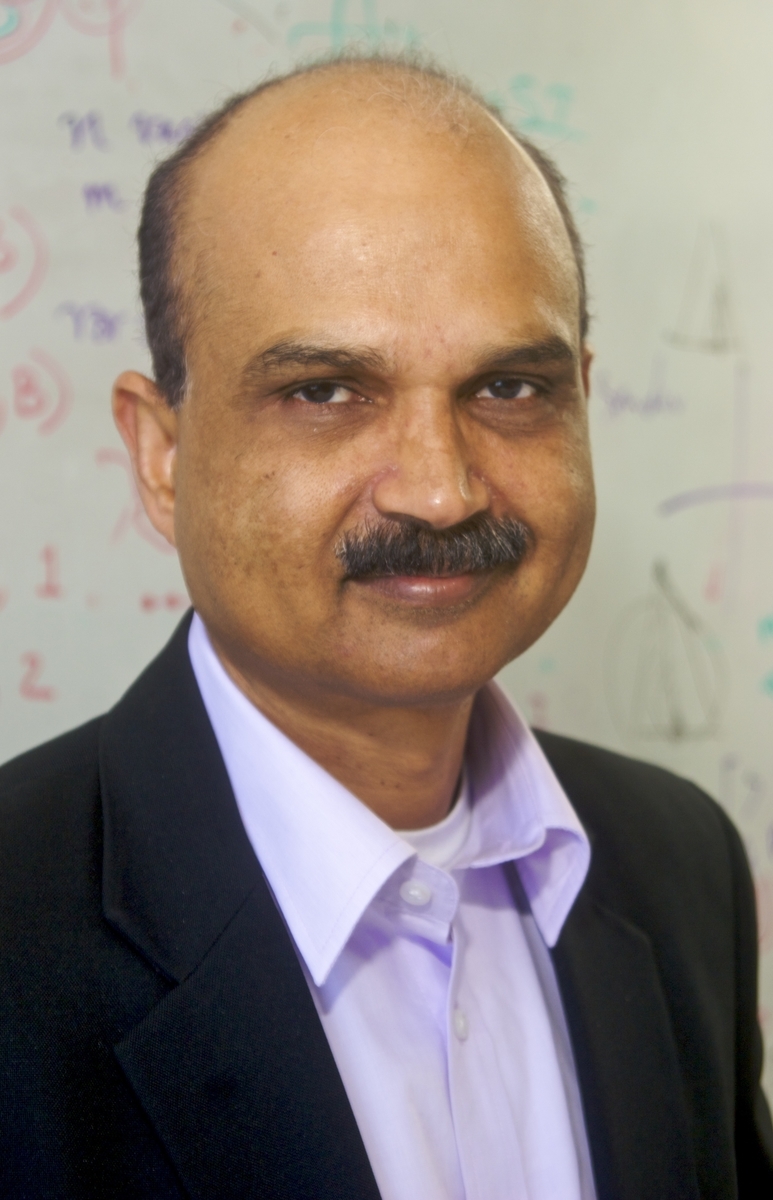
Ambika Bhagi-Damodaran Research Group
University of Minnesota
Ambika Bhagi-Damodaran · Associate Professor
How can metalloenzymes be rewired to create new therapeutics and sustainable biocatalysts for chemical transformations? The Bhagi-Damodaran Lab investigates structure, function and reaction mechanisms of metalloenzymes using protein engineering and small molecule discovery strategies. Researchers rewire metalloenzyme-dependent redox signal transduction pathways to develop next-generation tuberculosis and cancer therapeutics. The group is re-programing non-heme iron enzymes to enable modular C–H bond halogenation biocatalysis through mechanistic and protein-design studies. The lab combines biological, inorganic, medicinal, and computational chemistry approaches to manipulate active site electrostatics and reactivity in iron enzymes.
 Independently curated · Unclaimed
Ambuj K. Singh Research Group
University of California, Santa Barbara
Ambuj K. Singh · Distinguished Professor
How can learned graph representations be measured and designed to improve downstream tasks and robustness? The group develops geometry- and topology-based methods and graph-based models for drug discovery and chemical informatics. Researchers analyze social networks combining structure with attributes like sentiment and trust to model team decision dynamics and trust evolution. The group builds methods to integrate multimodal biological and imaging data to find discriminative sub-networks that predict global clinical or brain network states. They design scalable algorithms for querying and modeling dynamic composite networks to detect unusual patterns and enable efficient sampling.
Showing 1–24 of 541 labs