
Menu
University research directory
Research labs at
Emory University.
Compare 5 listed faculty-led profiles, explore their research interests, and follow the evidence in their selected work. These listings are a starting point for discovery and do not establish recruiting availability.
Explore the research before reaching out
Review each lab’s official website and recent publications. Compare the methods used, the questions being asked, and the practical requirements of any published opening. Unclaimed profiles are independently curated; the university has not approved or endorsed them.
How to compare research labs ↗Official university website ↗5 research-led lab profiles
Browse labs by their listed college affiliation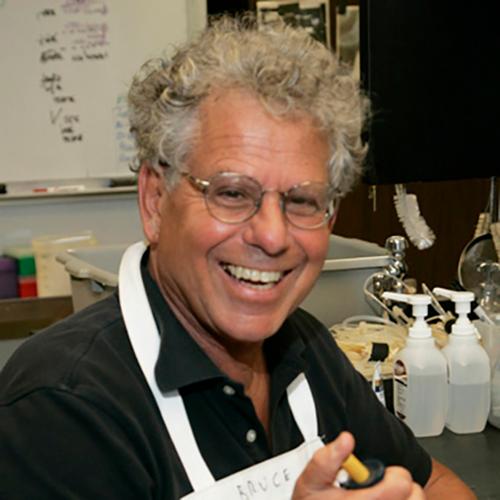 Independently curated · Unclaimed
Bruce Levin Research Group
Emory University
Bruce Levin · Samuel C. Dobbs Professor of Biology
How do bacterial populations and their viruses evolve and interact under antibiotic treatment and ecological change? The Levin Lab uses mathematical and computer simulation modeling alongside in vitro and laboratory animal experiments to study population and evolutionary biology of bacteria and their viruses. The group conducts experiments and theory on antimicrobial chemotherapy and the evolution of resistance to understand treatment failure. Researchers study the pharmacodynamics and pharmacokinetics of antibiotics to link drug behavior to within-host population and evolutionary dynamics. The lab investigates population dynamics, evolution, and control of infectious disease to apply evolutionary theory to health-related problems.
 Independently curated · Unclaimed
Eugene Agichtein Research Group
Emory UniversityEugene Agichtein · Professor, Computer Science
How can models of user behavior improve web search and conversational information access for real-world queries? The lab develops information retrieval and text-and-data-mining methods for web search and social media analysis to model online social interactions. Researchers build question-answering and clinical decision-support systems applying search and mining techniques to medical applications. The group investigates computational social science approaches that analyze large-scale user behavior to inform ranking and recommendation. Projects combine behavioral modeling, natural language processing, and evaluation on web and clinical datasets to detect early Alzheimer’s and other medically-relevant signals.
Katia Koelle Research Group
Emory UniversityKatia Koelle · Professor
How does viral evolution interact with epidemiological spread to shape disease dynamics and immunity? The lab models antigenic and genetic evolution of RNA viruses to link transmission dynamics with herd immunity effects. Researchers develop and fit mathematical and statistical models to sequence and epidemiological data to study constraints on viral adaptation. The group analyzes within-host heterogeneity in viral dynamics to assess how infection history and immune status alter selection pressures. Projects evaluate how control measures like immunization and vector reduction affect epidemiological and evolutionary outcomes.
Rustom Antia Research Group
Emory UniversityRustom Antia · Samuel C. Dobbs Professor of Biology
How do pathogens and immune responses change over time within hosts, and what drives those dynamics? The Antia Lab uses mathematical models and computer simulations to study pathogen and immune-response dynamics and to generate testable predictions. The group validates models by confronting them with experimental data and collaborates with experimental immunologists to conduct relevant experiments. The lab works closely with experimental partners, specifically the group of Dr. Rafi Ahmed at Emory, to compare model predictions with empirical results.
Shashank Shekhar Research Group
Emory UniversityShashank Shekhar · Assistant Professor
How do mechanical forces and regulatory proteins jointly control actin filament dynamics in cells? The lab studies actin dynamics and filament end remodeling using single-filament and single-molecule imaging approaches. Researchers combine microfluidics-assisted single filament imaging and multispectral single-molecule methods to observe protein-driven assembly and depolymerization. The group applies force spectroscopy and advanced TIRF microscopy to measure how mechanical cues alter filament behavior. Projects integrate biophysical experiments with mathematical modeling to explain emergent intracellular actin dynamics across cellular processes.
Showing 1–5 of 5 labs