
Menu
University research directory
Research labs at
The University of Chicago.
Compare 5 listed faculty-led profiles, explore their research interests, and follow the evidence in their selected work. These listings are a starting point for discovery and do not establish recruiting availability.
Explore the research before reaching out
Review each lab’s official website and recent publications. Compare the methods used, the questions being asked, and the practical requirements of any published opening. Unclaimed profiles are independently curated; the university has not approved or endorsed them.
How to compare research labs ↗Official university website ↗5 research-led lab profiles
Browse labs by their listed college affiliation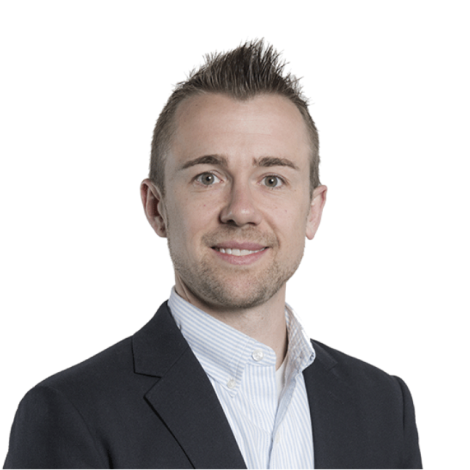 Independently curated · Unclaimed
Bryan Dickinson Research Group
The University of ChicagoBryan Dickinson · Professor and Associate Chair
How can engineered molecules and evolution-based methods measure and control biological systems in living cells? The Dickinson Group combines synthetic organic chemistry, protein engineering, and molecular evolution to create molecular technologies for studying and controlling biology. Researchers develop rapid selection and evolution-based technologies to create peptide- and protein-based binders, inhibitors, and molecular glues. The group engineers RNA-targeting therapeutics and programmable RNA reader and delivery systems, including CIRTS and taRNAs, to probe and modulate post-transcriptional regulation. They design bioorthogonal acylating probes paired with localized esterase expression to enable proximity-dependent RNA labeling and spatial analysis.
 Independently curated · Unclaimed
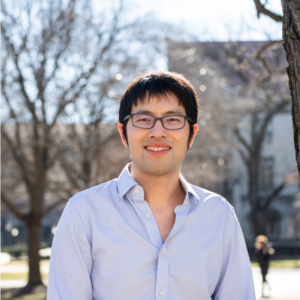
Chenhao Tan Research Group
The University of ChicagoChenhao Tan · Associate Professor of Computer Science
How can AI explanations and interactions be designed so humans make better decisions with machine assistance? The Chicago Human + AI (CHAI) Lab builds algorithms to align AI explanations with human interpretation to improve human-AI decision making. The group analyzes large textual datasets and natural experiments to understand how language shapes human decisions, such as persuasion and bargaining. Researchers develop decision-focused summarization and delegation methods so AI highlights the most decision-relevant information for people. The lab explores few-shot learning from human explanations to enable people to efficiently improve large language models.
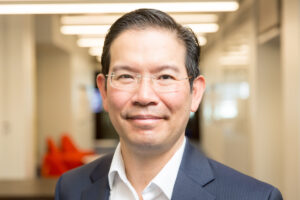
Dorian Abbot Research Group
The University of ChicagoDorian Abbot · Professor
What do mathematical and computational models reveal about climate, paleoclimate, and planetary habitability? Research uses mathematical and computational models to understand fundamental problems in Earth and planetary science, with current focus areas including rare event sampling and machine learning in weather and climate. The group works on climate dynamics, glaciology, geophysical fluid dynamics, and planetary sciences using theory, high-performance numerical simulation, and data analysis. Researchers collaborate within the department and with external partners to study extreme events and planetary habitability across theoretical and computational approaches. Ongoing projects emphasize rare event sampling methods and AI-boosted techniques to characterize extreme weather.
 Independently curated · Unclaimed
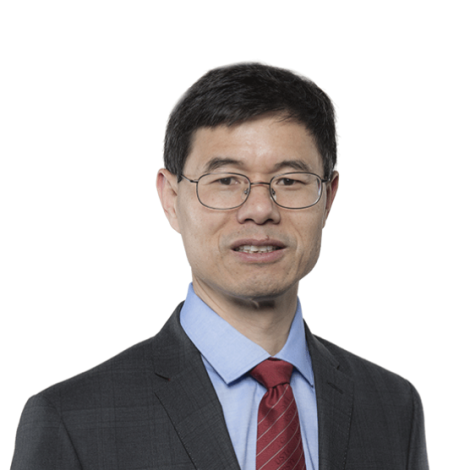
Fred Chong Research Group
The University of ChicagoFred Chong · Seymour Goodman Distinguished Service Professor of Computer Science
How can algorithms, software, and machine designs make 100–1000-qubit quantum devices practical for real scientific problems? The EPiQC expedition develops new algorithms and software tailored to 100–1000 quantum-bit devices to reduce the gap between algorithms and architectures. The group studies quantum software and machine designs alongside experiments to align algorithms with device-specific properties and to enable practical quantum computations. Researchers design and analyze emerging computing technologies, including multicore and embedded architectures, while exploring sustainability and security trade-offs in systems. The group leads multidisciplinary projects combining architecture, algorithms, and quantum device considerations to facilitate scalable quantum and high-performance computing.
 Independently curated · Unclaimed
Wenbin Lin Research Group
The University of ChicagoWenbin Lin · James Franck Professor of Chemistry
Can functional porous and nanoscale materials be engineered to enable sustainable energy and targeted cancer therapies? The group’s ongoing projects include metal-organic frameworks, catalysis, renewable energy, nanomedicine, and cancer therapy. Researchers design and study metal-organic frameworks as single-site solid asymmetric catalysts, gas storage/separation media, and light-harvesting/photocatalytic materials. The group develops hybrid nanoscale materials for biomedical imaging, targeted drug delivery, and nanoparticle radiosensitizers to enhance chemotherapy, radiotherapy, and immunotherapy and to enable preclinical-to-clinic translation. Current work integrates light-harvesting, water oxidation, and proton reduction expertise to pursue artificial photosynthesis and biofuel catalytic conversions.
Showing 1–5 of 5 labs