
Menu
University research directory
Research labs at
New York University (NYU).
Compare 5 listed faculty-led profiles, explore their research interests, and follow the evidence in their selected work. These listings are a starting point for discovery and do not establish recruiting availability.
Explore the research before reaching out
Review each lab’s official website and recent publications. Compare the methods used, the questions being asked, and the practical requirements of any published opening. Unclaimed profiles are independently curated; the university has not approved or endorsed them.
How to compare research labs ↗Official university website ↗5 research-led lab profiles
Browse labs by their listed college affiliation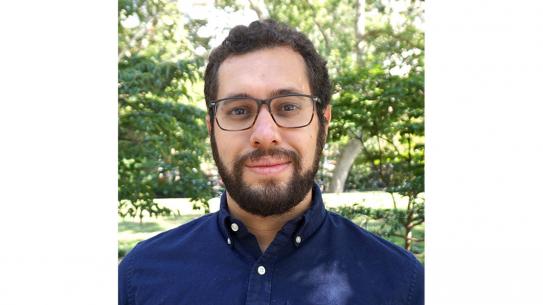 Independently curated · Unclaimed
Christopher Musco Research Group
New York University (NYU)
Christopher Musco · Institute Associate Professor, Computer Science and Engineering
What algorithmic strategies let large datasets be processed with provable speed and accuracy? The group develops randomized linear-algebra sketching methods to compress matrices and accelerate large-scale machine learning while preserving provable error bounds. The group designs streaming and sketching algorithms that process high-rate data with sublinear memory, enabling one-pass summaries for statistical estimation. Researchers analyze optimization and numerical linear algebra mechanisms to improve solver convergence and stability for large problems encountered in data science. The team implements algorithmic prototypes and benchmarks to evaluate tradeoffs between runtime, memory, and theoretical guarantees.
 Independently curated · Unclaimed
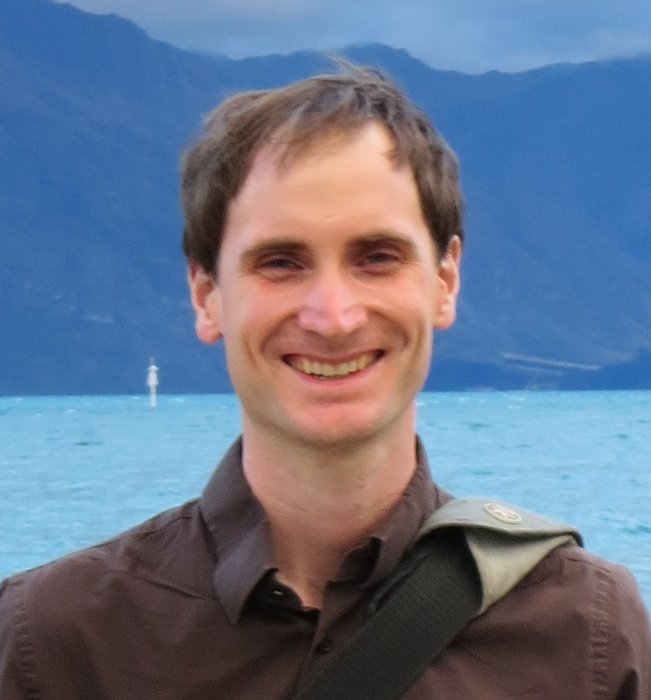
Edwin Gerber Research Group
New York University (NYU)Edwin Gerber · Professor of Mathematics and Atmosphere/Ocean Science
How does natural atmospheric variability inform climate response to anthropogenic forcing? The group builds simplified, idealized atmospheric models to bridge theory and comprehensive Earth System simulations and to analyze stratosphere–troposphere coupling. Researchers develop idealized models of the stratosphere-troposphere system to study the upper atmosphere’s role in surface climate. The lab uses theoretical analysis and comparisons with comprehensive model simulations to quantify responses to stratospheric ozone and greenhouse gas changes. The team applies dynamical systems and geophysical fluid dynamics tools to improve mechanistic understanding and predictive ability of climate model behavior.
 Independently curated · Unclaimed
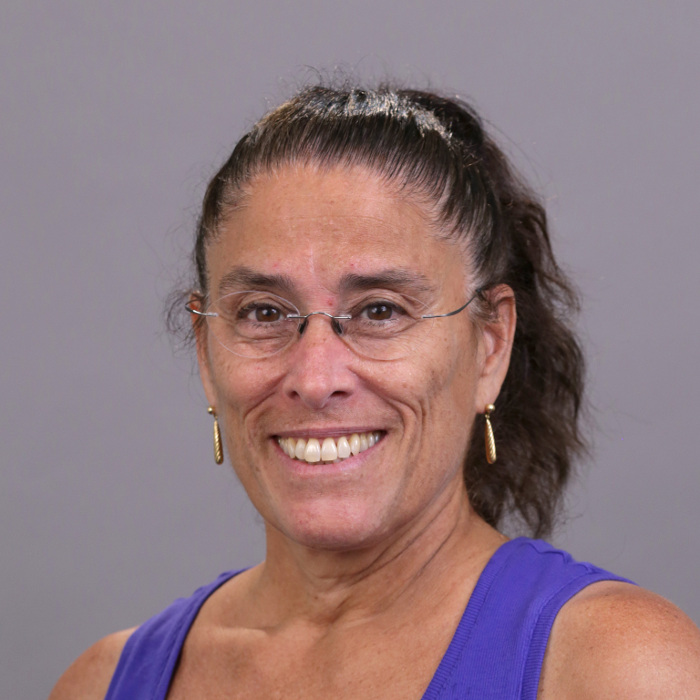
Marsha Berger Research Group
New York University (NYU)Marsha Berger · Silver Professor of Computer Science and Mathematics
How can adaptive discretization and parallel computing efficiently resolve complex fluid dynamics across scales? The group develops adaptive mesh and solution-refinement techniques for computational fluid dynamics to capture multiscale flow features. Researchers design and analyze adaptive numerical methods that reduce discretization error while concentrating computational effort where needed. The team implements parallel scientific computing frameworks and domain-decomposition strategies to scale adaptive solvers on high-performance systems. They study algorithmic mechanisms that combine adaptivity with parallelization to accelerate convergence and enable large-scale CFD simulations.
 Independently curated · Unclaimed
Ramesh Karri Research Group
New York University (NYU)Ramesh Karri · Professor, Electrical and Computer Engineering
Can hardware and chip-design workflows be made resilient to malicious modifications introduced during design or by AI assistance? The group studies trustworthy hardware and develops security-aware CAD, verification, and metrics to detect and prevent hardware Trojans and other tampering. Researchers ran an AI Hardware Attack Challenge and analyzed how large language models can be used to insert exploitable hardware modifications, documenting attack mechanisms and mitigations. The team investigates AI-orchestrated malware and defenses, exemplified by research on autonomous LLM-orchestrated ransomware prototypes. They also co-lead platform efforts to accelerate privacy-preserving cryptographic hardware design and shared chiplet libraries to improve secure hardware prototyping.
 Independently curated · Unclaimed
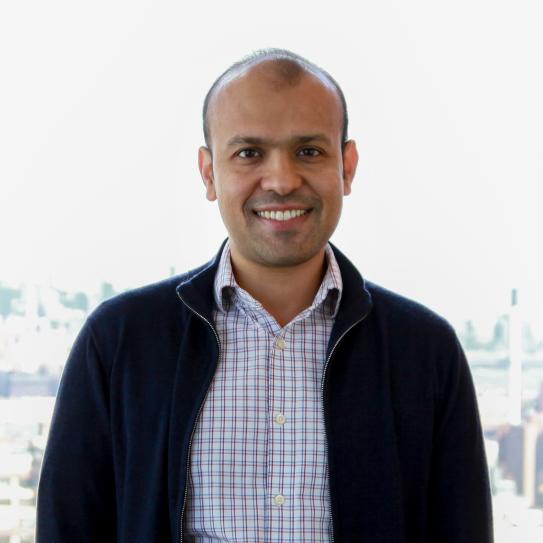
Siddharth Garg Research Group
New York University (NYU)Siddharth Garg · Professor of Electrical and Computer Engineering
How can hardware and microarchitectural design enable energy-efficient, secure, and reliable computing? The EnSuRe group researches electronic design automation, micro-architectural solutions, and hardware security techniques for energy-aware and trustworthy chips. Researchers develop methods for secure machine learning, defenses against hardware Trojans, and split-manufacturing approaches to prevent reverse engineering. The team builds energy-aware architectures and tools to address dark-silicon constraints and to optimize power-performance trade-offs. The group designs hardware-aware ML models and Verilog-generation workflows to accelerate privacy-preserving and efficient chip design.
Showing 1–5 of 5 labs