
Menu
Explore a research direction
Artificial intelligence
research labs.
Explore labs that list artificial intelligence, machine learning, or related methods among their research interests. Compare the problems they study, the evidence in their publications, and the people leading the work.
What to compare
A shared interest in AI can cover very different projects. Look for the application domain, the data a group uses, how it evaluates its systems, and whether your interests align with developing methods or applying them.
Profiles appear here because their listed research keywords match this topic. Inclusion does not establish an open position. Check the official sources and any published application instructions before reaching out.
Prepare a research introduction ↗44 research-led lab profiles
Browse labs by their listed college affiliationAhmed Abbasi Research Group
University of Notre Dame
Ahmed Abbasi · Joe and Jane Giovanini Professor of IT, Analytics, and Operations
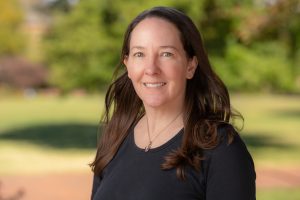
How can analytics explain and predict human behavior in sociotechnical systems using large-scale text and multimodal data? The lab develops human-centered analytics and machine learning methods for modeling behavior in health and online communities using deep learning, psychometric NLP, and multimodal feature fusion. Researchers build and evaluate large-scale digital experimentation platforms and design robustness methods to detect distribution shifts and adversarial conditions through predictive modeling and evaluation. The group applies high-dimensional deep document and hierarchical models to extract personality, psychometrics, and adverse-event signals from textual and search data for health monitoring. The lab integrates interdisciplinary computational, statistical, and experimental methods to frame, evaluate, and solve applied problems in trustworthy AI.
 Independently curated · Unclaimed
Alexis Battle Research Group
Johns Hopkins University
Alexis Battle · Wu and Zhang Professor
How does genetic variation in noncoding DNA alter molecular phenotypes across human tissues? The group analyzes large-scale genomic sequencing data to study how genetic differences contribute to gene regulation and disease outcomes. The lab develops computational biology tools, statistical methods, and machine learning strategies to predict the effects of variation in noncoding DNA sequences. Researchers at the Battle Lab build integrative genomic networks and apply them to problems such as autism and rare Mendelian disease variant prediction. The lab also evaluates and predicts the impact of personal genomics and rare genetic variants to improve diagnosis of rare diseases.
 Independently curated · Unclaimed
Alice E. Smith Research Group
The University of Alabama
Alice E. Smith · Endowed Shelby Distinguished Professor
Alice E. Smith's faculty-led research profile covers Advanced Manufacturing, Artificial Intelligence, Autonomous Vehicles, and Data Analytics.
 Independently curated · Unclaimed
Arman Cohan Research Group
Yale University
Arman Cohan · Assistant Professor of Computer Science
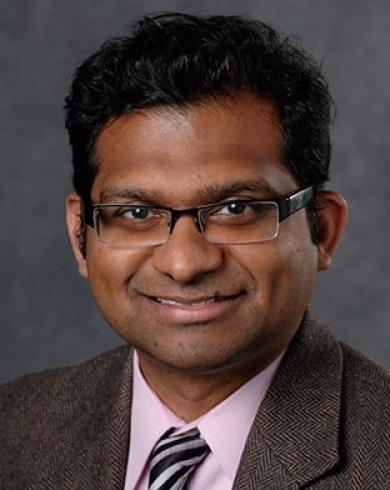
How can language models and representation learning be adapted to long-context, multi-document, and specialized-domain tasks while improving reliability and evaluation? The Yale NLP Lab studies language modeling, representation learning, retrieval, and domain-specific applications across mechanistic interpretability and evaluation. Researchers investigate capabilities and reasoning of large language models, retrieval-augmented methods, and knowledge-intensive environments using experiments and modeling. The group develops pretraining and summarization techniques for long and multi-document inputs and evaluates few-shot and faithfulness metrics for real-world NLP tasks. Lab members publish in major NLP and ML venues and maintain an active research and student training program.
 Independently curated · Unclaimed
Arun Ross Research Group
Michigan State University
Arun Ross · Martin J. Vanderploeg Endowed Professor, Computer Science and Engineering
How can biometric systems be made resilient to presentation attacks while preserving user privacy and recognition accuracy? The group researches presentation attack detection methods and spoofing defenses, including explainable attention-guided iris PAD. Researchers develop semi-adversarial networks and convolutional autoencoders to impart privacy to face images while retaining utility for recognition. The work explores vulnerabilities in fingerprint and iris systems through empirical studies that expose spoofing and masterprint risks. The lab investigates multi-biometrics and fusion strategies to improve recognition reliability under adversarial or degraded inputs.
Baowei Fei Research Group
University of Texas at Dallas
Baowei Fei · Professor
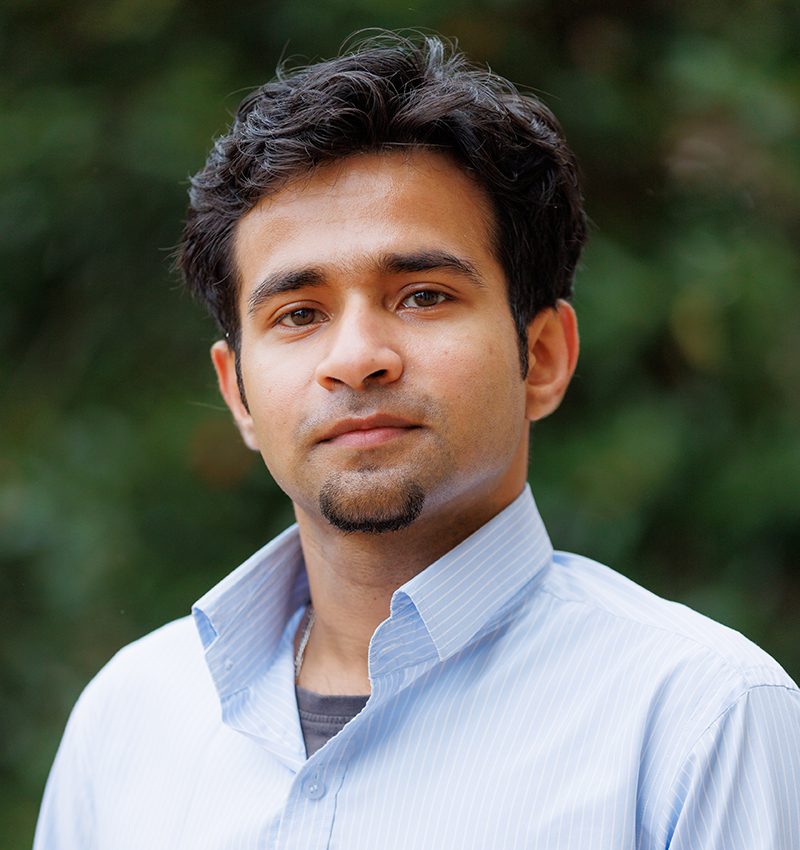
Can imaging reveal information that a surgeon cannot see with the naked eye? Fei develops medical imaging and computational methods for identifying tissue and guiding interventions. His research includes hyperspectral imaging, which measures light across many wavelengths, paired with artificial intelligence to investigate cancer detection. Other work combines imaging modalities such as PET and three-dimensional ultrasound for more precise biopsy guidance. The group connects engineering algorithms and imaging hardware with clinical questions in areas including head and neck and prostate cancer, making image-guided medicine a central research theme.
 Independently curated · Unclaimed
Bineet Ghosh Research Group
The University of AlabamaBineet Ghosh · Assistant Professor
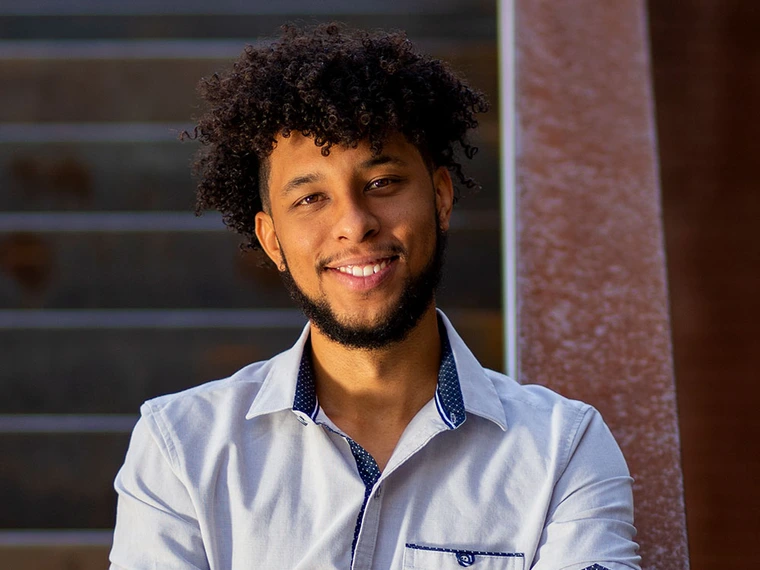
Bineet Ghosh's faculty-led research profile covers Artificial Intelligence, Autonomous Vehicles, Deep Learning, and Embedded Systems.
 Independently curated · Unclaimed
Cristian Román-Palacios Research Group
University of ArizonaCristian Román-Palacios · Assistant Professor
How do lineage relationships explain patterns of species richness across regions and time? The group constructs and analyzes large phylogenetic trees to test drivers of biodiversity using species-level datasets and comparative methods. Researchers develop statistical and machine-learning workflows to infer paleoclimatic variables from proxy datasets and to reconstruct past climates for testing species’ responses. The lab applies data mining and biostatistical pipelines to quantify how historical and recent climate change affect species survival probabilities across taxa. The team implements open-source computational tools and reproducible workflows to run large-scale biodiversity and paleoclimate analyses efficiently.
Dimitris Metaxas Research Group
Rutgers University–New Brunswick
Dimitris Metaxas · Board of Governors Professor
Metaxas investigates how artificial intelligence can combine learned patterns with knowledge about the world. His research connects machine learning with physical principles, dynamical systems, and other domain knowledge. Projects span computer vision, biomedical image analysis, and computer graphics, alongside image and text generation using generative models. Additional interests include language and vision language models, explainable AI, and learning with limited supervision. These directions connect the mathematical design of intelligent systems with applications where understanding images and interpreting complex data are central research challenges.
 Independently curated · Unclaimed
George Konidaris Research Group
Brown University
George Konidaris · Professor of Computer Science
Can robots autonomously learn abstract skills that enable fast, goal-directed planning across diverse tasks and environments? The Intelligent Robot Lab constructs high-level symbolic representations and abstraction hierarchies to enable planning, for example work on "From Skills to Symbols" and related projects. The lab develops hierarchical reinforcement learning and probabilistic learning methods to learn task-level skills and then composes them for long-horizon planning using projects such as "Autonomous Robot Skill Acquisition." Researchers integrate optimal control, planning, and learned skills to produce robust behavior under uncertainty in manipulation and navigation. The lab builds applied systems including robot motion-planning hardware and software prototypes described as "Robot Motion Planning on a Chip.
Janardhan Rao Doppa Research Group
Washington State University
Janardhan Rao Doppa · Professor
Doppa develops artificial intelligence methods that help decide what to design or test next. His research connects structured machine learning and adaptive experimental design with scientific discovery and engineering optimization. WSU describes applications in hardware design, nanoporous materials, drug discovery, three-dimensional printing, cybersecurity, and agriculture. His faculty site also discusses theory-guided learning for managing system performance, power, and temperature. The distinctive opportunity is working on AI that guides expensive research and design choices, where learning algorithms must account for objectives and constraints beyond predictive accuracy alone.
Jenna Wiens Research Group
University of Michigan-Ann Arbor
Jenna Wiens · Professor
How can hospital data support useful clinical decisions when measurements are incomplete and model predictions can be unreliable? The group develops machine-learning approaches using patient images, laboratory tests and vital signs. Research includes predicting infections and other patient outcomes, learning treatment policies with causal inference and offline reinforcement learning, and evaluating how clinicians respond to AI recommendations. Another direction investigates selective prediction: withholding potentially unreliable outputs to reduce automation bias. The work connects algorithm design with the practical effects of deploying models in clinical workflows.
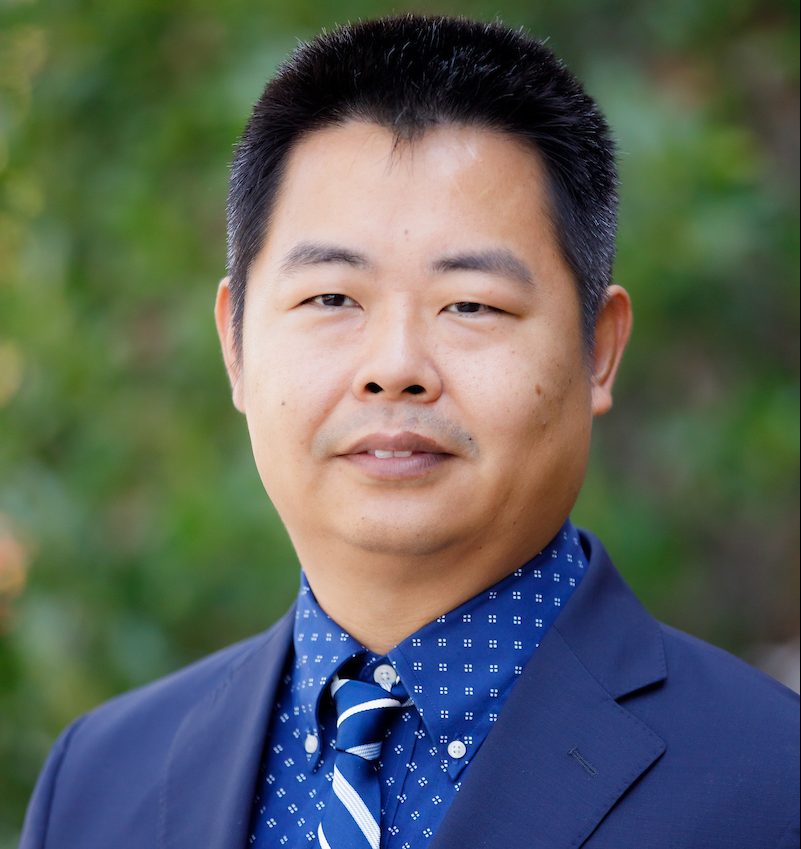
Jeremy Palmer Research Group
University of Houston
Jeremy Palmer · Ernest J. and Barbara M. Henley Professor
Jeremy Palmer’s group uses molecular simulation to uncover how materials behave where direct observation is difficult. Its computational research spans crystalline materials, soft and complex media, glasses, and metastable liquids, with energy and environmental applications motivating material design. Physics-based calculations and machine learning help investigate molecular transport, nanoparticle dispersion, and the structure of challenging liquids. The group also contributes simulation software and reproducible workflows. This research connects chemical engineering and statistical physics with the practical task of predicting material properties from microscopic interactions.
 Independently curated · Unclaimed
Jiaqi (Jackey) Gong Research Group
The University of AlabamaJiaqi (Jackey) Gong · Associate Professor, Adjunct Associate Professor of ME, Director for the Alabama Center for the Advancement of Artificial Intelligence
Jiaqi (Jackey) Gong's faculty-led research profile covers Artificial Intelligence, Computer Vision, Data Analytics, and Deep Learning.
Joshua S. Fu Research Group
The University of Tennessee-Knoxville
Joshua S. Fu · Professor
Fu investigates how climate and environmental change affect systems people depend on. His research connects climate impacts with energy infrastructure, air pollution, water availability, carbon sequestration, and extreme events such as heatwaves, droughts, and floods. Human health provides another application area, while artificial intelligence and machine learning support analyses of climate, health, and atmospheric deposition. The group offers prospective researchers a broad but connected environmental-engineering direction: modeling changing conditions and tracing their consequences across infrastructure, natural resources, and populations rather than treating those impacts as isolated problems.
Kavita Bala Research Group
Cornell University
Kavita Bala · Provost Professor of Computer Science
How can visual systems identify materials and lighting from photographs to enable realistic editing and recognition? The group develops datasets and algorithms for material recognition and visual search, including the Materials in Context Database and visual similarity models. Researchers build physically-based and differentiable rendering methods for recovering shape and material properties to support editing and relighting. The group applies remote-sensing and scale-aware recognition techniques to satellite imagery and cloud removal benchmarks for Earth-observation tasks. Methods combine convolutional neural networks, differentiable Monte Carlo rendering, and dataset/benchmark construction to evaluate recognition and inverse-rendering performance.
Kim Binsted Research Group
University of Hawai’i at Mānoa
Kim Binsted · Professor
A successful space mission depends on people functioning together as well as on its technology. Binsted’s research interests include artificial intelligence, human computer interfaces, and long duration human space exploration. Her HI-SEAS research has examined life in an isolated Mars analog habitat on Mauna Loa. Studies investigated crew dynamics, morale, stress, food, and performance during extended confinement. This work explores how crew selection and support can influence team functioning, connecting computing and human behavior with the practical challenges of sustained exploration far from Earth.
 Independently curated · Unclaimed
Leonard Lab
Princeton UniversityNaomi Ehrich Leonard · Edwin S. Wilsey Professor of Mechanical and Aerospace Engineering; Department Chair
How do many individuals coordinate without a single leader? Naomi Ehrich Leonard’s lab studies the dynamics, control, and learning behind networked systems, from robot teams to collective animal behavior. Projects include decentralized robot task allocation, nonlinear models of opinion formation, and learning three-dimensional rotational dynamics from images. The work combines mathematical models, feedback control, and computational experiments to explain how local interactions produce group-level behavior. Its selected papers offer two entry points: predicting rigid-body motion with physics-based learning, and tuning how a network reaches agreement or maintains disagreement.
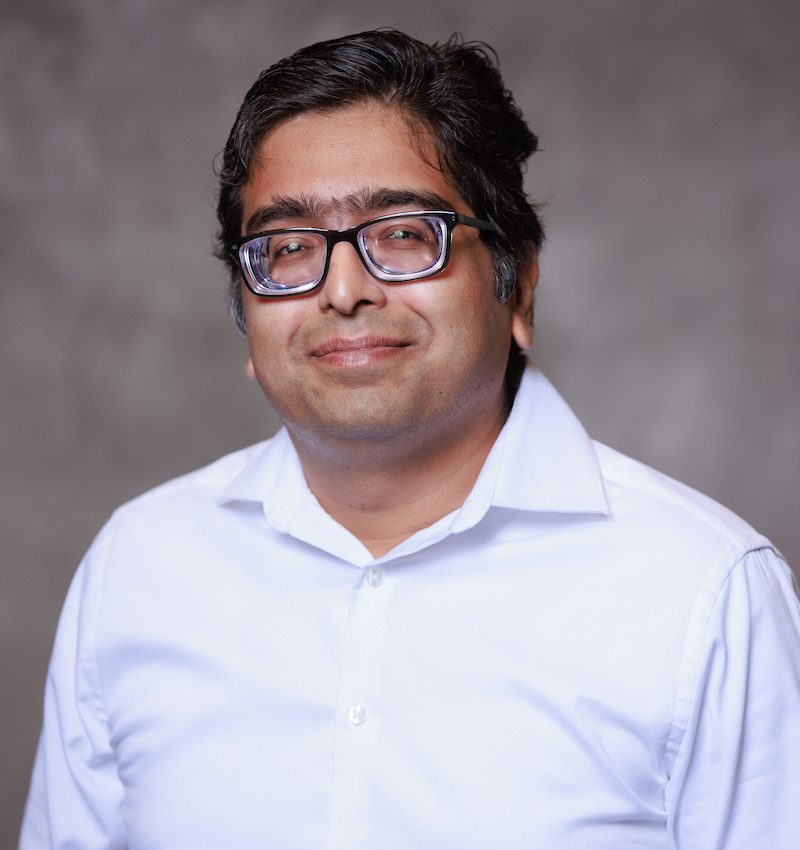
Mark Dredze Research Group
Johns Hopkins UniversityMark Dredze · John C. Malone Professor
How can natural language processing of social media and clinical text detect and monitor public health outcomes in real time? The group develops artificial intelligence systems that apply statistical models of language to social media analysis for public health surveillance. Researchers design and evaluate statistical methods for information extraction addressing syntax, semantics, sentiment, and spoken language processing tasks. They build new clinical natural language processing methods to analyze medical records for applications in clinical informatics and medicine. Applications studied include tobacco control, vaccinations, infectious disease surveillance, mental health, drug use, and gun violence prevention using AI-based language models.
 Independently curated · Unclaimed
Md Rayhanur Rahman Research Group
The University of AlabamaMd Rayhanur Rahman · Assistant Professor
Md Rayhanur Rahman's faculty-led research profile covers Artificial Intelligence, Cyber Security, Deep Learning, and Generative AI & LLMs.
 Independently curated · Unclaimed
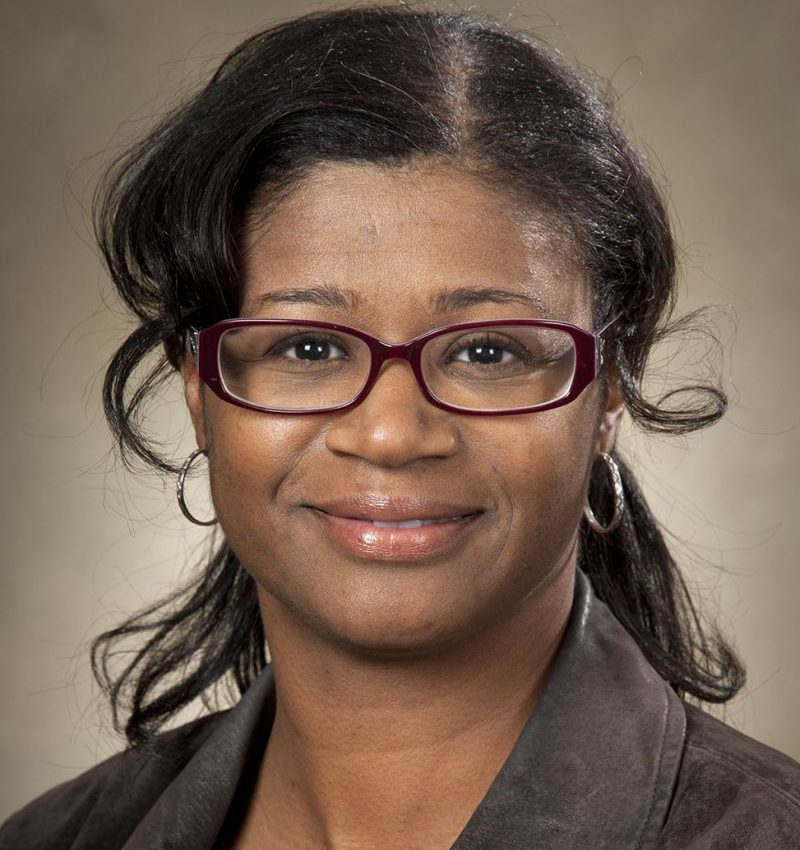
Michael Brent Research Group
Washington University in St Louis
Michael Brent · Henry Edwin Sever Professor of Engineering; Professor of Computer Science & Engineering; Professor of Biomedical Engineering; Professor of Genetics
How can a person's genome sequence predict expression levels of any gene in that person? The Brent Lab maps which genes are regulated by each transcription factor in yeast and Cryptococcus using computational and experimental methods to define regulatory targets. The group is applying computational TF-target mapping methods to integrate diverse human datasets and identify regulatory networks across humans. Researchers develop quantitative models that predict gene expression level from genome sequence by combining statistics, network analysis, and machine learning. The lab participates in the Long Life Family Study to find genetic variants associated with longevity by integrating DNA sequence, DNA methylation, and gene expression data.
 Independently curated · Unclaimed
Monica Anderson Research Group
The University of AlabamaMonica Anderson · Associate Professor & Associate Department Head for Undergraduate Studies
Monica Anderson's faculty-led research profile covers Artificial Intelligence, Computer Science Education, Engineering Education and Pedagogy, and Robotics.
Naren Ramakrishnan Research Group
Virginia Polytechnic Institute and State University
Naren Ramakrishnan · University Distinguished Professor
How can patterns in complex data help researchers anticipate events and make better decisions? The group works on applied machine learning, data science and urban analytics. Research interests include recommender systems, computational epidemiology and visual analytics. Documented projects examine optimization of school boundaries and tools that support interactive redistricting, while related work investigates information extraction from scholarly literature. Participation in pandemic research connects data science with models of disease spread, bringing computational methods to problems that involve both technical predictions and real-world consequences.
Nicholas Berente Research Group
University of Notre DameNicholas Berente · James H. Sweeny III and Alicia Sweeny Collegiate Professor of IT, Analytics, and Operations
How should organizations design practices and governance to manage generative AI and its ethical challenges in workplaces? The GAMA Lab studies organizational and ethical implications of generative AI, combining empirical studies and design-oriented analyses. Researchers investigate norm-based coordination, guardrails, and managerial design to improve predictability and accountability in human-AI ecologies. The lab develops test-driven and governance-oriented methods for machine learning ethics, and studies how crowd and bot dynamics reshape online community behavior and data validity. Projects integrate computational modeling, field studies, and interdisciplinary theory to inform managerial responses to AI deployment.
Showing 1–24 of 44 labs