
Menu
University research directory
Research labs at
Yale University.
Compare 5 listed faculty-led profiles, explore their research interests, and follow the evidence in their selected work. These listings are a starting point for discovery and do not establish recruiting availability.
Explore the research before reaching out
Review each lab’s official website and recent publications. Compare the methods used, the questions being asked, and the practical requirements of any published opening. Unclaimed profiles are independently curated; the university has not approved or endorsed them.
How to compare research labs ↗Official university website ↗5 research-led lab profiles
Browse labs by their listed college affiliation Independently curated · Unclaimed
Arman Cohan Research Group
Yale University
Arman Cohan · Assistant Professor of Computer Science
How can language models and representation learning be adapted to long-context, multi-document, and specialized-domain tasks while improving reliability and evaluation? The Yale NLP Lab studies language modeling, representation learning, retrieval, and domain-specific applications across mechanistic interpretability and evaluation. Researchers investigate capabilities and reasoning of large language models, retrieval-augmented methods, and knowledge-intensive environments using experiments and modeling. The group develops pretraining and summarization techniques for long and multi-document inputs and evaluates few-shot and faithfulness metrics for real-world NLP tasks. Lab members publish in major NLP and ML venues and maintain an active research and student training program.
Armita Nourmohammad Research Group
Yale UniversityArmita Nourmohammad · Associate Professor of Biomedical Engineering
How do biological systems learn and evolve molecular programs that produce adaptive immune responses? The PhABLE group develops physics-inspired machine learning models to map the immune recognition shape space for antigen–receptor interactions. Researchers integrate information theory and statistical physics to uncover dynamic landscapes of immune decision-making in health and disease. Projects apply computational models and data analysis to predict adaptive immune responses and guide immune engineering strategies. The lab combines ML, control theory, and quantitative modeling to design interpretable models of T and B cell receptor specificity and evolution.
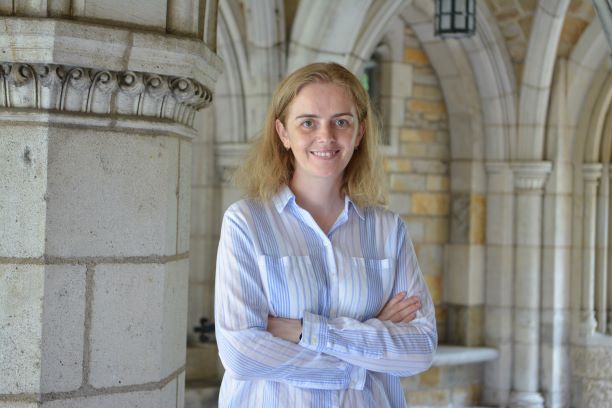 Independently curated · Unclaimed
Ruzica Piskac Research Group
Yale UniversityRuzica Piskac · Professor of Computer Science
How can formal methods and automated reasoning improve software reliability and trustworthiness in real-world systems? The ROSE group develops program synthesis and software verification techniques using decision procedures and automated reasoning to certify program correctness. Researchers build tools and apply automated reasoning to software configuration, firewall repair, and synthesis of verifiable code snippets. Projects use theorem proving, SMT decision procedures, and synthesis pipelines to detect and repair software bugs and configuration errors. The group combines formal approaches with applied security and cryptography to prove properties of programs and protocols.
Sidi Chen Research Group
Yale UniversitySidi Chen · Associate Professor of Genetics
Which genes and cell-intrinsic factors control anti-tumor immunity in vivo? The Chen lab performs genome-scale in vivo CRISPR and CRISPRa screens in T cells and tumors to discover regulators of T cell infiltration, degranulation, and tumor immune evasion. The group develops AAV- and CRISPR-based engineering platforms (for example MAEGI and AAV-Cpf1 KIKO) to create and test immune-gene and CAR-T engineering strategies in mouse tumor models. Researchers combine high-throughput genetic screens with precision in vivo cancer models to map tumor-intrinsic suppressors and immune modulators. Technology development includes spatial and scalable perturbation methods to enable therapeutic target discovery.
Valerie Horsley Research Group
Yale UniversityValerie Horsley · Professor of Molecular, Cellular and Developmental Biology and Associate Professor of Dermatology
How do adult epithelial stem cells and non-epithelial neighbors coordinate to maintain tissue homeostasis, repair wounds, and influence fibrosis or tumorigenesis? The Horsley lab uses mouse genetics, cell culture, genomics, and microscopy to dissect cell-intrinsic and cell-extrinsic regulators of epithelial regeneration. Researchers study stem cell contributions to wound healing and scarring, the role of adipocytes and myeloid metabolism in skin repair, and molecular biomarkers of keloids and fibrosis. The group leverages clinical resources and collaborates across stem cell and engineering groups to address clinically relevant questions in epithelial biology and dermatology.
Showing 1–5 of 5 labs