
Menu
Explore a research direction
Artificial intelligence
research labs.
Explore labs that list artificial intelligence, machine learning, or related methods among their research interests. Compare the problems they study, the evidence in their publications, and the people leading the work.
What to compare
A shared interest in AI can cover very different projects. Look for the application domain, the data a group uses, how it evaluates its systems, and whether your interests align with developing methods or applying them.
Profiles appear here because their listed research keywords match this topic. Inclusion does not establish an open position. Check the official sources and any published application instructions before reaching out.
Prepare a research introduction ↗44 research-led lab profiles
Browse labs by their listed college affiliation Independently curated · Unclaimed
Noorbakhsh Amiri Golilarz Research Group
The University of Alabama
Noorbakhsh Amiri Golilarz · Assistant Professor
Noorbakhsh Amiri Golilarz's faculty-led research profile covers Artificial Intelligence, Computer Vision, Data Analytics, and Deep Learning.
 Independently curated · Unclaimed
Pedro F. Felzenszwalb Research Group
Brown University
Pedro F. Felzenszwalb · Professor of Engineering and Computer Science
How can algorithms detect and localize people and objects robustly in natural images with deformations and occlusions? The lab developed and evaluated a deformable part model for person detection in benchmark challenges to improve object localization under variation. Researchers design and analyze algorithms connecting computer vision with optimization and statistics to enable reliable image restoration and segmentation. The group implements method combinations from machine learning, signal processing and natural language processing to address mid- and high-level vision tasks. The team releases papers, talk slides and code to document methods and reproducible evaluations.
 Independently curated · Unclaimed
Rachel Mandelbaum Research Group
Carnegie Mellon University
Rachel Mandelbaum · Professor and Department Head
How can improved analysis methods extract cosmological information from large imaging surveys with minimal bias? The group develops and applies weak gravitational lensing and related analysis techniques to measure cosmic shear and galaxy properties from survey data. Current projects focus on Hyper Suprime-Cam data and preparations for Rubin Observatory LSST and the Roman Space Telescope, developing methods for shear estimation, PSF systematics removal, and redshift distribution inference. Researchers design generative and machine-learning approaches for galaxy morphology and ensemble redshift estimation to enable precision cosmology with upcoming wide-field surveys.
Rad Lab
Northeastern University, US
Tina Eliassi-Rad · Inaugural Joseph E. Aoun Professor
What can networks reveal about patterns hidden in large collections of connected data? The group works at the intersection of data mining, machine learning and network science, developing algorithms for analyzing physical and social phenomena. Applications of this research include fraud detection, cyber situational awareness, drug discovery and online discourse. The program also investigates ethical questions in machine learning and AI. Its algorithms have been incorporated into graph-analysis systems and open-source software, linking theoretical and algorithmic research with practical uses of networked data.
 Independently curated · Unclaimed
Regina Barzilay Research Group
Massachusetts Institute of Technology
Regina Barzilay · School of Engineering Distinguished Professor for AI and Health
Can machine learning detect cancer risk from routine clinical imaging before symptoms appear to enable earlier intervention? The group develops deep-learning models for personalized mammography-based risk prediction and early cancer detection. Researchers build ML methods for de-novo molecular design and retrosynthesis to change traditional drug-discovery pipelines toward data-driven generation. The team develops generative models such as BoltzGen to create protein binders for biological targets and tools like VaxSeer to predict virus evolution for vaccine strain selection. They also focus on interpretability and robustness for clinical AI to support safer, fairer deployment in healthcare settings.
 Independently curated · Unclaimed
Remo Rohs Research Group
University of Southern California
Remo Rohs · Professor of Quantitative and Computational Biology
How do three-dimensional molecular shapes determine where proteins bind DNA? The Rohs Lab develops machine learning and AI methods to model protein–DNA binding specificity using DNA shape features. The group builds and maintains DNAproDB, a database and processing pipeline for automated analysis and visualization of protein–DNA complexes. Researchers apply geometric deep learning and graph neural networks to predict protein–nucleic acid binding from structural and sequence features. The lab integrates computational structural biology, experimental mapping, and predictive modeling to reveal readout mechanisms of protein, RNA, and drug interactions.
 Independently curated · Unclaimed
Runlong Yu Research Group
The University of AlabamaRunlong Yu · Assistant Professor
Runlong Yu's faculty-led research profile covers Artificial Intelligence, Data Analytics, Generative AI & LLMs, and Geospatial Analysis.
 Independently curated · Unclaimed
Sayanton Dibbo Research Group
The University of AlabamaSayanton Dibbo · Assistant Professor
Sayanton Dibbo's faculty-led research profile covers Artificial Intelligence, Cyber Security, Data Privacy, and Generative AI & LLMs.
 Independently curated · Unclaimed
Shahram Rahimi Research Group
The University of AlabamaShahram Rahimi · Head of the Department of Computer Science, Professor
Shahram Rahimi's faculty-led research profile covers Artificial Intelligence, Computer Science Education, Generative AI & LLMs, and Machine Learning.
 Independently curated · Unclaimed
Siddharth Garg Research Group
New York University (NYU)
Siddharth Garg · Professor of Electrical and Computer Engineering
How can hardware and microarchitectural design enable energy-efficient, secure, and reliable computing? The EnSuRe group researches electronic design automation, micro-architectural solutions, and hardware security techniques for energy-aware and trustworthy chips. Researchers develop methods for secure machine learning, defenses against hardware Trojans, and split-manufacturing approaches to prevent reverse engineering. The team builds energy-aware architectures and tools to address dark-silicon constraints and to optimize power-performance trade-offs. The group designs hardware-aware ML models and Verilog-generation workflows to accelerate privacy-preserving and efficient chip design.
 Independently curated · Unclaimed
Sinan Al-Ani Research Group
The University of AlabamaSinan Al-Ani · Teaching Assistant Professor
Sinan Al-Ani's faculty-led research profile covers Cyber Security, Internet of Things (IoT), and Machine Learning.
Stefanos Nikolaidis Research Group
University of Southern CaliforniaStefanos Nikolaidis · Fluor Early Career Chair in Engineering and Associate Professor of Computer Science
How can robots behave robustly when interacting with people in unconstrained everyday environments? The ICAROS lab develops computational human-robot interaction algorithms and end-to-end robotic systems to assist users in complex, real-world tasks. The group builds automatic scenario generation methods to create diverse, realistic test scenarios that improve robotic robustness and evaluation. Researchers combine procedural content generation and quality diversity optimization with experimental deployments to enable robots to adapt through simulated and real-world experiences. The lab investigates end-to-end solutions that enable deployed robotic systems to act robustly when interacting with people in practical applications.
 Independently curated · Unclaimed
Sudip Mittal Research Group
The University of AlabamaSudip Mittal · Associate Professor
Sudip Mittal's faculty-led research profile covers Artificial Intelligence, Cyber Security, Data Analytics, and Digital Twins.
 Independently curated · Unclaimed
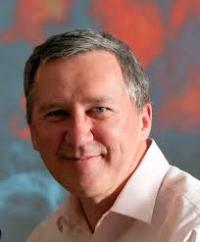
Thorsten Joachims Research Group
Cornell University
Thorsten Joachims · Jacob Gould Schurman Professor of Computer Science and Information Science
Clicks, choices, and text edits contain learning signals—but they also carry bias. Thorsten Joachims and his students develop machine-learning methods for using that feedback in search, recommendation, education, and language models. Their work connects counterfactual evaluation, policy learning, ranking, and personalization. POTEC tackles learning from logged decisions when the action space is large; coactive learning studies how a user’s edits can help personalize an LLM without requiring a perfect reference answer. This faculty-led research group offers a route into both the theory of interactive learning and its application to human-centered systems.
 Independently curated · Unclaimed
Tom M. Mitchell Research Group
Carnegie Mellon UniversityTom M. Mitchell · Founders University Professor, Machine Learning Department
How can machine learning decode human brain activity to reveal the neural representations of language meaning during reading? The group uses functional Magnetic Resonance Imaging to capture three-dimensional images of human brain activity and trains machine learning algorithms to decode mental states from those images. The group develops temporal models and classifiers for extremely high-dimensional, noisy fMRI data to discover spatial-temporal activity patterns associated with cognitive tasks. The group builds intelligent workstation assistants that learn from users' email, calendar and text files, focusing on automatic information extraction and cumulative long-term learning. The group applies large language models and student-knowledge tracing to improve online education systems and to select effective teaching actions.
 Independently curated · Unclaimed
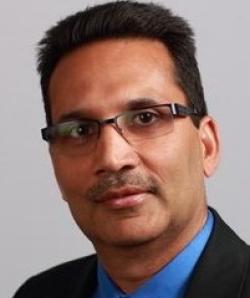
Travis Atkison Research Group
The University of AlabamaTravis Atkison · Professor
The group works across cybersecurity, privacy, transportation systems, machine learning, software engineering, and computing education.
 Independently curated · Unclaimed
Vipin Chaudhary Research Group
Case Western Reserve UniversityVipin Chaudhary · Kevin J. Kranzusch Professor in Computer & Data Science
How can high-performance computing accelerate machine learning on very large scientific datasets to enable faster discoveries? The group pursues projects in high performance computing and machine learning, applying compiler and network expertise to scale algorithms for large data processing. Researchers develop methods in artificial intelligence and quantum computing to explore new computation paradigms and improve performance of scientific applications. The lab uses computer-aided diagnosis and digital image processing techniques to analyze biomedical data and support intervention research. The group secures and manages large externally funded projects to translate scalable computing methods into deployed research infrastructure.
Yoseph Barash Research Group
University of PennsylvaniaYoseph Barash · Professor of Genetics
How do sequence features and cellular context determine mechanisms of alternative splicing and post‑transcriptional isoform regulation in human tissues? The lab develops machine learning algorithms that integrate high‑throughput data such as RNASeq and CLIPSeq to infer RNA biogenesis and function. They build probabilistic graphical models and other computational methods to predict effects of genetic variation on RNA processing, including splicing QTLs. Predictions from computational models are followed by experimental verifications using high‑throughput sequencing assays to test inferred regulatory mechanisms. Ongoing projects include integrating long‑read 3′ and 5′ assays and polyA site annotation to resolve isoform diversity and variant effects on transcript ends.
Yu Sun Research Group
University of South FloridaYu Sun · Professor
Yu Sun’s research brings together robotics, deep learning, computer vision, haptics, and human-computer interaction. His work in robotic hands, grasping, and manipulation examines how robots can handle objects and carry out useful tasks, while medical applications connect intelligent systems with human needs. He also directs USF’s Center for Innovation, Technology, and Aging. The program links perception, physical interaction, and AI rather than treating them as separate problems, offering a research setting at the intersection of robotic capability, interactive technology, and applications involving people.
Ziv Bar-Joseph Research Group
Carnegie Mellon UniversityZiv Bar-Joseph · FORE Systems Professor of Computer Science; Ray & Stephanie Lane Computational Biology Department; Machine Learning Department
How do computational methods reveal interactions and dynamics in complex biological systems across time? The Systems Biology Group develops computational methods for understanding interactions, dynamics and conservation of complex biological systems using approaches that span experimental design to systems-level analysis. The group builds algorithms inspired by biological distributed systems to improve distributed computing and to infer information-processing principles in biology. Projects include development of methods for experimental design and for reconstruction of dynamic biological networks from high-throughput temporal data. Researchers apply machine learning and bioinformatics to integrate static and temporal datasets to model biological system behavior.
Showing 25–44 of 44 labs