
Menu
University research directory
Research labs at
Purdue University West Lafayette.
Compare 5 listed faculty-led profiles, explore their research interests, and follow the evidence in their selected work. These listings are a starting point for discovery and do not establish recruiting availability.
Explore the research before reaching out
Review each lab’s official website and recent publications. Compare the methods used, the questions being asked, and the practical requirements of any published opening. Unclaimed profiles are independently curated; the university has not approved or endorsed them.
How to compare research labs ↗Official university website ↗5 research-led lab profiles
Browse labs by their listed college affiliation Independently curated · Unclaimed
Daniel M. Suter Research Group
Purdue University West Lafayette
Daniel M. Suter · Professor, Associate Department Head for Faculty Affairs and Undergraduate Student Success
How do neuronal growth cones detect mechanical and chemical cues to direct axonal growth and regeneration? The Suter lab uses Aplysia and zebrafish models with quantitative live-cell imaging to measure growth cone dynamics. Projects include assays of reactive oxygen species in neuronal development, mechanosensing studies, zebrafish spinal cord injury drug screens, and in vivo axonal bulk cytoskeletal flow measurements. They combine cell biological, biophysical, molecular, and biochemical techniques to probe mechanisms underlying growth cone motility. The lab applies these experimental methods to develop treatments that enhance axonal regeneration after nervous system injury.
 Independently curated · Unclaimed
Kelsey Prissel Research Group
Purdue University West LafayetteKelsey Prissel · Assistant Professor
How did planetary crusts and cores form and interact to produce observed volcanic and geochemical signatures? Kelsey Prissel’s group conducts high-temperature and high-pressure laboratory experiments and isotopic analyses to recreate planetary differentiation processes. They perform geochemical modeling of elemental diffusion, isotopic fractionation, and magma crystallization to interpret experimental results. Petrographic characterization of lunar, meteorite, and terrestrial samples supports synthesis of ground-truth materials for remote sensing. The group also participates in analog mission and field campaigns to prepare instruments and materials for planetary surface exploration.
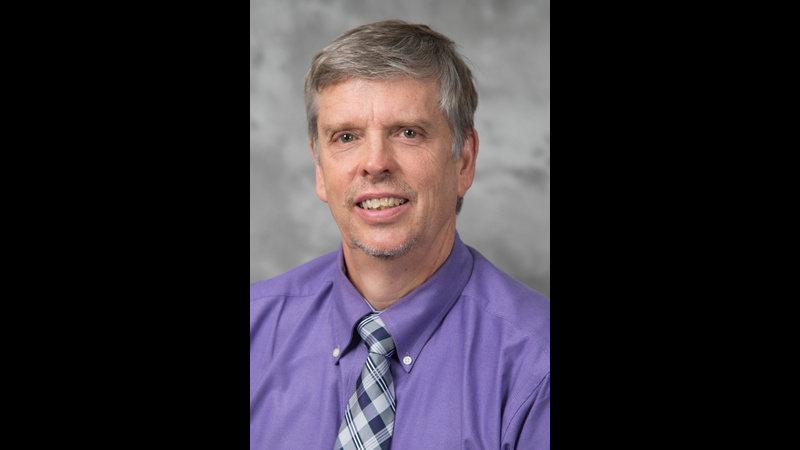
Leifu Chang Research Group
Purdue University West LafayetteLeifu Chang · Associate Professor
How do the structures of large protein and protein–nucleic acid assemblies determine their regulation and function at molecular resolution? The Chang group focuses on cryo-electron microscopy and biochemical reconstitution to solve structures of large complexes. Researchers apply X-ray crystallography, NMR, electron tomography, and advanced spectroscopy alongside computational approaches to examine nucleic acid and protein structures. Current projects document CRISPR-Cas systems and cell-cycle regulatory assemblies using structural methods to reveal mechanisms of action.
 Independently curated · Unclaimed
Marc H. Caffee Research Group
Purdue University West LafayetteMarc H. Caffee · Professor of Physics
What can cosmogenic and radiogenic nuclide measurements reveal about surface exposure, erosion, and planetary histories? The research applies stable- and radio-nuclide measurements to Quaternary landform evolution, cosmochronology, hydrology, and atmospheric processes. The group develops and improves techniques to measure new cosmogenic nuclides and enables expanded geochronologic constraints. Researchers operate and direct the PRIME Lab to produce cosmogenic nuclide data used for exposure dating and erosion-rate studies. Laboratory measurement development is combined with field sampling campaigns to address timescales of surface and planetary processes.
 Independently curated · Unclaimed
Roger Wiens Research Group
Purdue University West LafayetteRoger Wiens · Professor
How can remote laser- and spectroscopic instruments reveal elemental and molecular composition of planetary surfaces from a rover? The group develops remote-sensing spectroscopic instruments including LIBS, Raman, and fluorescence for planetary surface investigations. The team led and delivered ChemCam to provide LIBS-based elemental compositions at meter-range on Mars and operates SuperCam combining LIBS, Raman, VIS-IR spectroscopies, imaging, and acoustics on Perseverance. Researchers integrate instrument design, field testing, and mission operations to enable in situ compositional analyses of rocks and soils. Instrument data are used to constrain cosmochemistry and surface processes on Mars and other bodies.
Showing 1–5 of 5 labs