
Menu
Explore a research direction
Cybersecurity
research labs.
Browse research groups that list cybersecurity, privacy, or related security topics. Use the linked sources to distinguish their research focus from a general interest in keeping systems secure.
What to compare
Identify what the group protects: networks, software, devices, or people using a system. Compare its methods, such as measurement, formal reasoning, systems building, or user studies, against your experience and the questions you want to investigate.
Profiles appear here because their listed research keywords match this topic. Inclusion does not establish an open position. Check the official sources and any published application instructions before reaching out.
Prepare a research introduction ↗16 research-led lab profiles
Browse labs by their listed college affiliation Independently curated · Unclaimed
Arun Ross Research Group
Michigan State University
Arun Ross · Martin J. Vanderploeg Endowed Professor, Computer Science and Engineering
How can biometric systems be made resilient to presentation attacks while preserving user privacy and recognition accuracy? The group researches presentation attack detection methods and spoofing defenses, including explainable attention-guided iris PAD. Researchers develop semi-adversarial networks and convolutional autoencoders to impart privacy to face images while retaining utility for recognition. The work explores vulnerabilities in fingerprint and iris systems through empirical studies that expose spoofing and masterprint risks. The lab investigates multi-biometrics and fusion strategies to improve recognition reliability under adversarial or degraded inputs.
Computer Networking Research Group
University of Connecticut
Bing Wang · Professor
Computer networks must remain useful when devices, users, and traffic patterns change. Wang leads UConn’s Computer Networking Research Group, working across networking, ubiquitous computing, streaming, management, security, and performance evaluation. Her listed projects include detecting and diagnosing faults in wireless networks, using smartphone sensing for health applications, and investigating programmable network management. These directions bring system modeling together with practical networking questions, including how to interpret noisy sensing data and how to manage infrastructure that supports connected devices and services.
 Independently curated · Unclaimed
Dan Boneh Research Group
Stanford University
Dan Boneh · Professor of Computer Science and Electrical Engineering
Can cryptographic proofs scale to verify large model computations without revealing model parameters? The group develops succinct zero-knowledge and folding-based SNARK constructions to reduce proof size and verification cost for large computations. Researchers design homomorphic and lattice-based encryption schemes and residue-number-system techniques to enable arithmetic on encrypted large integers. They prototype verifiable computation and authenticated-data systems for scalable image and web security, combining IOPs and accumulators to enable integrity checks at scale. The lab evaluates web, mobile, and blockchain security, producing protocols for privacy-preserving airdrops and accountable threshold signatures.
G. Gary Tan Research Group
Penn State (Main campus)
G. Gary Tan · Distinguished Professor
What software vulnerabilities can compiler and formal-method techniques detect and mitigate in large codebases? The Security of Software (SOS) Group applies compiler, programming language, and formal method techniques to improving software security. The group pursues projects in software security, programming languages, and program verification with an emphasis on automated analysis frameworks. Researchers develop formal-methods-based analyses and compiler transformations to identify and harden vulnerable code paths. Ongoing work includes tool development and evaluation using benchmarks and security-relevant codebases.
 Independently curated · Unclaimed
Md Rayhanur Rahman Research Group
The University of Alabama
Md Rayhanur Rahman · Assistant Professor
Md Rayhanur Rahman's faculty-led research profile covers Artificial Intelligence, Cyber Security, Deep Learning, and Generative AI & LLMs.
Michael T. Goodrich Research Group
University of California, IrvineMichael T. Goodrich · Distinguished Professor
What efficient algorithms and data structures enable secure, privacy-preserving computation on large distributed systems? His research develops algorithm designs and data structures for diverse computational models including RAM, parallel, distributed, and external-memory. The group works on privacy-preserving data access and efficient solutions for problems like nearest-neighbor searching, convex hulls, and sorting using theoretical and practical algorithmic techniques. Researchers build secure distributed data structures and protocols to support information assurance and cloud security. The group applies these algorithmic methods to networking, machine learning, and geometric computing problems.
Mon(IoT)r Lab
Northeastern University, US
David Choffnes · Professor
What can measurements of real internet systems reveal about privacy, security and reliability? The group studies deployed systems, including mobile devices and the Internet of Things, to test whether their behavior matches existing models and assumptions. Research investigates the causes of unexpected behavior and develops new models or systems in response. Projects include monitoring connected-device behavior, protecting personal data flows and investigating net-neutrality violations. The work combines networking and distributed systems research with practical measurement of technologies that people use every day.
Paul Barford Research Group
University of Wisconsin-Madison
Paul Barford · Department Chair and Carl de Boor Professor
How can Internet traffic measurements detect and distinguish malicious attacks, fraud, and traffic anomalies in real time? The group measures and analyzes Internet data, communication protocols, and network topology to quantify normal and abnormal behaviors. Researchers develop and evaluate detection techniques for fraud, traffic anomalies, and intrusions using large-scale datasets and analytic methods to identify patterns of malicious activity. The lab operates experimental infrastructure and software for collecting network measurements and producing datasets used to test detection algorithms. Studies combine protocol-level analysis, topological measurement, and anomaly detection to improve understanding of Internet security and measurement accuracy.
 Independently curated · Unclaimed
Purushotham Bangalore Research Group
The University of AlabamaPurushotham Bangalore · James R. Cudworth Professor
Purushotham Bangalore's faculty-led research profile covers Cyber Security, Data Analytics, Distributed Systems, and High-Performance Computing.
 Independently curated · Unclaimed
Raheem A. Beyah Research Group
Georgia Institute of TechnologyRaheem A. Beyah · Provost & Exec VP for Acad Aff Endowed Chair and Professorships Titles Southern Company Chair
How can cyber-physical systems be protected from coordinated attacks that exploit both network and physical dynamics? The Cyber-Physical Security Lab develops detection and mitigation methods for attacks on critical infrastructure and embedded systems. The group studies privacy, network monitoring, and performance trade-offs to detect anomalous behavior in real-time systems. Researchers use systems-level experiments and monitoring tools to evaluate resilience and recovery mechanisms. The team applies these methods to industrial control and networked devices to improve operational security.
 Independently curated · Unclaimed
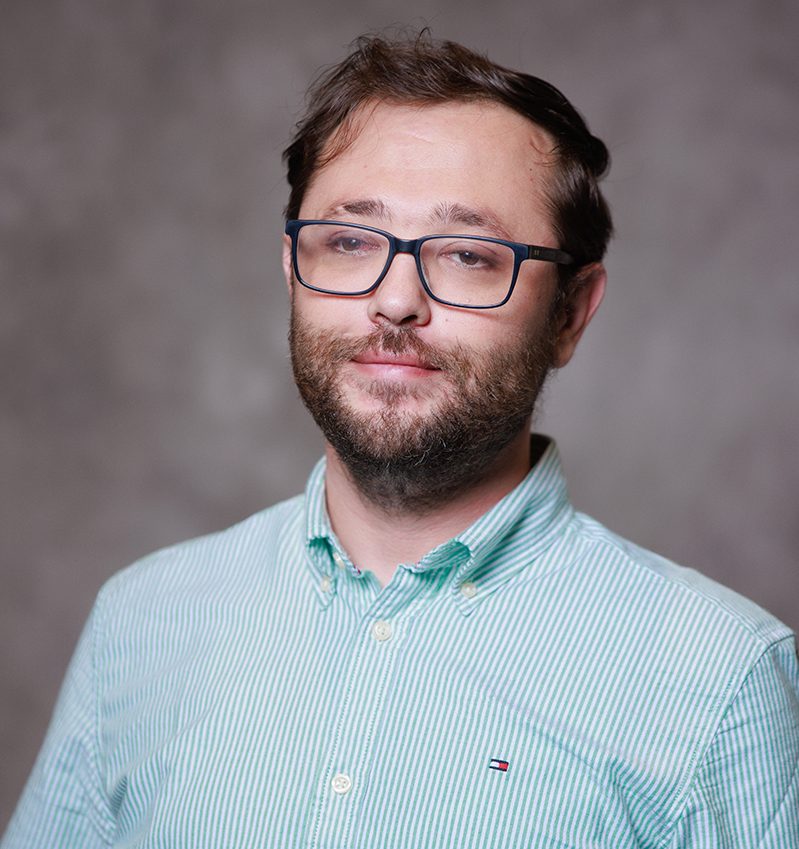
Sayanton Dibbo Research Group
The University of AlabamaSayanton Dibbo · Assistant Professor
Sayanton Dibbo's faculty-led research profile covers Artificial Intelligence, Cyber Security, Data Privacy, and Generative AI & LLMs.
 Independently curated · Unclaimed
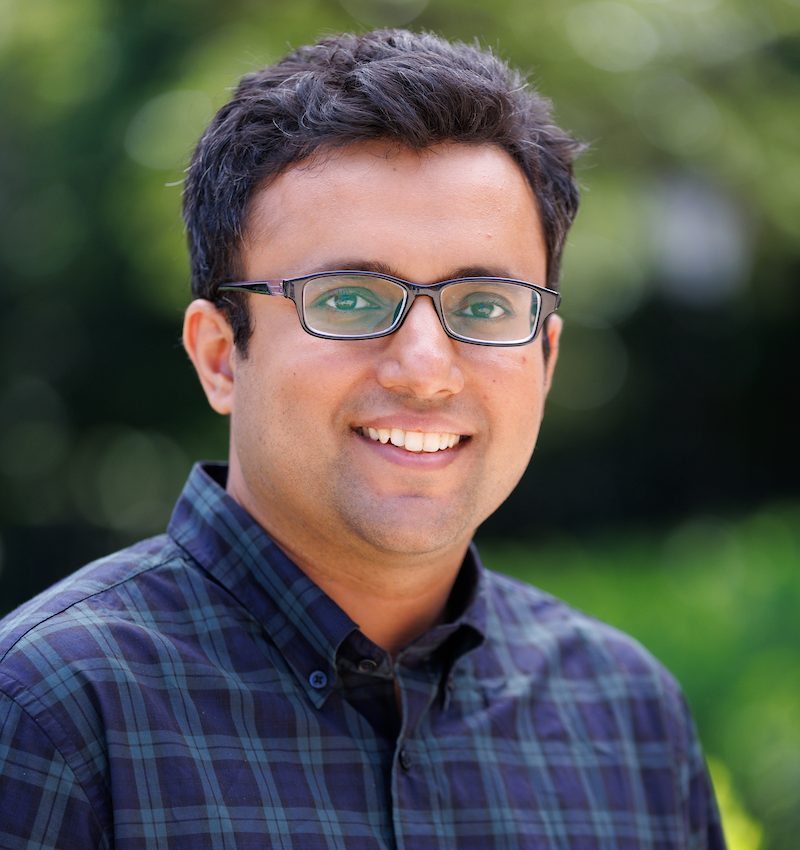
Sinan Al-Ani Research Group
The University of AlabamaSinan Al-Ani · Teaching Assistant Professor
Sinan Al-Ani's faculty-led research profile covers Cyber Security, Internet of Things (IoT), and Machine Learning.
 Independently curated · Unclaimed
Sudip Mittal Research Group
The University of AlabamaSudip Mittal · Associate Professor
Sudip Mittal's faculty-led research profile covers Artificial Intelligence, Cyber Security, Data Analytics, and Digital Twins.
 Independently curated · Unclaimed
Travis Atkison Research Group
The University of AlabamaTravis Atkison · Professor
The group works across cybersecurity, privacy, transportation systems, machine learning, software engineering, and computing education.
 Independently curated · Unclaimed
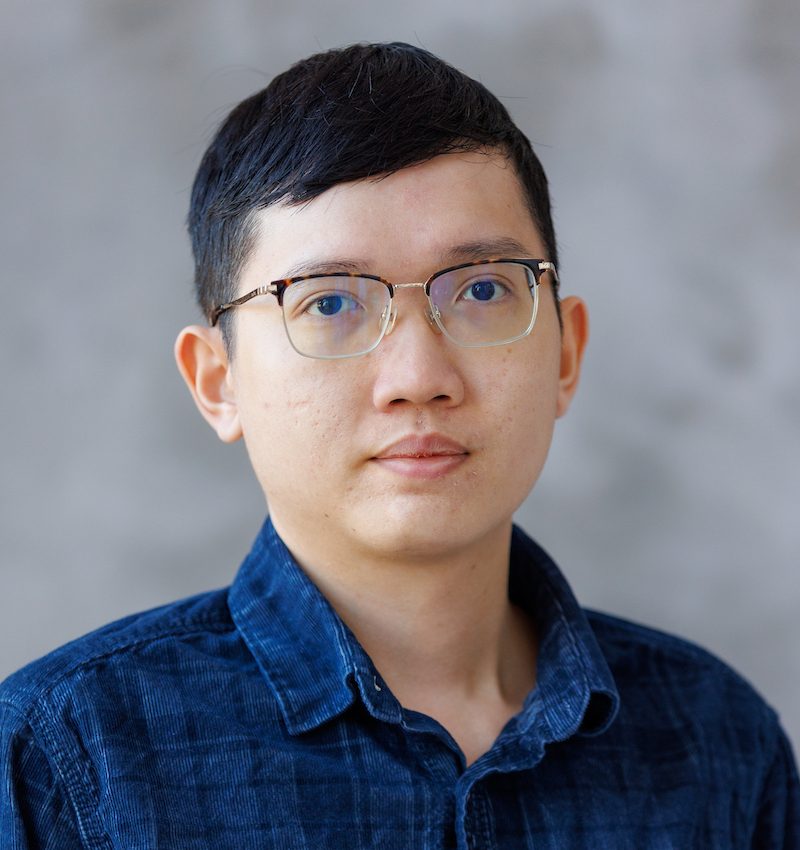
Tu Le Research Group
The University of AlabamaTu Le · Assistant Professor
Tu Le's faculty-led research profile covers Cyber Security, Data Privacy, Generative AI & LLMs, and Human-Computer Interaction.
 Independently curated · Unclaimed
Yang Xiao Research Group
The University of AlabamaYang Xiao · Professor
Yang Xiao's faculty-led research profile covers Cyber Security, Embedded Systems, Internet of Medical Things (IoMT), and Internet of Things (IoT).
Showing 1–16 of 16 labs