
Menu
University research directory
Research labs at
Michigan State University.
Compare 5 listed faculty-led profiles, explore their research interests, and follow the evidence in their selected work. These listings are a starting point for discovery and do not establish recruiting availability.
Explore the research before reaching out
Review each lab’s official website and recent publications. Compare the methods used, the questions being asked, and the practical requirements of any published opening. Unclaimed profiles are independently curated; the university has not approved or endorsed them.
How to compare research labs ↗Official university website ↗5 research-led lab profiles
Browse labs by their listed college affiliation Independently curated · Unclaimed
Arun Ross Research Group
Michigan State University
Arun Ross · Martin J. Vanderploeg Endowed Professor, Computer Science and Engineering
How can biometric systems be made resilient to presentation attacks while preserving user privacy and recognition accuracy? The group researches presentation attack detection methods and spoofing defenses, including explainable attention-guided iris PAD. Researchers develop semi-adversarial networks and convolutional autoencoders to impart privacy to face images while retaining utility for recognition. The work explores vulnerabilities in fingerprint and iris systems through empirical studies that expose spoofing and masterprint risks. The lab investigates multi-biometrics and fusion strategies to improve recognition reliability under adversarial or degraded inputs.
 Independently curated · Unclaimed
Ramani Narayan Research Group
Michigan State UniversityRamani Narayan · University Distinguished Professor Chemical Engineering and Materials Science
Can polymeric materials from renewable resources be engineered to be biodegradable and industrially manufacturable? Researchers develop biobased and biodegradable polymer systems and study their degradation behaviors under environmental conditions. The group uses reactive extrusion processing to translate laboratory polymer formulations to commercial-scale manufacturing of greener products. Scientists design interpenetrating polymer networks derived from silylated soybean oil combined with water-soluble polysiloxanes for tunable material properties. Work includes engineering natural-synthetic graft and block copolymers and recyclable biobased composites for sustainable material applications.
 Independently curated · Unclaimed
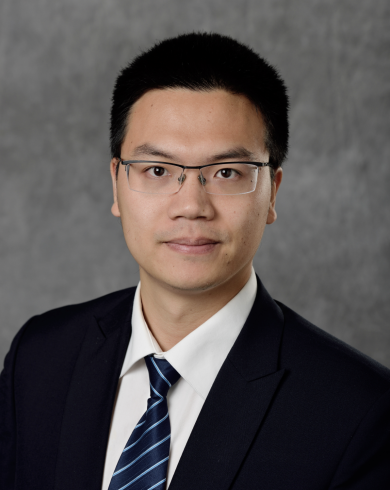
Wei Liao Research Group
Michigan State UniversityWei Liao · Professor
How can organic residues be biologically converted into usable bioenergy and chemical products at practical scales? The Liao Research Group cultivates freshwater algae with animal waste to remove nutrients and accumulate biomass for downstream uses. The group evaluates co-digestion strategies at commercial dairy anaerobic digesters to improve methane recovery and waste stabilization. Researchers assess solid digestate from anaerobic digestion as a potential feedstock for ethanol production using biochemical conversion methods. The center integrates solar, biological, and electrochemical technologies to develop novel waste utilization systems that combine capture, conversion, and product synthesis.
 Independently curated · Unclaimed
Zhaojian Li Research Group
Michigan State UniversityZhaojian Li · Red Cedar Distinguished Professor, Mechanical Engineering
Can robots pick and sort apples reliably in unstructured orchard environments using integrated mobile manipulation systems? The group is the PI and lead developer for an Automated and Integrated Mobile System (AIMS) project to develop an efficient robotic apple harvester funded through a USDA Specialty Crop Research Initiative. The researchers design cloud-enabled vehicle control and sensing methods to address connectivity, control and privacy in connected and automated vehicles as described in the CAREER project. The team builds soft multi-arm robotic manipulators (SMART) and applies learning-based controllers to enable safer, compliant human-robot collaboration. The group applies learning and control of robot systems combined with vehicle dynamics and optimal control to improve autonomous mobility and robotic manipulation.
 Independently curated · Unclaimed
Zhichao Cao Research Group
Michigan State UniversityZhichao Cao · Assistant Professor, Computer Science and Engineering
How can long-range, low-power IoT networks be designed for reliable sensing in agricultural soils and wild fields? The group develops LoRa-enabled, space-air-ground integrated networks and FarmEye for large-scale agricultural data collection to support long-term sensing. Researchers build ultra-sensitive signal detection and Deep-Range low-power methods for extending IoT communication range while preserving energy efficiency. The team integrates soil-aware transmission control (Kairos) and passive sensing platforms to enable robust cross-soil LoRa performance and soil nutrient sensing. The lab applies edge intelligence and geo-distributed federated learning (GeoFL) to enable efficient on-device model training across agricultural deployments.
Showing 1–5 of 5 labs