
Menu
Explore a research direction
Computer vision
research labs.
Discover research in computer vision, image processing, and visual computing through faculty-led lab profiles. Review publications and official sources to understand each group's specific focus.
What to compare
Compare the kinds of visual data and problems a group studies. Look for differences between image analysis, video, three-dimensional scenes, and domain-specific applications, and ask how results are evaluated.
Profiles appear here because their listed research keywords match this topic. Inclusion does not establish an open position. Check the official sources and any published application instructions before reaching out.
Prepare a research introduction ↗13 research-led lab profiles
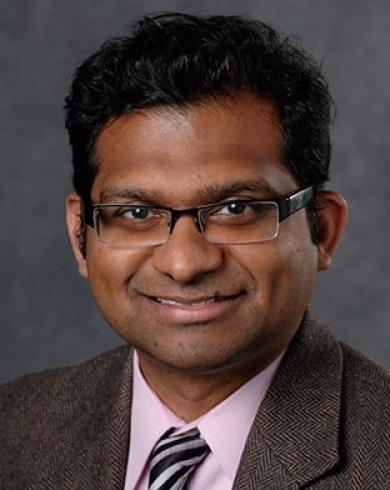
Browse labs by their listed college affiliationArie Kaufman Research Group
Stony Brook University
Arie Kaufman · Distinguished Professor
Complex data become easier to investigate when researchers can see and interact with their structure. Kaufman works in computer graphics and visualization, including methods for displaying volumetric and scientific data. His interests extend to interfaces, virtual reality, multimedia, and medical imaging. Current university research profiles highlight work combining virtual reality and machine learning with three dimensional virtual pancreatography for pancreatic cancer research. As director of the Center of Visual Computing, he connects visual computing methods with applications that help researchers examine and interpret complex information.
 Independently curated · Unclaimed
Arun Ross Research Group
Michigan State University
Arun Ross · Martin J. Vanderploeg Endowed Professor, Computer Science and Engineering
How can biometric systems be made resilient to presentation attacks while preserving user privacy and recognition accuracy? The group researches presentation attack detection methods and spoofing defenses, including explainable attention-guided iris PAD. Researchers develop semi-adversarial networks and convolutional autoencoders to impart privacy to face images while retaining utility for recognition. The work explores vulnerabilities in fingerprint and iris systems through empirical studies that expose spoofing and masterprint risks. The lab investigates multi-biometrics and fusion strategies to improve recognition reliability under adversarial or degraded inputs.
Baowei Fei Research Group
University of Texas at Dallas
Baowei Fei · Professor
Can imaging reveal information that a surgeon cannot see with the naked eye? Fei develops medical imaging and computational methods for identifying tissue and guiding interventions. His research includes hyperspectral imaging, which measures light across many wavelengths, paired with artificial intelligence to investigate cancer detection. Other work combines imaging modalities such as PET and three-dimensional ultrasound for more precise biopsy guidance. The group connects engineering algorithms and imaging hardware with clinical questions in areas including head and neck and prostate cancer, making image-guided medicine a central research theme.
 Independently curated · Unclaimed
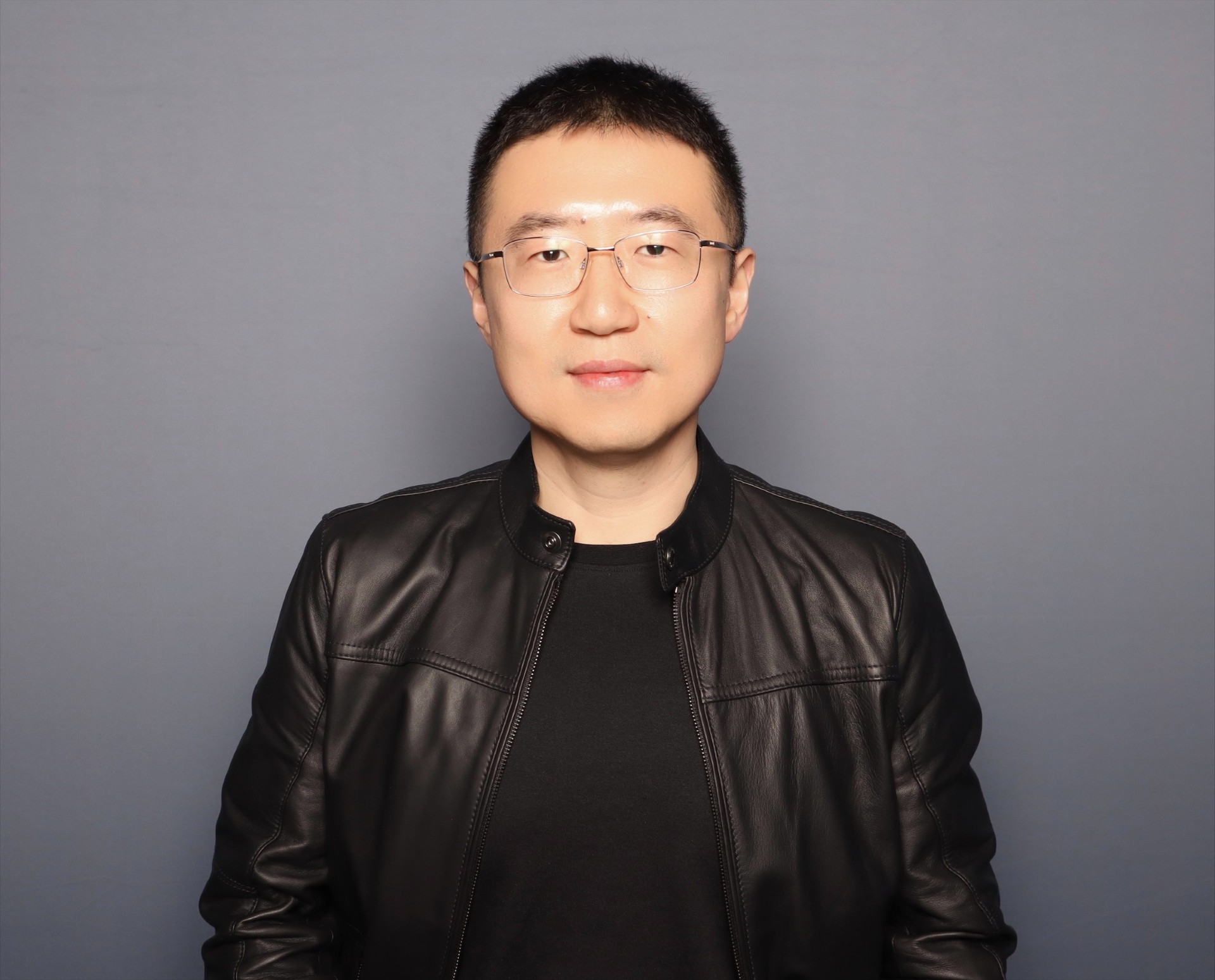
Chenliang Xu Research Group
University of Rochester
Chenliang Xu · Associate Professor of Computer Science
How can video understanding methods link vision and language to describe actions and narratives in moving images? The group develops methods for video segmentation and fine-grained actor-action segmentation to separate actors and actions across frames using computer vision algorithms. Researchers build activity recognition and video storytelling models that combine visual features with natural language representations to generate coherent descriptions of video content. The group explores cross-modal audio-visual generation to synthesize complementary modalities for richer video understanding using deep multimodal learning. Recent projects include work on multimodal vision-and-x modeling and trustworthy AI for video tasks.
Dimitris Metaxas Research Group
Rutgers University–New Brunswick
Dimitris Metaxas · Board of Governors Professor
Metaxas investigates how artificial intelligence can combine learned patterns with knowledge about the world. His research connects machine learning with physical principles, dynamical systems, and other domain knowledge. Projects span computer vision, biomedical image analysis, and computer graphics, alongside image and text generation using generative models. Additional interests include language and vision language models, explainable AI, and learning with limited supervision. These directions connect the mathematical design of intelligent systems with applications where understanding images and interpreting complex data are central research challenges.
 Independently curated · Unclaimed
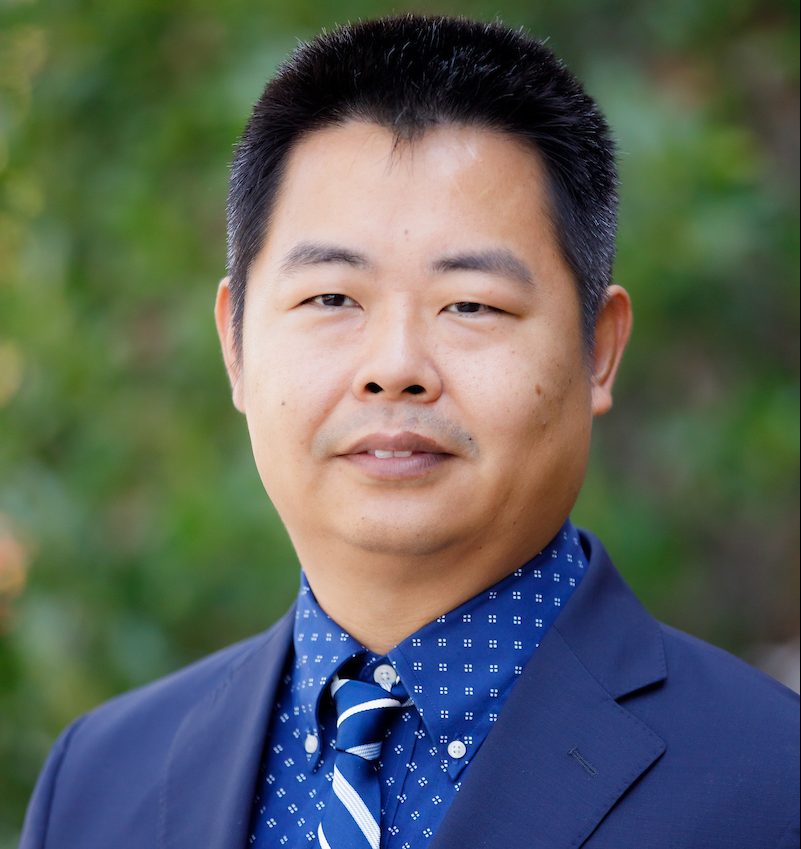
Jiaqi (Jackey) Gong Research Group
The University of Alabama
Jiaqi (Jackey) Gong · Associate Professor, Adjunct Associate Professor of ME, Director for the Alabama Center for the Advancement of Artificial Intelligence
Jiaqi (Jackey) Gong's faculty-led research profile covers Artificial Intelligence, Computer Vision, Data Analytics, and Deep Learning.
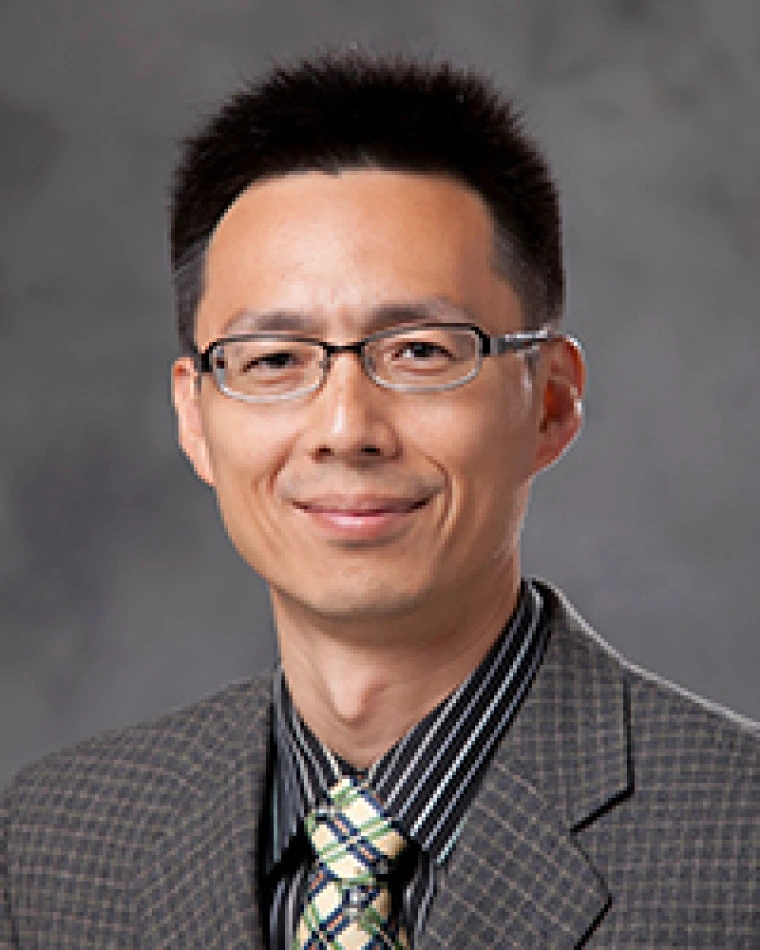
Kavita Bala Research Group
Cornell University
Kavita Bala · Provost Professor of Computer Science
How can visual systems identify materials and lighting from photographs to enable realistic editing and recognition? The group develops datasets and algorithms for material recognition and visual search, including the Materials in Context Database and visual similarity models. Researchers build physically-based and differentiable rendering methods for recovering shape and material properties to support editing and relighting. The group applies remote-sensing and scale-aware recognition techniques to satellite imagery and cloud removal benchmarks for Earth-observation tasks. Methods combine convolutional neural networks, differentiable Monte Carlo rendering, and dataset/benchmark construction to evaluate recognition and inverse-rendering performance.
 Independently curated · Unclaimed
Nan-kuei Chen Research Group
University of ArizonaNan-kuei Chen · Professor of Biomedical Engineering
How can MRI acquisition and reconstruction be improved to deliver high-resolution, artifact-free scans for challenging patients within clinical time limits? The research develops novel acquisition and reconstruction approaches, including multiplexed sensitivity encoded (MUSE) MRI, to map human brain connectivity at high spatial resolution. Projects focus on artifact characterization and correction for EPI distortions, susceptibility-induced signal loss, Nyquist and motion-induced phase errors using pulse sequence design and signal processing. Researchers combine fast image acquisition, denoising, and algorithm development to enable multi-contrast and quantitative MRI in clinically-feasible timeframes. The lab implements and validates methods through applied studies, NIH-funded projects, and collaborations on diffusion and functional MRI.
 Independently curated · Unclaimed
Noorbakhsh Amiri Golilarz Research Group
The University of AlabamaNoorbakhsh Amiri Golilarz · Assistant Professor
Noorbakhsh Amiri Golilarz's faculty-led research profile covers Artificial Intelligence, Computer Vision, Data Analytics, and Deep Learning.
 Independently curated · Unclaimed
Pedro F. Felzenszwalb Research Group
Brown University
Pedro F. Felzenszwalb · Professor of Engineering and Computer Science
How can algorithms detect and localize people and objects robustly in natural images with deformations and occlusions? The lab developed and evaluated a deformable part model for person detection in benchmark challenges to improve object localization under variation. Researchers design and analyze algorithms connecting computer vision with optimization and statistics to enable reliable image restoration and segmentation. The group implements method combinations from machine learning, signal processing and natural language processing to address mid- and high-level vision tasks. The team releases papers, talk slides and code to document methods and reproducible evaluations.
 Independently curated · Unclaimed
Regina Barzilay Research Group
Massachusetts Institute of Technology
Regina Barzilay · School of Engineering Distinguished Professor for AI and Health
Can machine learning detect cancer risk from routine clinical imaging before symptoms appear to enable earlier intervention? The group develops deep-learning models for personalized mammography-based risk prediction and early cancer detection. Researchers build ML methods for de-novo molecular design and retrosynthesis to change traditional drug-discovery pipelines toward data-driven generation. The team develops generative models such as BoltzGen to create protein binders for biological targets and tools like VaxSeer to predict virus evolution for vaccine strain selection. They also focus on interpretability and robustness for clinical AI to support safer, fairer deployment in healthcare settings.
Ryan Carney Research Group
University of South FloridaRyan Carney · Associate Professor
Dinosaurs and disease surveillance meet in Ryan Carney’s unusually broad research program. His paleontology work uses three-dimensional imaging, modeling, and animation to study Archaeopteryx, functional anatomy, and the evolution of bird flight. A second direction applies artificial intelligence, citizen-science observations, remote sensing, and geographic modeling to mosquitoes and the diseases they transmit. Virtual and augmented reality help translate anatomical research into visual teaching tools. Across these projects, digital methods reveal biological patterns and make complex information useful for scientific analysis, education, and public-health monitoring.
Sudeep Sarkar Research Group
University of South FloridaSudeep Sarkar · Distinguished University Professor
Sudeep Sarkar studies how computers can understand the content and activity in images and video. His research covers visual grouping, gait biometrics, action recognition, medical images, and economic signals visible in satellite imagery. A major direction combines symbolic representations with deep learning to interpret events and support activities of daily living, including assistive robotics. The work links foundational computer vision with applications across medicine, engineering, and independent living. It is relevant to researchers interested in AI systems that reason about visual scenes and changing human activities.
Showing 1–13 of 13 labs