
Menu
University research directory
Research labs at
University of Washington.
Compare 5 listed faculty-led profiles, explore their research interests, and follow the evidence in their selected work. These listings are a starting point for discovery and do not establish recruiting availability.
Explore the research before reaching out
Review each lab’s official website and recent publications. Compare the methods used, the questions being asked, and the practical requirements of any published opening. Unclaimed profiles are independently curated; the university has not approved or endorsed them.
How to compare research labs ↗Official university website ↗5 research-led lab profiles
Browse labs by their listed college affiliationAdam Leaché Research Group
University of WashingtonAdam Leaché · Professor
How do genomic datasets and analytical methods reveal species boundaries and evolutionary relationships in reptiles and amphibians? The Leaché Lab uses genome-scale SNP and sequence-capture data to infer phylogenies and test competing tree-building approaches across herpetological groups. Researchers develop and validate species delimitation and phylogeographic methods through simulations, analytical tool development, and bioinformatics pipelines to assess lineage divergence. The group integrates field-collected samples with Burke Museum specimens and genetic resources to link contemporary populations with historical material for temporal biodiversity studies. The lab applies genomic workflows and computational frameworks to clarify taxonomic trends and evaluate gene flow in species-tree estimation.
 Independently curated · Unclaimed
David C. Catling Research Group
University of WashingtonDavid C. Catling · Professor
How do planetary surfaces and atmospheres co-evolve to create and sustain habitable conditions on worlds like Earth and Mars? The group analyzes spacecraft data from Mars missions to study planetary surfaces and atmospheric processes relevant to habitability. Researchers model the coupled evolution of planetary surfaces, atmospheres, climate, and biogeochemical cycles to explain Earth's atmospheric oxygenation and life's co-evolution. The group participates in the Virtual Planetary Lab to evaluate planetary habitability using comparative planet and exoplanet frameworks and modelling methods. They investigate origins-of-life questions through projects in the Simons Collaboration on the Origin of Life combining theory and planetary context.
David Shean Research Group
University of WashingtonDavid Shean · Associate Professor
How can satellite, airborne, UAV, and terrestrial remote sensing be combined to quantify glacier and snow dynamics across mountain and polar regions? The group develops SlideRule Earth, a cloud-based on-demand framework to process ICESat-2 laser altimetry data into high-level elevation point-cloud products for rapid algorithm development. Researchers design and evaluate stereo+lidar fusion algorithms and on-board pointing/information systems to improve precision of stereo and lidar datasets for NASA STV mission requirements. The lab applies multi-sensor deep learning fusion, radiative transfer simulations (DART), and joint optimization routines to increase vertical accuracy and uncertainty characterization in stereo+lidar products. The group evaluates commercial smallsat, Planet, SkySat, BlackSky, and Capella datasets to capture high-resolution cryosphere dynamics and map snow and glacier changes.
Paul Yager Research Group
University of WashingtonPaul Yager · Professor
Can low-cost, instrument-free paper-based microfluidic devices provide sensitive, sample-to-result diagnostics at the point of care? The lab develops two-dimensional paper networks (2DPNs) to create high-sensitivity paper protein-binding assays for pathogens and instrument-free nucleic acid amplification tests. Researchers combine materials science, immunoassay chemistry, microfluidics, and cell-phone imaging to detect viral and bacterial targets without laboratory infrastructure. The group designs disposable or low-cost device components and integrated sample-to-result workflows suitable for low-resource settings. They validate methods via analytical studies and publications on lateral flow, fluorescence imaging, and sample lysis compatible with point-of-care deployment.
 Independently curated · Unclaimed
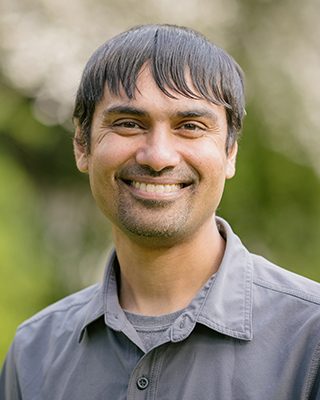
Shwetak N. Patel Research Group
University of WashingtonShwetak N. Patel · Professor
How can ubiquitous sensors and embedded systems enable low-cost health and sustainability monitoring in homes and personal devices? The Ubicomp Lab develops sensing systems and low-power embedded platforms for energy, water, and mobile health monitoring, and novel interaction technologies. Researchers design algorithms in human-computer interaction and machine learning to infer occupancy, energy usage, and physiological signals from commodity sensors. The group prototypes sensor hardware and field-deploys systems for residential energy monitoring, mobile health sensing, and environmental sustainability studies. They translate research through startups and technology transfer targeting real-world sensing and health applications.
Showing 1–5 of 5 labs