
Menu
University research directory
Research labs at
Cornell University.
Compare 5 listed faculty-led profiles, explore their research interests, and follow the evidence in their selected work. These listings are a starting point for discovery and do not establish recruiting availability.
Explore the research before reaching out
Review each lab’s official website and recent publications. Compare the methods used, the questions being asked, and the practical requirements of any published opening. Unclaimed profiles are independently curated; the university has not approved or endorsed them.
How to compare research labs ↗Official university website ↗5 research-led lab profiles
Browse labs by their listed college affiliation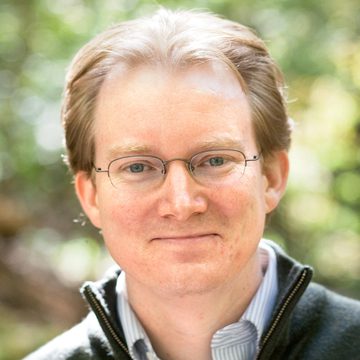 Independently curated · Unclaimed
Christopher Batten Research Group
Cornell University
Christopher Batten · Professor
How can programmable accelerators and chip-level interconnection networks be designed to improve performance and energy efficiency of future computer systems? The research group builds prototype systems and tape-out class projects that implement digital ASIC accelerators and mixed digital/analog chips to validate design assumptions and test hardware-software integration. Researchers develop parallel programming frameworks and software-managed scratchpad memory techniques to support dynamic task parallelism and efficient use of manycore architectures. The group explores productive VLSI chip design methodologies and generator-checking techniques for dynamic hardware description languages to improve reliability and correctness of hardware generators. The lab evaluates programmable accelerator architectures and eFPGA integration for cache-coherent SoCs to study scalable accelerator-software interfaces.
Kavita Bala Research Group
Cornell UniversityKavita Bala · Provost Professor of Computer Science
How can visual systems identify materials and lighting from photographs to enable realistic editing and recognition? The group develops datasets and algorithms for material recognition and visual search, including the Materials in Context Database and visual similarity models. Researchers build physically-based and differentiable rendering methods for recovering shape and material properties to support editing and relighting. The group applies remote-sensing and scale-aware recognition techniques to satellite imagery and cloud removal benchmarks for Earth-observation tasks. Methods combine convolutional neural networks, differentiable Monte Carlo rendering, and dataset/benchmark construction to evaluate recognition and inverse-rendering performance.
Peter Hitchcock Research Group
Cornell UniversityPeter Hitchcock · Department Chair and Assistant Professor, Earth and Atmospheric Sciences
How does stratospheric variability influence surface weather and the global circulation on subseasonal to seasonal timescales? The Hitchcock Research Group uses dynamical models across a range of complexity and multiple observational datasets to study stratosphere–troposphere coupling. Researchers develop and analyze low-order analytical models and comprehensive climate/forecast models to investigate stratospheric vacillations, polar vortex disturbances, and easterly jet emergence. Projects include protocols for stratospheric nudging and studies of downward influence from sudden stratospheric warmings to quantify predictable surface impacts.
 Independently curated · Unclaimed
Silvia Ferrari Research Group
Cornell UniversitySilvia Ferrari · John Brancaccio Professor of Mechanical and Aerospace Engineering
How can information-driven planning improve decision-making for sensing and control in distributed autonomous systems? The Laboratory for Intelligent Systems and Control (LISC) develops algorithms for information-driven path planning and control, active perception, and sensorimotor learning. Researchers formulate and apply adaptive dynamic programming, reinforcement learning, and nonparametric Bayesian models for target tracking and distributed sensor-network control. Projects include scalable learning algorithms for spiking neuronal networks and value-function approximation methods for multiscale dynamical systems.
 Independently curated · Unclaimed
Thorsten Joachims Research Group
Cornell UniversityThorsten Joachims · Jacob Gould Schurman Professor of Computer Science and Information Science
Clicks, choices, and text edits contain learning signals—but they also carry bias. Thorsten Joachims and his students develop machine-learning methods for using that feedback in search, recommendation, education, and language models. Their work connects counterfactual evaluation, policy learning, ranking, and personalization. POTEC tackles learning from logged decisions when the action space is large; coactive learning studies how a user’s edits can help personalize an LLM without requiring a perfect reference answer. This faculty-led research group offers a route into both the theory of interactive learning and its application to human-centered systems.
Showing 1–5 of 5 labs