
Menu
University research directory
Research labs at
Brown University.
Compare 5 listed faculty-led profiles, explore their research interests, and follow the evidence in their selected work. These listings are a starting point for discovery and do not establish recruiting availability.
Explore the research before reaching out
Review each lab’s official website and recent publications. Compare the methods used, the questions being asked, and the practical requirements of any published opening. Unclaimed profiles are independently curated; the university has not approved or endorsed them.
How to compare research labs ↗Official university website ↗5 research-led lab profiles
Browse labs by their listed college affiliation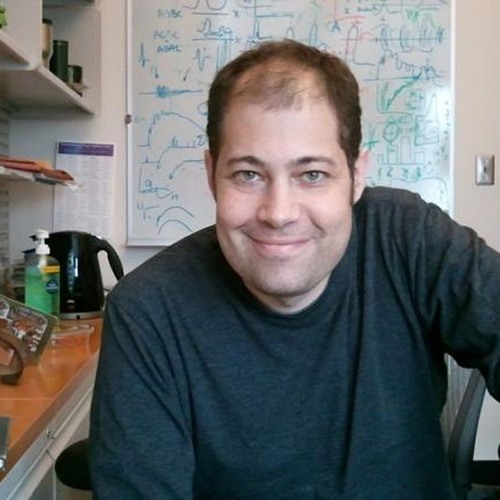 Independently curated · Unclaimed
Carlos Aizenman Research Group
Brown University
Carlos Aizenman · Professor of Neuroscience
How does sensory experience shape the development and homeostatic regulation of neural circuits during early life? The lab uses electrophysiology and molecular biology to probe mechanisms that regulate neuronal excitability, synaptic connectivity and dendritic morphology. Researchers perform in vivo and in vitro single-cell electrophysiology, calcium imaging and confocal imaging in the Xenopus tadpole visual system to link cellular mechanisms to circuit function. The group manipulates gene expression in individual neurons to test effects on electrophysiological and morphological properties. The team pairs behavioral testing with cellular assays to study how circuit changes affect visually-guided behaviors.
 Independently curated · Unclaimed
George Konidaris Research Group
Brown UniversityGeorge Konidaris · Professor of Computer Science
Can robots autonomously learn abstract skills that enable fast, goal-directed planning across diverse tasks and environments? The Intelligent Robot Lab constructs high-level symbolic representations and abstraction hierarchies to enable planning, for example work on "From Skills to Symbols" and related projects. The lab develops hierarchical reinforcement learning and probabilistic learning methods to learn task-level skills and then composes them for long-horizon planning using projects such as "Autonomous Robot Skill Acquisition." Researchers integrate optimal control, planning, and learned skills to produce robust behavior under uncertainty in manipulation and navigation. The lab builds applied systems including robot motion-planning hardware and software prototypes described as "Robot Motion Planning on a Chip.
 Independently curated · Unclaimed
Ingrid Daubar Research Group
Brown UniversityIngrid Daubar · Associate Professor (Research)
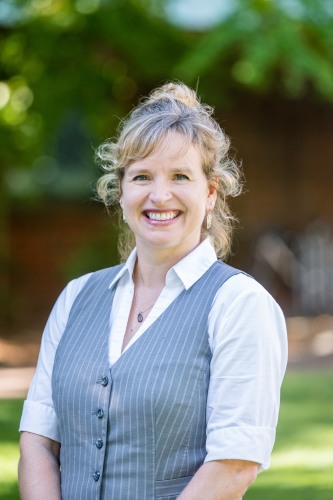
How can current impacts and other time-varying surface phenomena on Mars, the Moon, and icy moons be detected and characterized? The research group studies current cratering on Mars and the Moon and small-crater morphology to quantify recent impact rates and surface change. Researchers investigate dust-mobilty and dust devil track lifetimes on Mars using image analysis to infer deposition and surface alteration processes. The group participates in spacecraft science and operations, including roles on Europa Clipper, MRO, InSight, and Juno, to link orbital and in situ observations to surface processes. Methods include machine-learning-driven detection of geological features and numerical and laboratory modeling of impact and mass-wasting processes.
 Independently curated · Unclaimed
Linda M. Abriola Research Group
Brown UniversityLinda M. Abriola · Joan Wernig and E. Paul Sorensen Professor of Engineering
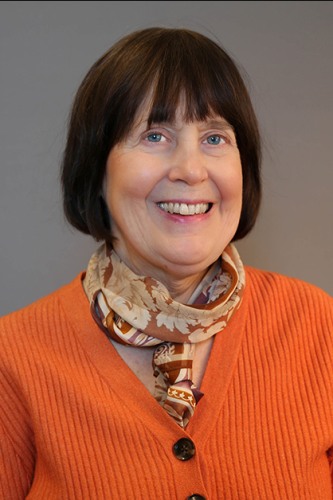
How do organic chemicals move and persist in subsurface groundwater and soils under remediation actions? The research program models multiphase flow and reactive transport to predict contaminant fate and to design remediation strategies. Researchers investigate nanoparticle transport and reactivity for engineered subsurface applications and test transport mechanisms experimentally and in models. The group studies groundwater hydrology and soil remediation to understand PFAS and other emerging contaminants in the subsurface environment. The lab engages in interdisciplinary projects documented on the Engineering and IBES faculty pages.
 Independently curated · Unclaimed
Pedro F. Felzenszwalb Research Group
Brown UniversityPedro F. Felzenszwalb · Professor of Engineering and Computer Science
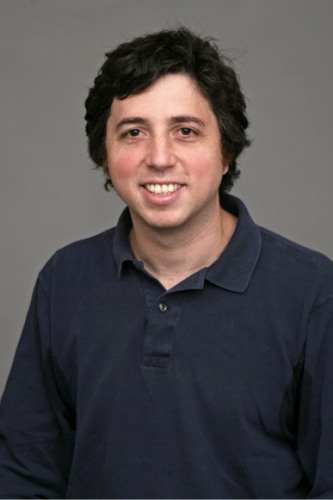
How can algorithms detect and localize people and objects robustly in natural images with deformations and occlusions? The lab developed and evaluated a deformable part model for person detection in benchmark challenges to improve object localization under variation. Researchers design and analyze algorithms connecting computer vision with optimization and statistics to enable reliable image restoration and segmentation. The group implements method combinations from machine learning, signal processing and natural language processing to address mid- and high-level vision tasks. The team releases papers, talk slides and code to document methods and reproducible evaluations.
Showing 1–5 of 5 labs