
Menu
University research directory
Research labs at
University of California, Santa Cruz.
Compare 5 listed faculty-led profiles, explore their research interests, and follow the evidence in their selected work. These listings are a starting point for discovery and do not establish recruiting availability.
Explore the research before reaching out
Review each lab’s official website and recent publications. Compare the methods used, the questions being asked, and the practical requirements of any published opening. Unclaimed profiles are independently curated; the university has not approved or endorsed them.
How to compare research labs ↗Official university website ↗5 research-led lab profiles
Browse labs by their listed college affiliation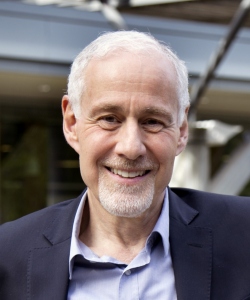 Independently curated · Unclaimed
Alexander L. Wolf Research Group
University of California, Santa Cruz
Alexander L. Wolf · Distinguished Professor of Computer Science and Engineering
How can distributed, networked services be architected to remain dependable under varying workloads and failures? The group develops and evaluates service-based systems, content-based networking, and cloud/data-center networking projects to study scalable and resilient distributed architectures. The researchers build and analyze information-centric networking and publish experimental systems such as the Siena publish/subscribe communication system for content-based messaging. The lab investigates configuration management, software architecture, and tools for survivability to understand mechanisms for fault tolerance, recovery, and secure deployment. The group uses distributed experimentation frameworks and automation (for example, the Weevil automation framework) to measure networked system behavior under realistic conditions.
 Independently curated · Unclaimed
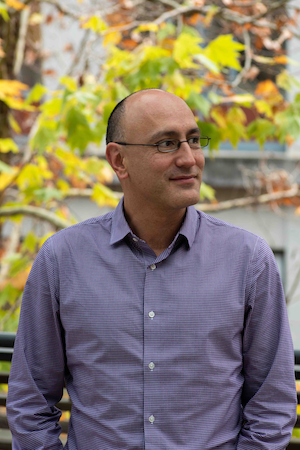
Alvaro A. Cardenas Research Group
University of California, Santa CruzAlvaro A. Cardenas · Professor of Computer Science and Engineering
How can autonomous and cyber-physical systems detect and recover from real-world adversarial manipulations to sensors and actuators? The research group designs and evaluates attack detection and real-time recovery architectures for autonomous vehicles, drones, and robotic systems using physics-aware and common-sense reasoning in control loops. The researchers perform measurement studies and resilient-control designs for industrial control systems and the power grid, analyzing real-world ICS/SCADA attacks and proposing monitoring and resilient architectures. The lab develops ML- and AI-based methods for automated cybersecurity tasks including anomaly detection, alert fusion, and incident response for critical infrastructures. The group prototypes and evaluates defenses in platforms ranging from consumer drones to large-scale power-grid measurement datasets.
David Haussler Research Group
University of California, Santa CruzDavid Haussler · Distinguished Professor
What genomic changes underlie human neural development differences and disease-associated variants? The Computational Genomics / Haussler Lab develops statistical and algorithmic methods to analyze genome, transcriptome, and comparative genomics data to study gene regulation and molecular evolution. Researchers apply hidden Markov models, stochastic grammars, and discriminative kernel methods to detect genomic patterns and cancer biomarkers across genomes. The lab uses CRISPR, human cerebral cortex organoids, and single-cell RNA-seq to functionally characterize neurodevelopmental genes altered in human evolution. They build and maintain web tools (UCSC Genome Browser, Xena) for large-scale genomic data sharing and comparative analysis across species.
Jin Zhong Zhang Research Group
University of California, Santa CruzJin Zhong Zhang · Distinguished Professor and Chair
How can engineered nanomaterials enable faster charge dynamics and novel optical or catalytic functions for energy and sensing applications? The Zhang Research Group synthesizes semiconductor and metal nanocrystals, quantum dots, and magic-sized clusters using inorganic colloidal chemistry methods to probe ultrafast carrier and spin dynamics. Researchers employ femtosecond laser spectroscopy, SERS, XAFS/XPS and microscopy to characterize exciton, spin, and charge relaxation processes in doped and undoped nanomaterials. The group develops perovskite and metal-halide nanostructures and studies circularly polarized luminescence and chiral coordination to advance LEDs, photocatalysis, and sensing. They investigate photoelectrochemical water splitting and hydrogen generation using novel nanowires and oxide nanostructures.
Liting Hu Research Group
University of California, Santa CruzLiting Hu · Associate Professor
How can edge and cloud systems provide low-latency, high-throughput stream and AI services across distributed infrastructures? The ELVES Research Lab implements adaptive edge stream processing projects such as DART and FP4S to scale analytics engines across Spark, Flink, and Storm. Researchers design federated learning and AI-serving platforms (Totoro, Totoro+) using distributed runtime mechanisms to train and serve models at the edge. The group develops lightweight virtualization and serverless scheduling systems (Capybara, Ekko) using container and decentralized scheduling techniques for elastic compute. They build intelligent resource orchestration control planes (RBay, Monalytics) applying monitoring-driven control for edge and datacenter clusters to optimize utilization.
Showing 1–5 of 5 labs