
Menu
University research directory
Research labs at
University of Illinois at Urbana-Champaign.
Compare 5 listed faculty-led profiles, explore their research interests, and follow the evidence in their selected work. These listings are a starting point for discovery and do not establish recruiting availability.
Explore the research before reaching out
Review each lab’s official website and recent publications. Compare the methods used, the questions being asked, and the practical requirements of any published opening. Unclaimed profiles are independently curated; the university has not approved or endorsed them.
How to compare research labs ↗Official university website ↗5 research-led lab profiles
Browse labs by their listed college affiliation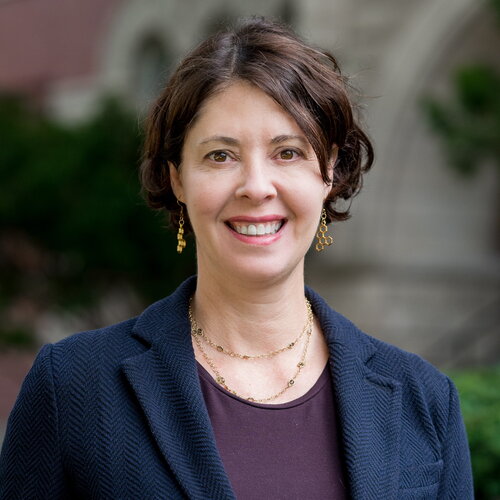 Independently curated · Unclaimed
Christy F. Landes Research Group
University of Illinois at Urbana-Champaign
Christy F. Landes · Professor of Chemistry
How do single molecules and particles reveal heterogeneous structure–function relationships in biological and synthetic systems? The research group develops experimental data acquisition and analysis methods to optimize information retrieval in single-molecule and single-particle spectroscopies. The group characterizes biological examples of heterogeneous structure–function relationships, including protein dynamics at interfaces, using single-molecule spectroscopy and imaging. The researchers identify, understand, and optimize heterogeneous structure–function relationships in synthetic systems using spectro-electrochemistry and nanoparticle plasmonics. The group combines experimental and theoretical methods to increase information content and interpret low signal-to-noise single-molecule data.
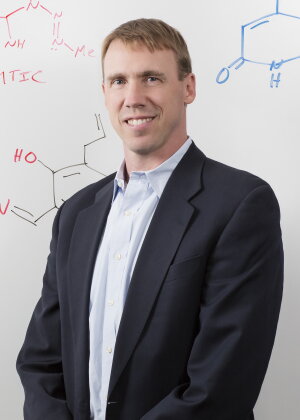
Jennifer Bernhard Research Group
University of Illinois at Urbana-ChampaignJennifer Bernhard · Donald Biggar Willett Professor in Electrical and Computer Engineering
How can reconfigurable antenna structures and electromagnetic design improve wireless communication and sensing? The research group develops reconfigurable active and passive antennas using MEMS, microwave switches, ferroelectric materials, and mechanical actuation to tune frequency, bandwidth, and radiation patterns. Researchers investigate electromagnetics for wireless communication, including packaging effects on internal antenna performance and synthesis approaches for embedded and IoT antennas. Methods combine theoretical electromagnetic analysis, experimental fabrication, measurements in anechoic chambers, and design-oriented modeling to optimize antenna systems for data-rate, exposure, and battery performance.
 Independently curated · Unclaimed
Paul J. Hergenrother Research Group
University of Illinois at Urbana-ChampaignPaul J. Hergenrother · Professor of Chemistry
Which small organic compounds selectively kill cancer cells or drug-resistant bacteria and by what mechanisms? Hergenrother's group designs, synthesizes, and evaluates organic molecules with novel biological properties, including enzyme modulators and anticancer and antibacterial compounds. Projects include Complexity-to-Diversity (CtD) synthesis of diverse compounds from natural products and high-throughput screening to identify biologically active molecules. Researchers apply structure-based design, medicinal chemistry, and biological assays, including tests on patient samples, to identify personalized anticancer targets such as procaspase-3 activation and NQO1-selective agents. The group develops predictive rules and synthesis strategies to produce compounds active against Gram-negative pathogens.
 Independently curated · Unclaimed
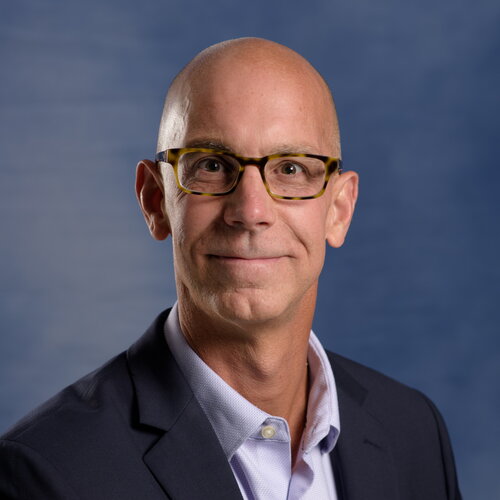
Paul V. Braun Research Group
University of Illinois at Urbana-ChampaignPaul V. Braun · Professor of Chemistry
What materials architectures enable improved electrochemical energy storage at the nanoscale? The Braun group synthesizes and studies materials with unique optical, electrochemical, thermal, mechanical, and transport properties guided by 3D nano- and mesoscale architectures. The group focuses recent projects on materials for electrochemical energy storage, advanced optics, chemical sensing, heat and matter transport control, and self-healing materials. Researchers use synthesis, self-assembly, and fabrication of controlled nano- and mesoscale architectures to produce emergent properties such as tailored transport and optical behavior. The group measures electrochemical, optical, thermal, mechanical, and transport responses to link architecture and materials processing to function.
 Independently curated · Unclaimed
Robert Trapp Research Group
University of Illinois at Urbana-ChampaignRobert Trapp · Professor of Atmospheric Sciences
How will severe convective storms and their hazards respond to climate variability and change? Trapp conducts research on severe convective storms, including their dynamics and attendant hazards, and their connection with climate change and variability. Current projects include seasonal prediction of tornado activity and convection-permitting dynamical downscaling to project hazardous convective weather under future climates. Researchers combine dynamical modeling, convection-permitting downscaling, and environment-informed ensembles to examine storm-scale responses to changing kinematic and thermodynamic environments. Studies also analyze radar and in-situ observations of mesoscale convective systems to link observed storm dynamics with modeled environmental changes.
Showing 1–5 of 5 labs