
Menu
University research directory
Research labs at
University of California, Irvine.
Compare 5 listed faculty-led profiles, explore their research interests, and follow the evidence in their selected work. These listings are a starting point for discovery and do not establish recruiting availability.
Explore the research before reaching out
Review each lab’s official website and recent publications. Compare the methods used, the questions being asked, and the practical requirements of any published opening. Unclaimed profiles are independently curated; the university has not approved or endorsed them.
How to compare research labs ↗Official university website ↗5 research-led lab profiles
Browse labs by their listed college affiliationAdriana D. Briscoe Research Group
University of California, IrvineAdriana D. Briscoe · Distinguished Professor, Ecology & Evolutionary Biology
Can genetic changes in opsins and photoreceptor expression explain color vision evolution and behavioral responses in butterflies? The lab studies gene duplication and functional diversification of visual pigment genes to link molecular sequence changes to physiology and behavior. Researchers map spatial expression of photoreceptors and colored filters in butterfly eyes and test consequences for predator avoidance and mate detection using behavioral and physiological assays. The group documents co‑evolution of UV receptors and UV‑yellow wing pigments in Heliconius via comparative genomics and spectral sensitivity measurements. They also investigate digestive enzyme expression in the proboscis to characterize feeding physiology.
Jin-Yi Yu Research Group
University of California, IrvineJin-Yi Yu · Professor
How do different El Nino types alter regional climate extremes and ocean-atmosphere teleconnections? The Climate Dynamics and Ocean-Atmosphere Interactions Group studies the two types of El Nino (central‑Pacific and eastern‑Pacific) and their distinct patterns and teleconnections. The group develops and uses a high-resolution coupled atmosphere-ocean general circulation model to simulate ENSO dynamics and variability. Researchers create SST animations and diagnostics to contrast CP and EP El Nino events and investigate mechanisms that control ENSO onset and decay. The team examines ENSO–monsoon interactions and interbasin influences on ENSO evolution.
Michael T. Goodrich Research Group
University of California, IrvineMichael T. Goodrich · Distinguished Professor
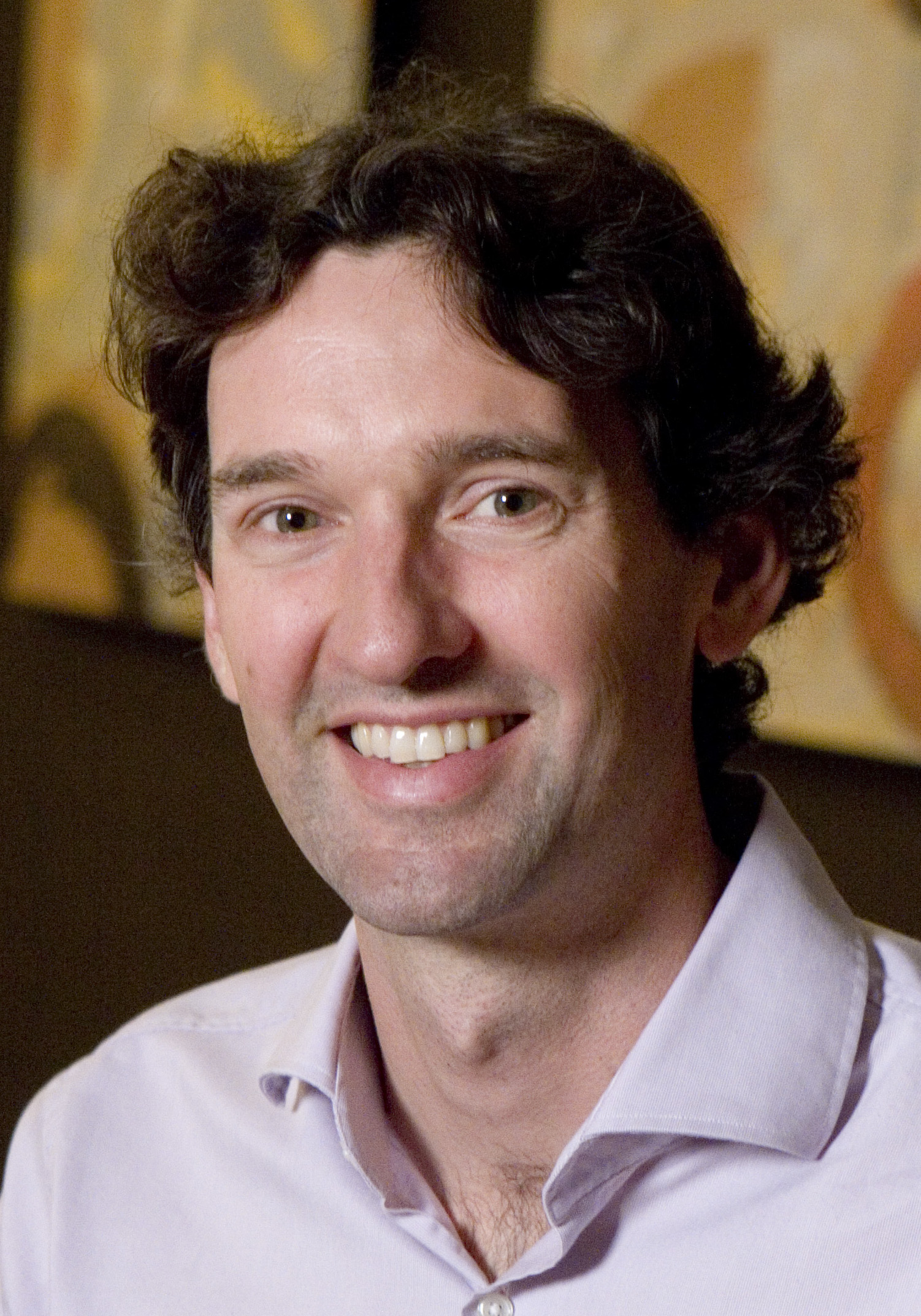
What efficient algorithms and data structures enable secure, privacy-preserving computation on large distributed systems? His research develops algorithm designs and data structures for diverse computational models including RAM, parallel, distributed, and external-memory. The group works on privacy-preserving data access and efficient solutions for problems like nearest-neighbor searching, convex hulls, and sorting using theoretical and practical algorithmic techniques. Researchers build secure distributed data structures and protocols to support information assurance and cloud security. The group applies these algorithmic methods to networking, machine learning, and geometric computing problems.
 Independently curated · Unclaimed
Steven D. Allison Research Group
University of California, IrvineSteven D. Allison · Professor
How do soil microbes respond to drought and affect ecosystem carbon cycling? The Allison Lab measures microbial physiological characteristics and integrates trait-based theory to explain microbial ecological roles. The group combines experiments and models across scales from genomes to the planet to analyze microbial diversity, functioning, and evolution. Researchers build new mathematical models and tools to test and compare soil carbon model performance and predict the fate of global soils. The lab conducts warming experiments (for example in Alaska) to observe microbial and ecosystem responses to rapid climate change.
Travis E. Huxman Research Group
University of California, IrvineTravis E. Huxman · Professor, Ecology & Evolutionary Biology
How do plant traits and water-carbon coupling control ecosystem responses to drought and precipitation pulses? The lab documents ecohydrological consequences of drought and tree die‑off by measuring carbon and water fluxes across arid landscapes to link plant physiology to ecosystem-scale gas exchange. Researchers compare leaf‑ to ecosystem‑level CO2 fluxes and soil respiration sensitivity across gradients of shrub encroachment and soil texture using field flux measurements and synthesis approaches. The group investigates precipitation pulse effects on plant and microbial responses using chamber and isotopic partitioning methods to separate transpiration and evaporation. They use cross‑biome syntheses and modeling to scale cellular and plant processes to landscape carbon‑water coupling.
Showing 1–5 of 5 labs