
Menu
University research directory
Research labs at
Carnegie Mellon University.
Compare 5 listed faculty-led profiles, explore their research interests, and follow the evidence in their selected work. These listings are a starting point for discovery and do not establish recruiting availability.
Explore the research before reaching out
Review each lab’s official website and recent publications. Compare the methods used, the questions being asked, and the practical requirements of any published opening. Unclaimed profiles are independently curated; the university has not approved or endorsed them.
How to compare research labs ↗Official university website ↗5 research-led lab profiles
Browse labs by their listed college affiliation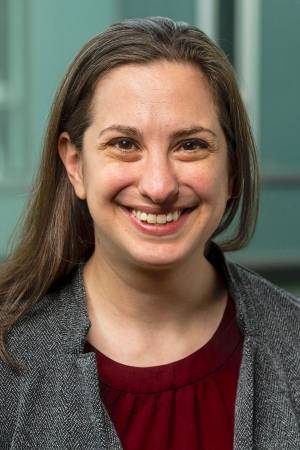 Independently curated · Unclaimed
Human And Robot Partners (HARP) Lab
Carnegie Mellon University
Henny Admoni · Associate Professor, Robotics Institute
A helpful robot needs to understand the person beside it. Henny Admoni’s HARP Lab studies how robots infer human intentions, learn from human teachers, and collaborate in everyday tasks. Its projects investigate robots that ask for help when uncertain, models of what a human teacher believes, and shared control that blends human input with robot actions. Assistive robotics provides a practical setting for these questions, including interfaces for people with motor impairments. Selected publications examine transparent robot policies and the feedback preferences of power-wheelchair users controlling a robotic arm.
 Independently curated · Unclaimed
Jonathan Cagan Research Group
Carnegie Mellon UniversityJonathan Cagan · George Tallman and Florence Barrett Ladd University Professor, Mechanical Engineering
How can computational models and AI improve human design problem solving in engineering practice? The Integrated Design Innovation Group researches engineering design automation by merging AI, machine learning, optimization, and cognitive-science models of designer processes. Projects study hybrid human/AI teams, computational methods for biomechanical system design and diagnosis, and user-centered integrated product development. Researchers develop algorithmic agents, multi-agent simulations, and optimization techniques to represent designer cognition and to assist or evaluate real-time design decision processes. The group combines behavioral experiments, computational modeling, and applied engineering datasets to test and refine computational design methods.
 Independently curated · Unclaimed
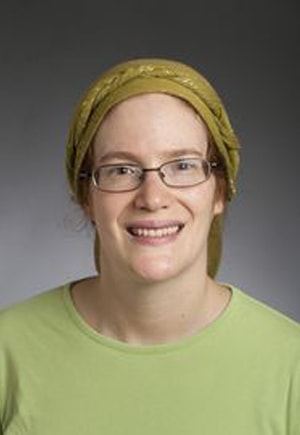
Rachel Mandelbaum Research Group
Carnegie Mellon UniversityRachel Mandelbaum · Professor and Department Head
How can improved analysis methods extract cosmological information from large imaging surveys with minimal bias? The group develops and applies weak gravitational lensing and related analysis techniques to measure cosmic shear and galaxy properties from survey data. Current projects focus on Hyper Suprime-Cam data and preparations for Rubin Observatory LSST and the Roman Space Telescope, developing methods for shear estimation, PSF systematics removal, and redshift distribution inference. Researchers design generative and machine-learning approaches for galaxy morphology and ensemble redshift estimation to enable precision cosmology with upcoming wide-field surveys.
 Independently curated · Unclaimed
Tom M. Mitchell Research Group
Carnegie Mellon UniversityTom M. Mitchell · Founders University Professor, Machine Learning Department
How can machine learning decode human brain activity to reveal the neural representations of language meaning during reading? The group uses functional Magnetic Resonance Imaging to capture three-dimensional images of human brain activity and trains machine learning algorithms to decode mental states from those images. The group develops temporal models and classifiers for extremely high-dimensional, noisy fMRI data to discover spatial-temporal activity patterns associated with cognitive tasks. The group builds intelligent workstation assistants that learn from users' email, calendar and text files, focusing on automatic information extraction and cumulative long-term learning. The group applies large language models and student-knowledge tracing to improve online education systems and to select effective teaching actions.
Ziv Bar-Joseph Research Group
Carnegie Mellon UniversityZiv Bar-Joseph · FORE Systems Professor of Computer Science; Ray & Stephanie Lane Computational Biology Department; Machine Learning Department
How do computational methods reveal interactions and dynamics in complex biological systems across time? The Systems Biology Group develops computational methods for understanding interactions, dynamics and conservation of complex biological systems using approaches that span experimental design to systems-level analysis. The group builds algorithms inspired by biological distributed systems to improve distributed computing and to infer information-processing principles in biology. Projects include development of methods for experimental design and for reconstruction of dynamic biological networks from high-throughput temporal data. Researchers apply machine learning and bioinformatics to integrate static and temporal datasets to model biological system behavior.
Showing 1–5 of 5 labs