
Menu
University research directory
Research labs at
University of California, Santa Barbara.
Compare 5 listed faculty-led profiles, explore their research interests, and follow the evidence in their selected work. These listings are a starting point for discovery and do not establish recruiting availability.
Explore the research before reaching out
Review each lab’s official website and recent publications. Compare the methods used, the questions being asked, and the practical requirements of any published opening. Unclaimed profiles are independently curated; the university has not approved or endorsed them.
How to compare research labs ↗Official university website ↗5 research-led lab profiles
Browse labs by their listed college affiliation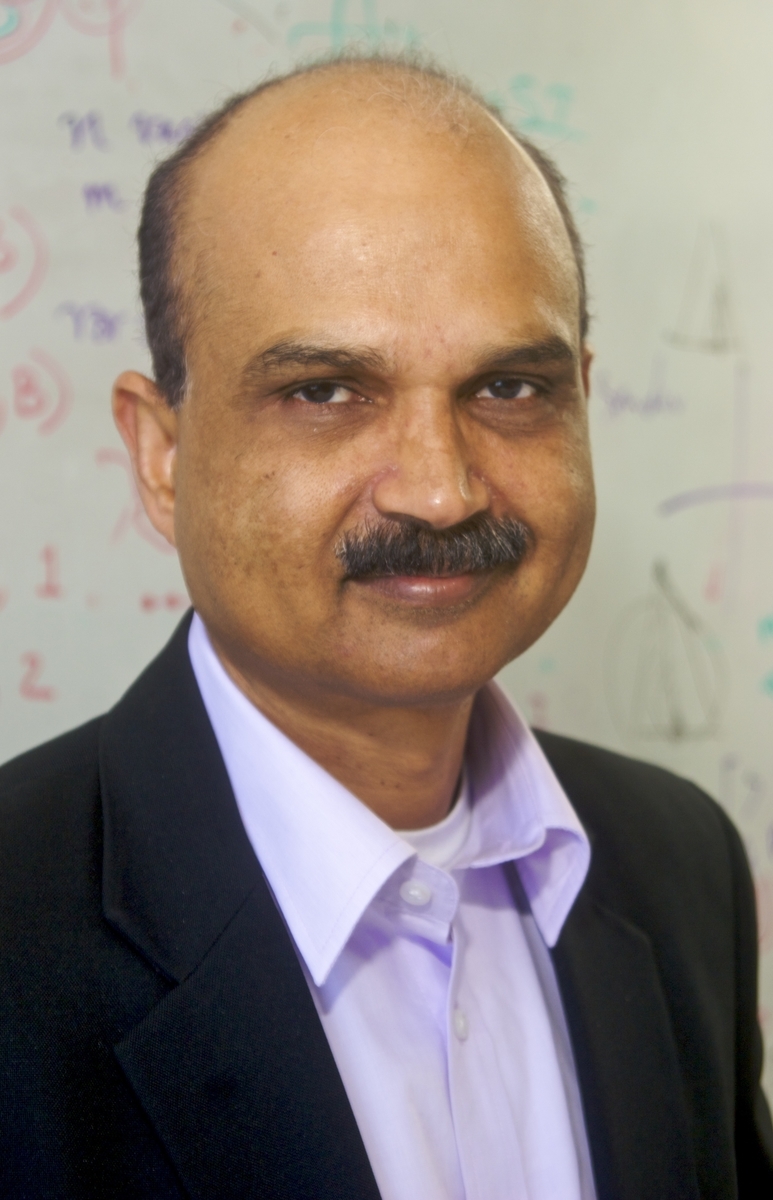 Independently curated · Unclaimed
Ambuj K. Singh Research Group
University of California, Santa Barbara
Ambuj K. Singh · Distinguished Professor
How can learned graph representations be measured and designed to improve downstream tasks and robustness? The group develops geometry- and topology-based methods and graph-based models for drug discovery and chemical informatics. Researchers analyze social networks combining structure with attributes like sentiment and trust to model team decision dynamics and trust evolution. The group builds methods to integrate multimodal biological and imaging data to find discriminative sub-networks that predict global clinical or brain network states. They design scalable algorithms for querying and modeling dynamic composite networks to detect unusual patterns and enable efficient sampling.
 Independently curated · Unclaimed
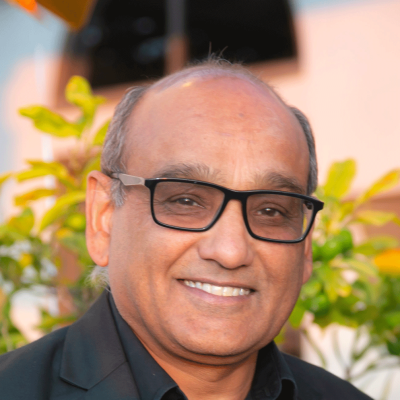
Divyakant Agrawal Research Group
University of California, Santa BarbaraDivyakant Agrawal · Distinguished Professor & Chair
How can distributed databases remain available and correct under failures and scale to cloud settings? His research focuses on distributed databases and fault-tolerance for cloud and data-centric services. Work addresses design and analysis of data-aware services, multimedia and spatial databases, and workflow systems for large-scale data management. The group investigates mechanisms for fault tolerance and distributed transactions to ensure data integrity across cloud environments. Methods include systems design and theoretical analysis of distributed algorithms and data structures for high-performance data management.
 Independently curated · Unclaimed
Grace Han Research Group
University of California, Santa BarbaraGrace Han · Associate Professor
What kinds of organic molecule designs enable reversible photon energy capture, storage, and triggered release in condensed phases? The Han Group develops molecular solar thermal energy storage systems based on anthracene and related chromophores for visible-light photon energy storage. The group designs photoswitches with controllable structural parameters to probe conformational freedom, absorption, and isomeric stability in condensed phases. Researchers combine synthetic chemistry with photophysical and materials characterization to measure switching dynamics and solid-state energy release mechanisms. Ongoing projects include optically controlled recovery and recycling of homogeneous organocatalysts using photoactive molecular systems.
 Independently curated · Unclaimed
Michael Beyeler Research Group
University of California, Santa BarbaraMichael Beyeler · Associate Professor
Can machine learning models explain and predict human-centered perceptual behavior in visual computing tasks? Research uses machine learning and data-mining methods to study perception and interaction within human-centered computing. Projects investigate algorithmic approaches to pattern recognition and intelligent systems applied to visual computing and human-computer interaction. The group employs computational modeling and data analysis to evaluate algorithms for multimodal perception and interaction. Methods combine experimental data with machine-learning algorithms to probe perceptual and behavioral phenomena in visual tasks.
Zach Eilon Research Group
University of California, Santa BarbaraZach Eilon · Professor
How do seismic waves reveal three-dimensional variations in Earth structure beneath tectonic regions? Research applies seismic tomography and inverse methods to image subsurface velocity structure and anisotropy. Projects use tomographic inversions to map attenuation and anisotropic signatures that constrain deformation and composition. Researchers develop and apply inverse methods to improve resolution and quantify uncertainties in seismic models. Methods include seismic waveform analysis and tomographic imaging to interpret geophysical structure and tectonic processes.
Showing 1–5 of 5 labs