
Menu
University research directory
Research labs at
University of Minnesota.
Compare 5 listed faculty-led profiles, explore their research interests, and follow the evidence in their selected work. These listings are a starting point for discovery and do not establish recruiting availability.
Explore the research before reaching out
Review each lab’s official website and recent publications. Compare the methods used, the questions being asked, and the practical requirements of any published opening. Unclaimed profiles are independently curated; the university has not approved or endorsed them.
How to compare research labs ↗Official university website ↗5 research-led lab profiles
Browse labs by their listed college affiliation Independently curated · Unclaimed
Ambika Bhagi-Damodaran Research Group
University of Minnesota
Ambika Bhagi-Damodaran · Associate Professor
How can metalloenzymes be rewired to create new therapeutics and sustainable biocatalysts for chemical transformations? The Bhagi-Damodaran Lab investigates structure, function and reaction mechanisms of metalloenzymes using protein engineering and small molecule discovery strategies. Researchers rewire metalloenzyme-dependent redox signal transduction pathways to develop next-generation tuberculosis and cancer therapeutics. The group is re-programing non-heme iron enzymes to enable modular C–H bond halogenation biocatalysis through mechanistic and protein-design studies. The lab combines biological, inorganic, medicinal, and computational chemistry approaches to manipulate active site electrostatics and reactivity in iron enzymes.
 Independently curated · Unclaimed
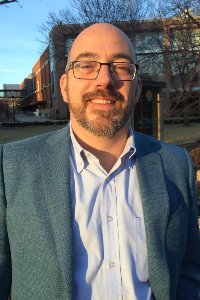
Kate Adamala Research Group
University of MinnesotaKate Adamala · Associate Professor
Can synthetic cells be built to model life and to serve as programmable bioreactors for biotechnology and space missions? The Adamala group builds and studies synthetic minimal cells—liposomal bioreactors that mimic natural cell functions and can be engineered for new capabilities. Researchers use cell-free protein expression, liposome encapsulation, and RNA engineering to create programmable synthetic cells for metabolic engineering, drug development, and biosensing. The lab applies synthetic cell systems to investigate origin-of-life questions and to develop tools for biomanufacturing and space exploration.
 Independently curated · Unclaimed
Michele Guala Research Group
University of MinnesotaMichele Guala · Professor, Department of Civil, Environmental, and Geo- Engineering and St. Anthony Falls Laboratory
What physical mechanisms control interactions between turbulence, sediments, and particles in environmental and geophysical flows? The Guala Research Group conducts experimental studies from wind tunnels to field work to examine vortex dynamics, particle-turbulence interactions, and sediment transport. At SAFL researchers develop novel measurement techniques such as large-scale PIV experiments and 3D particle tracking velocimetry for high-resolution flow characterization. Projects include studying interactions between large turbulent scales and erodible sediment layers to inform stream restoration and hydrokinetic device optimization. Laboratory and field measurements are combined with statistical data analysis tools to quantify mixing, wake behavior, and turbine array performance under migrating bedforms.
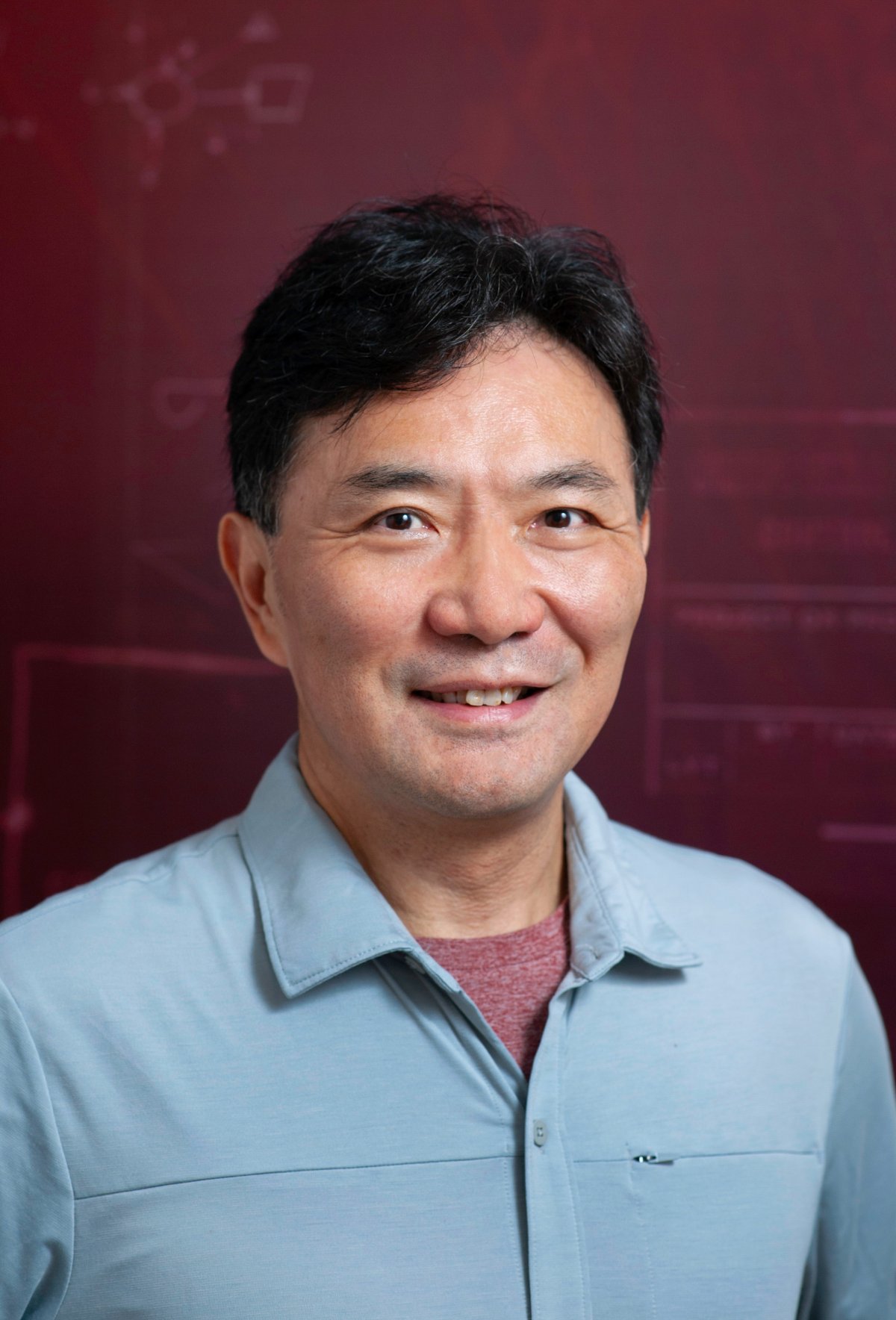
Raymond M. Hozalski Research Group
University of MinnesotaRaymond M. Hozalski · Professor, Department of Civil, Environmental, and Geo-Engineering
How do biofilms' mechanical properties influence their formation, control, and removal in engineered water systems? The Hozalski Research Group studies biofilms in water distribution systems, biologically-active filters, and membrane biofouling through targeted experiments. Researchers measure and manipulate biofilm mechanical properties using lab experiments, pilot-scale treatment systems, and field sampling to understand structure and function. Molecular biology techniques such as quantitative real-time PCR and DNA sequencing are used to quantify microbial communities and detect opportunistic pathogens. The group also investigates natural organic matter composition and its reactivity to evaluate effects on water treatment and drinking water quality.
 Independently curated · Unclaimed
Zhi-Li Zhang Research Group
University of MinnesotaZhi-Li Zhang · Professor, Qwest Land Grant Chair in Telecommunications
How can next-generation networks and AI be combined to support resilient, application-aware services like autonomous driving? The Computer Networking, Mobile, and AI Research Lab builds service-oriented, application-aware, scalable and secure 5G/NextG networked systems. The group develops AI/ML algorithms to enable intelligent software-defined networking, edge/cloud systems and Digital Twins. Researchers design and experimentally evaluate architectures for collaborative autonomous driving, metaverse applications, and IoT with cross-layer performance and security considerations. Work combines formal modeling, analysis, implementation, and real-world evaluation to measure and optimize networked system behavior.
Showing 1–5 of 5 labs