
Menu
University research directory
Research labs at
Harvard University.
Compare 5 listed faculty-led profiles, explore their research interests, and follow the evidence in their selected work. These listings are a starting point for discovery and do not establish recruiting availability.
Explore the research before reaching out
Review each lab’s official website and recent publications. Compare the methods used, the questions being asked, and the practical requirements of any published opening. Unclaimed profiles are independently curated; the university has not approved or endorsed them.
How to compare research labs ↗Official university website ↗5 research-led lab profiles
Browse labs by their listed college affiliation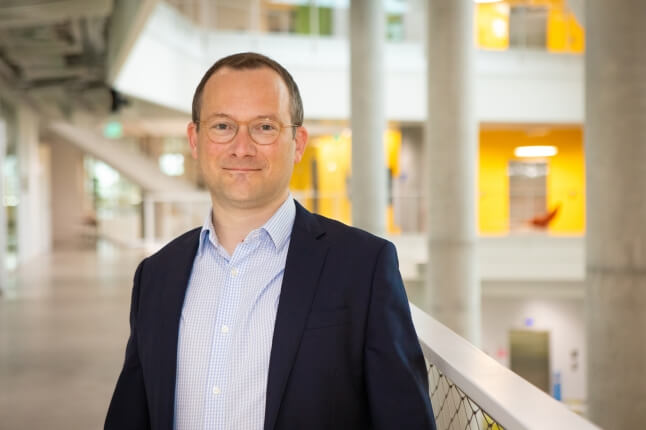 Independently curated · Unclaimed
David C. Parkes Research Group
Harvard University
David C. Parkes · George F. Colony Professor of Computer Science
How can algorithms, mechanism design, and multi-agent learning produce reliable collective decisions when agents are strategic or learn from data? Research addresses market and auction design, preference elicitation, bounded-rationality models, multi-agent reinforcement learning, and computational experiments. The group develops theoretical mechanism-design analyses and runs large-scale computational experiments and empirical studies to test mechanisms and learning-driven preference elicitation. Researchers lead the EconCS research group and connect with Harvard Data Science and Laboratory for Innovation Science resources. Contact details and teaching responsibilities are listed on the SEAS and lab pages.
 Independently curated · Unclaimed
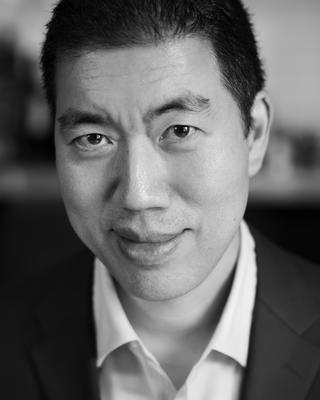
David R. Liu Research Group
Harvard UniversityDavid R. Liu · Thomas Dudley Cabot Professor of the Natural Sciences
Can precision genome edits and evolved macromolecules be engineered without double-strand breaks to study and treat disease? The group develops genome-editing proteins such as base editors and prime editors and evaluates their specificity, targeting scope, and deliverability for therapeutic applications. Researchers harness phage-assisted continuous evolution (PACE) and DNA-templated synthesis to evolve proteins and discover bioactive small molecules. The lab integrates molecular engineering, high-throughput selections, and delivery studies to improve editing efficiency and reduce byproducts. The group is led by the Thomas Dudley Cabot Professor of the Natural Sciences and HHMI investigator and documents technologies such as base editing and prime editing pioneered in the laboratory.
 Independently curated · Unclaimed
Edo Berger Research Group
Harvard UniversityEdo Berger · Professor of Astronomy
What are the progenitors and emission mechanisms of cosmic explosions such as gamma-ray bursts, supernovae, fast radio bursts and electromagnetic counterparts to gravitational-wave events? The group conducts coordinated multi-wavelength observational campaigns to obtain data across radio, optical/IR, X-ray and γ-ray bands to measure afterglow light curves and spectra. Researchers assemble observations from observatories around the world and in space to combine ground- and space-based datasets for transient characterization. The team develops and applies machine learning and artificial intelligence approaches for real-time photometric classification of transients and for analysis of gravitational-wave data. Projects include targeted studies of supernovae, gamma-ray bursts, tidal disruption events, gravitational-wave counterparts and magnetic activity in sub-stellar objects.
 Independently curated · Unclaimed
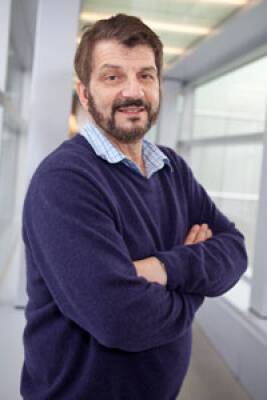
Experimental Soft Condensed Matter Group
Harvard UniversityDavid A. Weitz · Mallinckrodt Professor of Physics and of Applied Physics
A microscopic droplet can be a reaction vessel, a material-building block, or a home for growing cells. David Weitz’s group uses soft-matter physics and microfluidics to explore all three. The lab studies how the internal structure of colloids, emulsions, gels, and biological networks shapes their bulk behavior, using microscopy, scattering, and rheology. Selected work examines branched organoids grown inside collagen droplets and surfactant films that keep microfluidic droplets stable. Its research links hands-on fluid and materials experiments with questions about cell mechanics and biological measurement.
Federico Capasso Research Group
Harvard UniversityFederico Capasso · Robert L. Wallace Professor of Applied Physics and Vinton Hayes Senior Research Fellow in Electrical Engineering
How can metasurfaces and integrated photonic devices be designed to control light’s phase, amplitude, and polarization for flat optics and compact spectroscopy? The group spans design, numerical simulation, nanofabrication and device characterization across metasurfaces, frequency combs, and quantum cascade lasers. Researchers combine engineered semiconductor materials with metasurfaces to realize large nonlinear optical responses and develop metalenses including large-area and visible-wavelength devices. The group pursues applications such as terahertz sensing and on-chip frequency combs while publishing interdisciplinary work across Nature, ACS Nano, Optics journals and others. Projects are interdisciplinary and span from pure mathematics and simulations to system-level integrated devices.
Showing 1–5 of 5 labs