
Menu
University research directory
Research labs at
Washington University in St Louis.
Compare 5 listed faculty-led profiles, explore their research interests, and follow the evidence in their selected work. These listings are a starting point for discovery and do not establish recruiting availability.
Explore the research before reaching out
Review each lab’s official website and recent publications. Compare the methods used, the questions being asked, and the practical requirements of any published opening. Unclaimed profiles are independently curated; the university has not approved or endorsed them.
How to compare research labs ↗Official university website ↗5 research-led lab profiles
Browse labs by their listed college affiliation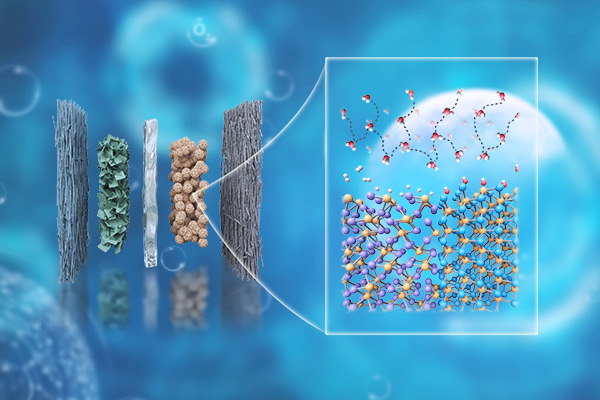 Independently curated · Unclaimed
Gang Wu Research Group
Washington University in St Louis
Gang Wu · professor of energy, environmental & chemical engineering
Can cheaper phosphide heterostructures enable durable, high-current hydrogen production in anion-exchange membrane water electrolyzers? The group engineered a heterostructure catalyst combining rhenium phosphide and molybdenum phosphide to boost catalytic activity for alkaline water electrolysis. Researchers integrated the new PGM-free cathode with a nickel-iron anode and tested it at industry-level current densities (1–2 A cm–2) to evaluate performance and durability. Experiments examined hydrogen adsorption/desorption roles of rhenium and proton-supplying kinetics accelerated by molybdenum, linking composition to reaction mechanisms. The team analyzed catalyst/electrolyte interface hydrogen-bond network engineering to lower resistance and improve hydrogen adsorption kinetics in membrane electrode assemblies.
 Independently curated · Unclaimed
Michael Brent Research Group
Washington University in St LouisMichael Brent · Henry Edwin Sever Professor of Engineering; Professor of Computer Science & Engineering; Professor of Biomedical Engineering; Professor of Genetics
How can a person's genome sequence predict expression levels of any gene in that person? The Brent Lab maps which genes are regulated by each transcription factor in yeast and Cryptococcus using computational and experimental methods to define regulatory targets. The group is applying computational TF-target mapping methods to integrate diverse human datasets and identify regulatory networks across humans. Researchers develop quantitative models that predict gene expression level from genome sequence by combining statistics, network analysis, and machine learning. The lab participates in the Long Life Family Study to find genetic variants associated with longevity by integrating DNA sequence, DNA methylation, and gene expression data.
 Independently curated · Unclaimed
Philip Skemer Research Group
Washington University in St LouisPhilip Skemer · Professor
How do rocks deform under conditions of Earth’s plate boundaries while producing observable microstructures? The group performs rock deformation experiments that test sensitivity to temperature, pressure, grain size, composition, and strain to isolate deformation mechanisms. Researchers analyze micro- to meso-scale structures in naturally deformed rocks to assess deformation process importance and link experimental results to models. The group uses experimental data to parameterize and test rheological models of mantle and crustal materials for geodynamic modeling. Researchers combine experimental deformation, microstructural observations, and modeling to connect laboratory results to seismological and geologic observations.
 Independently curated · Unclaimed
Ram Dixit Research Group
Washington University in St LouisRam Dixit · George and Charmaine Mallinckrodt Professor; Professor of Biology; Chair, Department of Biology
How do cortical microtubule arrays form and guide directional cell expansion in plant cells? The group investigates cortical microtubule organization using single-molecule imaging, live-cell imaging, molecular genetics and computer simulations to connect molecular activities to cellular-level organization. Researchers study how microtubule-associated proteins such as SPIRAL2 stabilize microtubule minus ends and influence array dynamics through biochemical and structural approaches. The lab performs mechanochemical mapping of Arabidopsis primary cell walls using atomic force microscopy–infrared spectroscopy to relate wall mechanics to growth patterns. Ongoing projects include multiscale studies of epidermal coordination during chiral root growth to link tissue-scale symmetry breaking to cell mechanics.
Tao Ju Research Group
Washington University in St LouisTao Ju · Professor, Computer Science & Engineering
How can robust algorithms convert raw 3D scan data into accurate surface models for complex shapes used in graphics and analysis? The lab develops algorithms for 3D surface modeling funded by an NSF grant to create more reliable surface representations. Researchers apply 3D imaging and measurement methods to quantify sorghum panicle traits that were previously unmeasured. The group designs biomedical image analysis techniques to extract structural information from medical images for computational analysis. The researchers combine computer graphics, vision and imaging methods to build tools for visualization and quantitative analysis.
Showing 1–5 of 5 labs