
Menu
Research labs across colleges and universities
Find a lab
worth exploring.
Browse faculty research, publications, teams, and contact details. Unclaimed listings are independently curated from public sources and do not imply endorsement or recruiting availability.
About listings, corrections, and removal ↗541 research-led lab profiles
Browse labs by their listed college affiliationEvolutionary Psychology Lab
Florida State UniversityJon Maner · Distinguished Research Professor
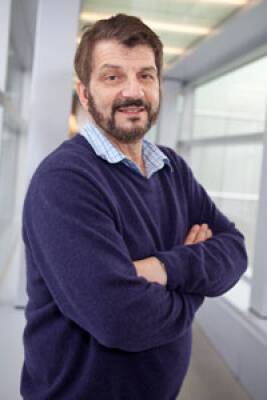
Why do people seek connection, defend themselves, or compete for status? Maner studies the relationships between motivation, emotion, and social thinking using ideas and methods from social and evolutionary psychology. Research addresses romantic attraction and relationship maintenance, leadership and power, and the distinct roles of dominance and prestige. Other interests include social rejection, affiliation, fear, anxiety, and disgust. These projects connect social circumstances with psychological responses. His current faculty page explicitly lists recruitment of a graduate student for fall 2027.
 Independently curated · Unclaimed
Experimental Soft Condensed Matter Group
Harvard University
David A. Weitz · Mallinckrodt Professor of Physics and of Applied Physics
A microscopic droplet can be a reaction vessel, a material-building block, or a home for growing cells. David Weitz’s group uses soft-matter physics and microfluidics to explore all three. The lab studies how the internal structure of colloids, emulsions, gels, and biological networks shapes their bulk behavior, using microscopy, scattering, and rheology. Selected work examines branched organoids grown inside collagen droplets and surfactant films that keep microfluidic droplets stable. Its research links hands-on fluid and materials experiments with questions about cell mechanics and biological measurement.
F. Wayne Outten Research Group
University of South Carolina-ColumbiaF. Wayne Outten · Guy F. Lipscomb Sr. Professor of Biochemistry
Wayne Outten investigates how bacteria handle essential metals without being harmed by them. A major focus is the assembly of iron–sulfur clusters, protein cofactors needed for processes such as respiration, metabolism, and DNA repair. The group studies how the Suf pathway builds these clusters during iron starvation and oxidative stress, using Escherichia coli as a model. Other questions concern metal acquisition, transport, storage, and regulation. The research connects biochemistry and microbial genetics with the possibility of disrupting metal-dependent processes that bacterial pathogens need to survive.
Federico Capasso Research Group
Harvard UniversityFederico Capasso · Robert L. Wallace Professor of Applied Physics and Vinton Hayes Senior Research Fellow in Electrical Engineering
How can metasurfaces and integrated photonic devices be designed to control light’s phase, amplitude, and polarization for flat optics and compact spectroscopy? The group spans design, numerical simulation, nanofabrication and device characterization across metasurfaces, frequency combs, and quantum cascade lasers. Researchers combine engineered semiconductor materials with metasurfaces to realize large nonlinear optical responses and develop metalenses including large-area and visible-wavelength devices. The group pursues applications such as terahertz sensing and on-chip frequency combs while publishing interdisciplinary work across Nature, ACS Nano, Optics journals and others. Projects are interdisciplinary and span from pure mathematics and simulations to system-level integrated devices.
Fractals Research Laboratory
University of Oregon
Richard Taylor · Professor of Physics, Psychology, and Art
What can repeating patterns in nature teach us about technology and human perception? Richard Taylor studies fractals and the chaotic processes that produce them, applying bio-inspired ideas to nanoscience, visual science, and art. His Fractals Research Laboratory investigates topics ranging from retinal implants for sight restoration to the relationship between fractal art and stress reduction. Other interests include nanoelectronics and solar cells. The research connects experimental physics with psychology and design, giving interdisciplinary researchers a specific mathematical theme that bridges those fields.
 Independently curated · Unclaimed
Frances H. Arnold Research Group
California Institute of Technology
Frances H. Arnold · Linus Pauling Professor of Chemical Engineering, Bioengineering and Biochemistry; Director, Donna and Benjamin M. Rosen Bioengineering Center
Can enzymes be evolved to catalyze nonnatural chemical reactions with improved activity and selectivity for industrial synthesis? The laboratory develops directed-evolution strategies and simulation tools to optimize enzyme sequences for targeted catalytic functions and to create new catalysts for specific chemistries. Researchers integrate machine learning and molecular simulation to navigate protein fitness landscapes, predict beneficial mutations, and accelerate screening for improved catalytic properties. Projects apply optimized enzymes to pharmaceutical synthesis, biofuels production, and sensors and diagnostics, demonstrating practical biocatalysis across diverse chemical problems. Experimental evolution experiments and analyses probe mechanisms of natural enzyme evolution to reveal adaptive pathways, tradeoffs, and determinants of catalytic efficiency.
Franco Lab
University of Colorado Denver/Anschutz Medical Campus
Santos Franco · Associate Professor of Pediatrics-Developmental Biology
How does a developing brain assign cells their identities and assemble them into functioning circuits? Santos Franco studies processes that shape the cerebral cortex, including neural stem-cell fate, the production of neurons and glia, and the migration of new neurons. His research also examines signaling pathways and gene-regulatory networks that pattern the nervous system, along with proteins involved in dendrite growth and synapse formation. These questions connect developmental biology with cellular neuroscience and the origins of brain organization.
Frank Fisher Research Group
Stevens Institute of Technology
Frank Fisher · Professor
Fisher investigates how nanoscale reinforcement changes the behavior of polymer materials and how those changes can be modeled across scales. His research combines characterization of multifunctional nanocomposites with multiscale materials modeling and vibration-energy harvesting. Listed studies examine carbon-nanotube processing and damage, as well as how confinement and salt affect polymer crystallization. He also researches engineering teaching and learning. For materials-focused researchers, the distinguishing connection is between fabrication choices, internal structure, and measured performance, with experimental results and models helping explain why a composite behaves as it does.
Frank Gupton Research Group
Virginia Commonwealth University
Frank Gupton · Professor
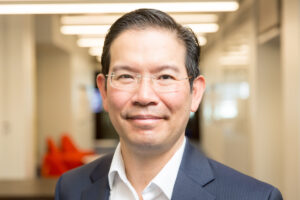
Gupton treats medicine affordability as a chemistry and engineering challenge. Through VCU’s Medicines for All Institute, his team redesigns routes for producing essential pharmaceutical ingredients, examining expensive starting materials, reaction steps, solvent use, and scale-up. VCU describes recent work on improving the synthesis of lenacapavir, alongside a broader record of process improvements for global-health medicines. The research moves from small laboratory batches toward reliable manufacturing methods. Its appeal lies in connecting detailed synthetic chemistry with a measurable practical goal: making established medicines easier and less costly to produce.
 Independently curated · Unclaimed
Fred Chong Research Group
The University of ChicagoFred Chong · Seymour Goodman Distinguished Service Professor of Computer Science
How can algorithms, software, and machine designs make 100–1000-qubit quantum devices practical for real scientific problems? The EPiQC expedition develops new algorithms and software tailored to 100–1000 quantum-bit devices to reduce the gap between algorithms and architectures. The group studies quantum software and machine designs alongside experiments to align algorithms with device-specific properties and to enable practical quantum computations. Researchers design and analyze emerging computing technologies, including multicore and embedded architectures, while exploring sustainability and security trade-offs in systems. The group leads multidisciplinary projects combining architecture, algorithms, and quantum device considerations to facilitate scalable quantum and high-performance computing.
G. Gary Tan Research Group
Penn State (Main campus)
G. Gary Tan · Distinguished Professor
What software vulnerabilities can compiler and formal-method techniques detect and mitigate in large codebases? The Security of Software (SOS) Group applies compiler, programming language, and formal method techniques to improving software security. The group pursues projects in software security, programming languages, and program verification with an emphasis on automated analysis frameworks. Researchers develop formal-methods-based analyses and compiler transformations to identify and harden vulnerable code paths. Ongoing work includes tool development and evaluation using benchmarks and security-relevant codebases.
Gabriele Villarini Research Group
University of Iowa
Gabriele Villarini · Professor of Civil and Environmental Engineering
When will extreme rainfall become a damaging flood, and how might that risk change? Gabriele Villarini studies flood hydrology, extreme weather, and hydroclimatology. His research connects climate predictions and projections with the behavior of hydrological extremes, using applied statistics to examine events such as hurricanes and atmospheric rivers. The group sits at the intersection of water engineering and climate science. Its questions are especially relevant to researchers interested in quantifying uncertain environmental hazards and understanding the processes behind large floods.
Galloway Lab
University of Virginia (Main campus)Laura Galloway · Commonwealth Professor of Biology
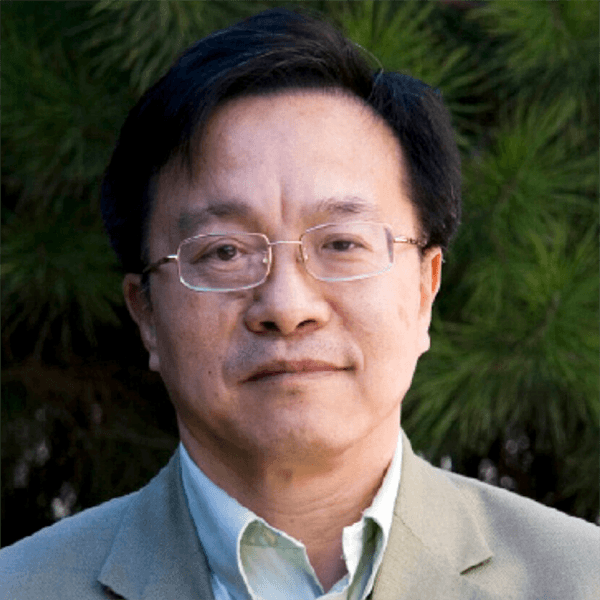
How do plants adapt when climates warm and their geographic ranges change? The lab combines field and greenhouse studies with ecological genetics, genomics and bioinformatics to investigate evolution in natural plant populations. Research examines populations remaining at the edges of ranges after glacial retreat as opportunities to understand responses to warmer conditions. Other projects connect historical range expansion with mating-system traits. The group also investigates whether differences in organelle genomes, including chloroplast DNA, contribute to reproductive isolation during the earliest stages of speciation.
 Independently curated · Unclaimed
Gang Bao Research Group
Rice UniversityGang Bao · Foyt Family Professor of Bioengineering
How can precise nucleases and nanoparticles be combined to correct disease-causing genes in patient cells? The Laboratory of Biomolecular Engineering & Nanomedicine develops gene correction techniques using CRISPR/Cas9 systems, TALENs and ZFNs to achieve precise and controlled genome editing. The group engineers superparamagnetic nanoparticle probes, quantum dot bioconjugates, activatable molecular probes and molecular beacons for sensitive multimodality molecular imaging and molecular detection. Researchers design and validate nanoprobe and nanodevice platforms, perform bioconjugation and cellular delivery, and optimize sensitivity and signal-to-background for cellular and in vivo imaging. Ongoing projects include targeted drug/gene delivery and gene targeting approaches for single-gene disorders and cancer.
 Independently curated · Unclaimed
Gang Wu Research Group
Washington University in St Louis
Gang Wu · professor of energy, environmental & chemical engineering
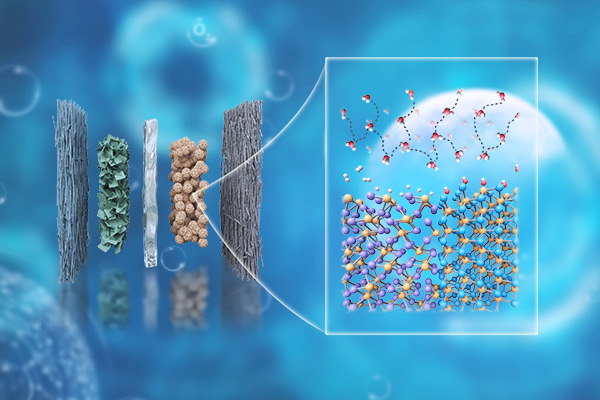
Can cheaper phosphide heterostructures enable durable, high-current hydrogen production in anion-exchange membrane water electrolyzers? The group engineered a heterostructure catalyst combining rhenium phosphide and molybdenum phosphide to boost catalytic activity for alkaline water electrolysis. Researchers integrated the new PGM-free cathode with a nickel-iron anode and tested it at industry-level current densities (1–2 A cm–2) to evaluate performance and durability. Experiments examined hydrogen adsorption/desorption roles of rhenium and proton-supplying kinetics accelerated by molybdenum, linking composition to reaction mechanisms. The team analyzed catalyst/electrolyte interface hydrogen-bond network engineering to lower resistance and improve hydrogen adsorption kinetics in membrane electrode assemblies.
Gao Lab
Boston College
Jianmin Gao · Professor and Chairperson of Chemistry
Cell membranes create a chemical boundary that researchers can learn to recognize and manipulate. Gao’s group uses organic synthesis and chemical biology to develop peptides and related molecules that reproduce useful features of natural membrane proteins. Projects include molecules that form channels and compounds that recognize particular lipids. Studying these interactions helps uncover the chemical rules governing how proteins engage membranes. The group also explores how that knowledge could guide the development of antibiotic candidates and agents for imaging tumors, connecting molecular design with biological function.
 Independently curated · Unclaimed
Gary Karpen Research Group
University of California, Berkeley
Gary Karpen · Professor of Cell Biology, Development and Physiology
How do nuclear organization and chromatin condensates control genome function and organismal health? The lab studies biocondensate formation and phase separation in heterochromatin using Drosophila and human cells to probe 3D chromatin organization. Researchers combine advanced imaging, chemical and biochemical experiments, and theoretical biophysics to test how emergent biophysical properties impact genome organization. They use inducible single DSB systems and genetic analysis to examine how chromatin states influence homologous recombination and NHEJ pathway choice. The group analyzes centromere haplotypes and satellite-derived AAGAG RNAs to link sequence variation and repeat transcripts to chromosome behavior and fertility.
 Independently curated · Unclaimed
George Konidaris Research Group
Brown University
George Konidaris · Professor of Computer Science
Can robots autonomously learn abstract skills that enable fast, goal-directed planning across diverse tasks and environments? The Intelligent Robot Lab constructs high-level symbolic representations and abstraction hierarchies to enable planning, for example work on "From Skills to Symbols" and related projects. The lab develops hierarchical reinforcement learning and probabilistic learning methods to learn task-level skills and then composes them for long-horizon planning using projects such as "Autonomous Robot Skill Acquisition." Researchers integrate optimal control, planning, and learned skills to produce robust behavior under uncertainty in manipulation and navigation. The lab builds applied systems including robot motion-planning hardware and software prototypes described as "Robot Motion Planning on a Chip.
Georgia Papavasiliou Research Group
Illinois Institute of Technology
Georgia Papavasiliou · Professor of Chemical Engineering, Department Chair
An engineered tissue needs an environment that helps cells organize and develop. Papavasiliou designs synthetic hydrogel scaffolds whose stiffness, degradation, and biochemical composition can be adjusted to influence cell behavior and vascular growth. Her research includes scaffolds containing cells and material gradients for regenerating complex tissue interfaces. Other projects develop nanoparticle emulsions for targeted drug delivery and models that connect polymer structure to therapeutic diffusion. The work combines biomaterials design with tissue engineering, examining how material properties shape biological responses.
Gianluca Gallo Research Group
Temple UniversityGianluca Gallo · Professor of Neural Sciences
How does a neuron grow its branches, and what causes those connections to break after injury? Gianluca Gallo investigates axon development and the regulation of actin filaments and microtubules by external signals. His lab uses high-resolution imaging and experiments in vitro and in vivo to study branching, mitochondrial function, and local protein production. Research also examines glycolysis and the mechanisms linking physical injury to axon severing and degeneration. These questions connect cell biology with nervous-system development and experimental approaches to protecting neural connections.
 Independently curated · Unclaimed
Gina R. Kuperberg Research Group
Tufts University
Gina R. Kuperberg · Dennett Stibel Professor of Cognitive Science
When, where and how does the human brain build the meaning of sentences, discourse and visual images? The NeuroCognition Lab uses event-related potentials (ERPs) to determine when neurocognitive language processes happen in the brain. The NeuroCognition Lab uses functional magnetic resonance imaging (fMRI) to determine where neurocognitive language processes occur in the human brain. The NeuroCognition Lab studies how the build-up of meaning is impaired in patients with schizophrenia by examining abnormal patterns of brain activity in such patients. The NeuroCognition Lab is based at Tufts and the Martinos Center and uses multimodal neuroimaging to study language and meaning.
Gina Turrigiano Research Group
Brandeis University
Gina Turrigiano · Professor
Turrigiano asks how brains can change through experience without losing stable function. Her laboratory investigates homeostatic plasticity, including synaptic scaling, through which neurons adjust their excitability and activity. Research examines how these stabilizing mechanisms interact with learning-related synaptic changes during development of the neocortex. The group also studies how sleep and other behavioral states influence plasticity and firing-rate regulation. This provides a concrete neuroscience puzzle for prospective researchers: a circuit must preserve useful activity while still being flexible enough for learning and experience to reshape its connections.
 Independently curated · Unclaimed
Grace Han Research Group
University of California, Santa Barbara
Grace Han · Associate Professor
What kinds of organic molecule designs enable reversible photon energy capture, storage, and triggered release in condensed phases? The Han Group develops molecular solar thermal energy storage systems based on anthracene and related chromophores for visible-light photon energy storage. The group designs photoswitches with controllable structural parameters to probe conformational freedom, absorption, and isomeric stability in condensed phases. Researchers combine synthetic chemistry with photophysical and materials characterization to measure switching dynamics and solid-state energy release mechanisms. Ongoing projects include optically controlled recovery and recycling of homogeneous organocatalysts using photoactive molecular systems.
 Independently curated · Unclaimed
Greg Grason Research Group
University of Massachusetts
Greg Grason · Professor
How do identical, locally-interacting sub-units self-organize into structures regulated at scales much larger than the units themselves? The group develops theory and computational models to study how geometric frustration produces long-range stress gradients and equilibrium self-limitation in soft matter assemblies. Researchers model filamentous matter to connect one-dimensional intra-filament shape with multi-filament organization using minimal theoretical models and computational studies. The group analyzes curvature-controlled assembly in membranes and at interfaces to explain how membrane geometry biases morphology and organization of embedded inclusions. Researchers design and analyze programmable self-assembly using DNA origami and protein-like subunits to encode and test rules for size- and shape-controlled assembly.
Showing 169–192 of 541 labs