
Menu
Research labs across colleges and universities
Find a lab
worth exploring.
Browse faculty research, publications, teams, and contact details. Unclaimed listings are independently curated from public sources and do not imply endorsement or recruiting availability.
About listings, corrections, and removal ↗541 research-led lab profiles
Browse labs by their listed college affiliationGregory Bowman Research Group
Johns Hopkins University
Gregory Bowman · Professor
How do molecular motors rearrange the DNA packaging that controls access to genetic information? The group investigates chromatin remodelers, proteins that use energy from ATP to reposition nucleosomes. These small structures wrap DNA around histone proteins, making reorganization essential when cells need access to particular sequences. Research examines the mechanisms of the remodeling motors and how their activity is regulated. A central question is how additional protein domains communicate with the motor to select nucleosome substrates and produce different remodeling outcomes.
Guillemin Lab
University of Oregon
Karen Guillemin · Professor of Biology
An animal and its resident microbes develop in constant interaction. Karen Guillemin investigates how hosts and microbial communities shape one another in development and disease, using zebrafish and fruit flies as experimentally tractable systems. Her lab combines live imaging and genetics to study bacterial colonization, including intestinal communities and Helicobacter pylori sensing. It also examines how microbial communities assemble in hosts. These projects connect microbiology, developmental biology, and inflammation, offering a focused way to explore the mechanisms behind host-microbe relationships.
 Independently curated · Unclaimed
Hamid Moradkhani Research Group
The University of Alabama
Hamid Moradkhani · Alton N. Scott Professor of Engineering, Affiliate Professor of Computer Science
Hamid Moradkhani's faculty profile is ready for the lab to add a research mission, team information, and current opportunities.
Hang Lu Research Group
Georgia Institute of TechnologyHang Lu · Professor and Cecil J. "Pete" Silas Chair of Chemical & Biomolecular Engineering
How can microfluidic and BioMEMS technologies enable high-throughput biological experiments and quantitative behavior measurements? The lab engineers microfluidic devices and BioMEMS to study neuroscience, genetics, cancer biology, and systems biology. Researchers develop image-based, high-throughput screening and machine-vision tools for cell and whole-organism phenotyping. Methods combine microdevices, optical stimulation/recording, automation, and big-data analysis to extract quantitative biological dynamics. Projects apply these tools to developmental neurobiology, behavioral neurobiology, stem cells, and cancer immunology studies.
Hanson Research Group
Florida State UniversityKenneth Hanson · Cottrell Family Professor
What determines whether an absorbed photon becomes useful chemical or mechanical work? Hanson’s group designs, synthesizes, and characterizes molecules that absorb or emit light. Electrochemical measurements and spectroscopy help connect molecular structure with performance. Research examines energy and electron transfer at interfaces between organic and inorganic materials, molecular interactions with surfaces, and ways to use triplet excited states in polymers that respond mechanically to light. This work brings synthesis and photochemistry together with solar energy conversion and the design of responsive materials.
 Independently curated · Unclaimed
Harry A. Atwater Research Group
California Institute of Technology
Harry A. Atwater · Professor
How can nanophotonic design and advanced materials be used to control light–matter interactions for high-efficiency solar energy capture and photoelectrochemical fuel synthesis? The group investigates plasmonic devices, metasurfaces and two-dimensional materials for engineered light absorption and emission across projects in photovoltaics, quantum light emission and photoelectrochemical solar fuels. Researchers fabricate and characterize plasmonic nanostructures using nanofabrication techniques including e-beam lithography and focused ion beam with near-field and far-field optical microscopy to measure sub-wavelength confinement and propagation. The team integrates transparent conducting oxides and plasmonic slot waveguides to make field-effect modulators and to explore carrier-concentration modulation for active control. The group also leads and contributes to DOE hub-scale efforts in solar fuels development.
Henry Du Research Group
Stevens Institute of Technology
Henry Du · Professor
Du investigates how nanoscale surfaces and optical structures can make small chemical signals measurable. His research combines surface modification, structured optical fibers, fiber-optic sensors, and metal nanostructures with plasmonic properties. Listed projects and publications include Raman measurements, nanoporous coatings for bacterial differentiation, and sensing approaches for PFAS in environmental and food-related systems. The common thread is engineering the interaction between a target molecule or organism and an optical measurement platform. Researchers interested in materials and photonics can explore how a designed surface changes detection sensitivity and selectivity.
Hongjun Wang Research Group
Stevens Institute of TechnologyHongjun Wang · Professor
Wang investigates how engineered building blocks can be organized into living tissue. His research includes three-dimensional tissue reconstruction, biomaterials design, regenerative engineering, and nanomedicine. Projects build hierarchical cardiovascular and musculoskeletal tissues using modular and bottom-up approaches, while examining how the surrounding microenvironment guides stem-cell differentiation. Other work designs nanostructures for combined diagnostic and therapeutic investigation. The group connects polymer and materials knowledge with cellular engineering, offering prospective researchers a concrete question: how can structure and local biological cues be designed together to support a desired tissue function?
Howard E. Gendelman Research Group
University of Nebraska Medical Center
Howard E. Gendelman · Professor
Gendelman connects immune biology with new approaches to infectious and neurodegenerative disease. His laboratory investigates long-acting antiretroviral delivery, gene editing, and immune-directed strategies for protecting the brain. Research combines brain and immune-cell cultures, animal models, microscopy, proteomics, and measurements of drug delivery through immune cells. Other projects explore protective T-cell responses and delivery approaches relevant to Parkinson’s disease. The group offers an interdisciplinary research direction where pharmacology, nanomedicine, and neuroimmunology meet; experimental disease-model results are presented as research rather than evidence of a broadly available cure.
Howard M. Milchberg Research Group
University of Maryland, College Park
Howard M. Milchberg · Distinguished University Professor
What limits the generation and control of plasma channels created by extreme laser pulses in gases and solids? The laboratory studies the interaction of extremely intense laser light with matter, including generation of plasmas and nonlinear optical phenomena for basic physics and applied uses. Researchers use high-intensity laser systems and diagnostics to create and probe transient high-energy-density states and plasma channels to measure nonlinear propagation, filamentation, and particle acceleration mechanisms. Experiments combine ultrashort-pulse lasers with time-resolved optical and plasma diagnostics to map energy deposition, ionization dynamics, and resultant electromagnetic emission. The group explores mechanisms to harness laser-driven plasma processes for applications in high-field physics and compact radiation sources.
 Independently curated · Unclaimed
Huanyu Cheng Research Group
Penn State (Main campus)
Huanyu Cheng · Associate Professor of Engineering Science and Mechanics
How can standalone stretchable device platforms be designed and fabricated for wearable and transient applications? The research group focuses on design, fabrication, and application of standalone stretchable device platforms. Projects include development of stretchable sensors, transient electronics, and graphene-based membranes for sensing and energy applications. Methods combine laser-induced graphene, thin-film processing, and materials-by-design strategies to achieve stretchability, bioresorbability, and wireless integration. Work tests devices in physiological sensing and environmental-energy contexts to validate performance and functionality.
 Independently curated · Unclaimed
Human And Robot Partners (HARP) Lab
Carnegie Mellon University
Henny Admoni · Associate Professor, Robotics Institute
A helpful robot needs to understand the person beside it. Henny Admoni’s HARP Lab studies how robots infer human intentions, learn from human teachers, and collaborate in everyday tasks. Its projects investigate robots that ask for help when uncertain, models of what a human teacher believes, and shared control that blends human input with robot actions. Assistive robotics provides a practical setting for these questions, including interfaces for people with motor impairments. Selected publications examine transparent robot policies and the feedback preferences of power-wheelchair users controlling a robotic arm.
 Independently curated · Unclaimed
Human-Technology Interaction Lab (HTIL)
The University of AlabamaChris S. Crawford · Associate Professor
The Human-Technology Interaction Lab (HTIL), led by Dr. Chris S. Crawford at The University of Alabama, studies brain-computer interfaces and human-robot interaction. The team combines neurophysiological sensing, software engineering, and robotics to explore how technology can respond to a person’s cognitive state. Projects include Brains and Blocks for creating neurofeedback applications, brain-controlled drone racing, EEG signal processing with bci.js, and NeuroBrush for interactive art. Collaborative research also explores RF sensing for sign language recognition. Computing education connects this work with hands-on learning about physiological interfaces.
Humanitarian Informatics Lab
George Mason UniversityHemant Purohit · Associate Professor of Information Sciences and Technology
During a crisis, useful information can be buried in a flood of online messages. Hemant Purohit develops human-centered AI systems for analyzing behavior and managing unstructured, multi-source data in real time. His Humanitarian Informatics Lab combines natural-language processing, semantic computing, and machine learning with social and cognitive theories. Applications include emergency preparedness and response, public safety, and cybersecurity. The research emphasizes human control and collaboration with intelligent systems, offering an intersection of data science, public services, and crisis informatics.
Hurlbert Lab
University of North Carolina at Chapel Hill
Allen Hurlbert · Professor
How do ecological community structure and species interactions generate repeating patterns of diversity across space and time? The lab uses large-scale citizen science datasets to quantify phenological mismatch between birds and caterpillars to test timing-based ecological hypotheses. The group develops and analyzes simulation models to test hypotheses for the latitudinal diversity gradient and to explore mechanisms generating large-scale diversity patterns. Researchers run eco-evolutionary experiments with Drosophila in collaboration with the Matute lab to test thermal niche limits, competition, and niche conservatism. The lab conducts manipulative experiments and modeling across vertebrate, invertebrate, and plant communities to link processes to observed diversity, composition, turnover, and relative abundance.
 Independently curated · Unclaimed
Ingrid Daubar Research Group
Brown University
Ingrid Daubar · Associate Professor (Research)
How can current impacts and other time-varying surface phenomena on Mars, the Moon, and icy moons be detected and characterized? The research group studies current cratering on Mars and the Moon and small-crater morphology to quantify recent impact rates and surface change. Researchers investigate dust-mobilty and dust devil track lifetimes on Mars using image analysis to infer deposition and surface alteration processes. The group participates in spacecraft science and operations, including roles on Europa Clipper, MRO, InSight, and Juno, to link orbital and in situ observations to surface processes. Methods include machine-learning-driven detection of geological features and numerical and laboratory modeling of impact and mass-wasting processes.
Insect Biodiversity and Systematics Laboratory
University of Hawai’i at Mānoa
Daniel Rubinoff · Professor of Entomology
Hawaiʻi’s insects reveal both remarkable evolutionary diversity and the pressures created by invasive species. Rubinoff’s laboratory uses DNA sequence information, morphology, ecological studies, and field and laboratory work to investigate these organisms. Research addresses relationships among native and introduced insects, the routes through which invasions occur, and causes of declines in native insects and plants. The group connects systematics with conservation planning and land management, using evidence about species identities and ecological relationships to inform efforts to protect biodiversity.
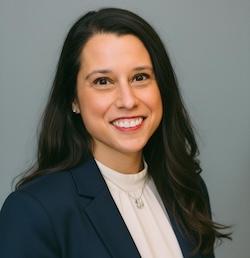
Isabel Escobar Research Group
University of KentuckyIsabel Escobar · Professor
Isabel Escobar engineers membrane materials for cleaner water and water reuse. Her research investigates multifunctional nanocomposite membranes, including two-dimensional materials that can help remove or destroy PFAS. Other projects examine antimicrobial membranes, biological and nanoparticle fouling, bio-derived materials, photocatalysis, and greener fabrication methods. Scaling membrane production connects laboratory design with practical use. The group asks both how to improve contaminant separation and how to make the separating materials themselves more sustainable, bringing polymer engineering and nanoscale surface chemistry into pressing environmental treatment challenges.
 Independently curated · Unclaimed
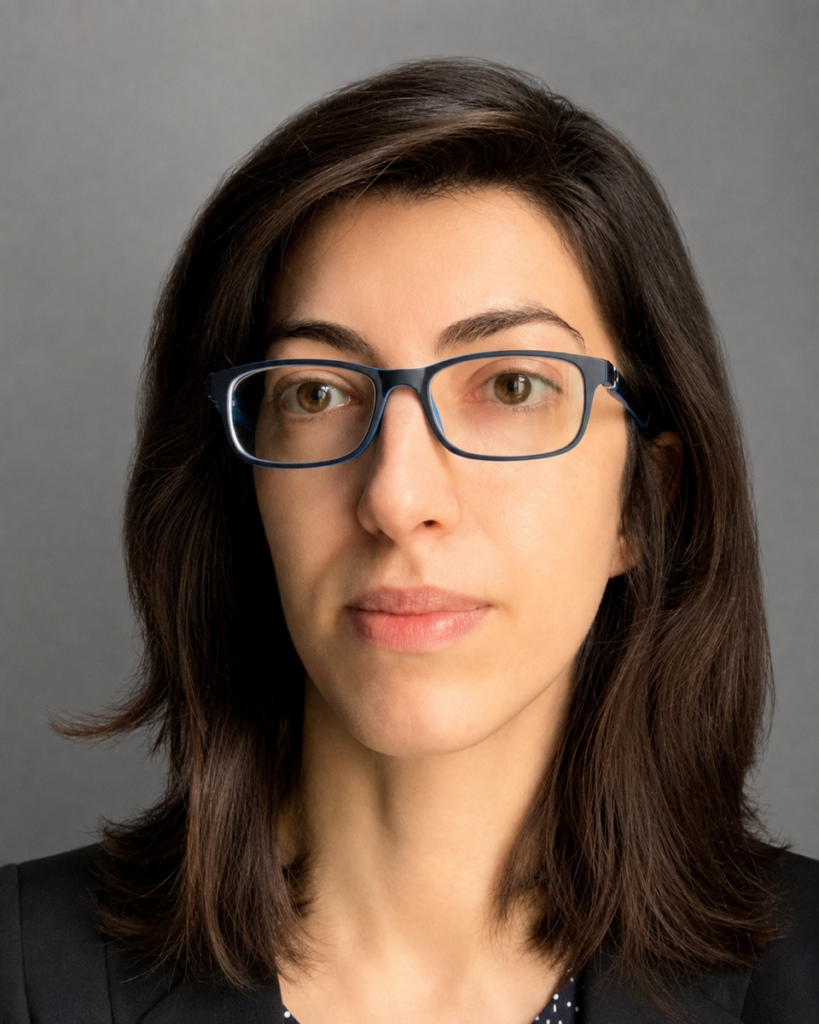
Işıl Dillig Research Group
University of Texas at Austin
Işıl Dillig · Department Chair and Professor
How can automatic program synthesis and verification make software safer and easier to build? Dillig's research develops program synthesis algorithms that generate code from specifications and examples to automate routine programming tasks. The group builds program verification and automated logical reasoning techniques to prove absence of classes of errors and security vulnerabilities. Researchers design domain-specific languages and type systems and apply automated theorem proving to scale verification and synthesis tools. The lab pursues interdisciplinary projects linking program analysis with AI, databases, security, and systems.
 Independently curated · Unclaimed
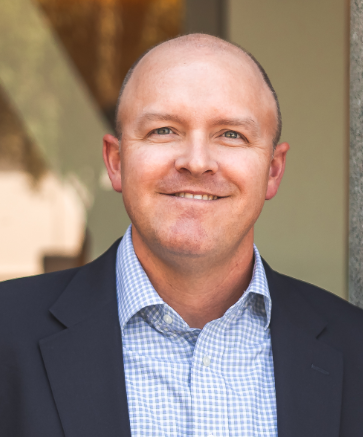
Iuliana Ene Research Group
Georgetown University
Iuliana Ene · Assistant Professor
How do fungal pathogens change genetically to survive antifungal drugs and the human host environment? Her laboratory analyzes genome plasticity to document chromosomal and copy-number changes that occur during drug exposure. Researchers measure phenotypic heterogeneity within fungal populations to link cell-to-cell communication with drug tolerance and resistance. The group investigates how host adaptation emerges by comparing genetic diversity and expression profiles across strains from different environments. She pursues antifungal drug discovery by identifying vulnerabilities that could guide development of improved antifungal therapies.
 Independently curated · Unclaimed
J. Kent Leach Research Group
University of California, Davis
J. Kent Leach · Professor
How can cell-instructive biomaterials be designed to direct tissue regeneration through local biophysical cues and signaling? The Leach Lab develops cell-instructive biomaterials to control cell behavior by tuning scaffold composition and mechanics to influence tissue formation. Researchers probe the local biophysical microenvironment to understand mechanobiology mechanisms that guide cell differentiation and matrix deposition. The group designs drug and gene delivery strategies embedded in biomaterials to modulate local signaling and improve regenerative outcomes. They apply in vivo imaging tools to monitor tissue formation and evaluate scaffold performance during musculoskeletal repair.
J. Marshall Shepherd Research Group
University of Georgia (USA)
J. Marshall Shepherd · Regents' Professor, Georgia Athletic Association Distinguished Professor of Geography and Atmospheric Sciences
A city can shape the weather its residents experience. J. Marshall Shepherd studies urban climate, hydrometeorological extremes, and the relationship between weather and society. His research connects atmospheric science with questions about how environmental hazards affect people, while his work in climate outreach helps make those questions understandable beyond academia. He directs the Atmospheric Sciences Program at Georgia. The research offers an entry point for interests spanning urban weather, extreme events, climate science, and the communication of environmental risk to public audiences.
J. Zach Hilt Research Group
University of KentuckyJ. Zach Hilt · William J. Bryan Professor
Zach Hilt develops nanocomposite materials for biological and environmental applications. His research interests include magnetic nanoparticles, bionanotechnology, and nanomedicine, with work on hydrogels that can be remotely controlled or respond to measured chemical signals. These systems connect material behavior with drug delivery and other biomedical uses. Environmental projects investigate polymer networks designed to bind persistent pollutants such as PCBs. The research links nanoscale components with the behavior of larger polymer systems, asking how responsive materials can perform useful functions in complex biological or contaminated environments.
Jacinta C. Conrad Research Group
University of Houston
Jacinta C. Conrad · Frank M. Tiller Professor
How does a bacterium move through a crowded fluid, or a nanoparticle navigate a microscopic pore? Jacinta Conrad’s research investigates the motion and assembly of particles in soft materials and near surfaces. The group combines microscopy, microfabrication, rheology, scattering, and computation to study bacteria, colloids, polymers, and nanoparticles. Projects connect microscopic transport with bacterial adhesion, antifouling surfaces, environmental remediation, and sensitive diagnostic tests. The research is particularly relevant to understanding how confinement and crowding reshape the behavior of materials that flow.
Showing 193–216 of 541 labs