
Menu
Research labs across colleges and universities
Find a lab
worth exploring.
Browse faculty research, publications, teams, and contact details. Unclaimed listings are independently curated from public sources and do not imply endorsement or recruiting availability.
About listings, corrections, and removal ↗541 research-led lab profiles
Browse labs by their listed college affiliation Independently curated · Unclaimed
Jianhan Chen Research Group
University of Massachusetts
Jianhan Chen · Professor of Chemistry and Biochemistry and Molecular Biology
How can advanced simulation methods reveal mechanisms of intrinsically disordered proteins and biomolecular condensates at biologically relevant scales? The Chen Research Group develops theoretical and computational methods for molecular modeling and simulation applied to biophysical and biomedical problems. The group creates advanced conformational sampling algorithms, implicit solvent force fields, and GPU-accelerated simulation algorithms to study proteins and RNAs. Researchers apply multiscale simulations and physics-informed machine learning to generate dynamic conformational ensembles for IDPs, fibril formation, and ion channel gating. The lab collaborates with experimental groups to validate models and study disease-relevant systems like amyloid formation and membrane ion channel regulation.
 Independently curated · Unclaimed
Jiaqi (Jackey) Gong Research Group
The University of Alabama
Jiaqi (Jackey) Gong · Associate Professor, Adjunct Associate Professor of ME, Director for the Alabama Center for the Advancement of Artificial Intelligence
Jiaqi (Jackey) Gong's faculty-led research profile covers Artificial Intelligence, Computer Vision, Data Analytics, and Deep Learning.
Jill Wegrzyn Research Group
University of Connecticut
Jill Wegrzyn · Associate Professor
How can genetic information help explain an organism’s response to its environment? Wegrzyn develops computational applications for studying individual genomes and entire populations. Her laboratory creates and maintains CartograPlant, a database and application connecting plant genetics, traits, and environmental conditions. She also participates in the Evolving Meta-Ecosystems initiative, which investigates how Arctic organisms and their ecological relationships respond to climate change. The work brings computational biology and evolutionary research together, making genomic information useful for studying adaptation and biodiversity.
Jin He Nano-Bio Research Laboratory
Florida International University
Jin He · Professor
He develops tools for watching molecules and cells at scales where individual interactions become measurable. His Nano-Bio Research Laboratory combines scanning-probe methods with optical, electrical, and electrochemical measurements, including nanopores and molecular junctions. Research investigates molecular recognition, electron transport, and how physical properties influence cellular behavior. Other projects develop single-entity sensing and analysis methods. For prospective researchers, the appeal is an instrument-building approach to biophysics: novel measurement systems make it possible to investigate molecular interactions and reactions inside confined spaces or complex biological environments.
Jin Zhong Zhang Research Group
University of California, Santa Cruz
Jin Zhong Zhang · Distinguished Professor and Chair
How can engineered nanomaterials enable faster charge dynamics and novel optical or catalytic functions for energy and sensing applications? The Zhang Research Group synthesizes semiconductor and metal nanocrystals, quantum dots, and magic-sized clusters using inorganic colloidal chemistry methods to probe ultrafast carrier and spin dynamics. Researchers employ femtosecond laser spectroscopy, SERS, XAFS/XPS and microscopy to characterize exciton, spin, and charge relaxation processes in doped and undoped nanomaterials. The group develops perovskite and metal-halide nanostructures and studies circularly polarized luminescence and chiral coordination to advance LEDs, photocatalysis, and sensing. They investigate photoelectrochemical water splitting and hydrogen generation using novel nanowires and oxide nanostructures.
Jin-Yi Yu Research Group
University of California, IrvineJin-Yi Yu · Professor
How do different El Nino types alter regional climate extremes and ocean-atmosphere teleconnections? The Climate Dynamics and Ocean-Atmosphere Interactions Group studies the two types of El Nino (central‑Pacific and eastern‑Pacific) and their distinct patterns and teleconnections. The group develops and uses a high-resolution coupled atmosphere-ocean general circulation model to simulate ENSO dynamics and variability. Researchers create SST animations and diagnostics to contrast CP and EP El Nino events and investigate mechanisms that control ENSO onset and decay. The team examines ENSO–monsoon interactions and interbasin influences on ENSO evolution.
Jingyi Jessica Li Research Group
University of California, Los Angeles
Jingyi Jessica Li · Professor of Statistics and Data Science
How can statistical models reveal which molecular processes drive cell-to-cell transcriptome variation across populations and within single cells? The research group develops interpretable statistical methods for biomedical data, building tools that quantify regulatory mechanisms across transcriptomes. The group extracts hidden information from transcriptomics data by designing algorithms and simulators to evaluate data-generation assumptions and benchmarking analysis workflows. Researchers construct synthetic negative controls and other statistical controls to ensure rigor and control false discoveries in high-throughput analyses. The group implements and releases software (for example, scDesign3) to simulate realistic single-cell and spatial omics data for method evaluation and experimental design.
Jodi McGill Research Group
Iowa State University
Jodi McGill · Professor of Veterinary Microbiology and Preventive Medicine
How does an early-life immune system respond to a respiratory infection? Jodi McGill studies immunity to respiratory infections in cattle, with interests in neonatal immunology and unconventional T-cell biology. Projects listed by the university include bovine respiratory syncytial virus, vaccine development, and training of innate immunity. These questions connect veterinary infectious disease with the mechanisms that shape immune protection. The research is relevant to people interested in animal health, vaccine responses, and how age and immune-cell biology influence resistance to infection.
 Independently curated · Unclaimed
John A. Rogers Research Group
Northwestern University
John A. Rogers · Professor
Can soft, bio-integrated electronic systems provide clinically useful, conformal interfaces to biological tissues for sensing and therapy? The Rogers Group develops bio-integrated microsystems—flexible, stretchable, and bioresorbable electronics—for neonatal monitoring, implantable optoelectronic neuromodulation, and temporary cardiac pacemaking. Researchers design epidermal microfluidic and sensor platforms for real-time chemical and physiological monitoring of sweat and transcutaneous gaseous flux. The group engineers injectable, cellular-scale optoelectronic filaments and multifunctional 3D mesostructures to interface with organoids and neural tissues for measurement and modulation. Work combines novel materials, mechanics-driven self-assembly, and micro/nanofabrication to enable soft lithographic and bioresorbable device platforms.
John Elrod Research Group
Temple UniversityJohn Elrod · Professor, William Wikoff Smith Chair in Cardiovascular Medicine
A cell’s energy machinery can also help determine whether it survives injury. John Elrod studies mitochondrial biology, metabolism, fibrosis, and cell death in cardiac injury, heart failure, and neurodegeneration. His multidisciplinary lab has investigated components of mitochondrial calcium exchange and how these pathways influence disease processes. He directs Temple’s Aging and Cardiovascular Discovery Center. The work connects cellular energy regulation with organ-level disorders, providing a focused research setting for interests in mitochondria, cardiovascular biology, and the molecular mechanisms of tissue damage.
John McCray Research Group
Colorado School of Mines
John McCray · Professor
John McCray studies how chemicals move through water systems and how that knowledge can improve environmental management. His research combines field observations, laboratory work, and modeling to investigate groundwater pollutants, PFAS, nutrient pollution, and urban water quality. Projects include green infrastructure for stormwater treatment and sustainability assessments of watersheds in southern Peru. A recurring challenge is linking contaminant movement and transfer between phases with workable mitigation strategies. The research connects hydrology, environmental chemistry, and planning decisions that shape the quality and sustainability of water resources.
 Independently curated · Unclaimed
John Pearson Research Group
Duke University
John Pearson · Associate Professor of Neurobiology
What algorithms and analysis tools will let researchers interpret terabyte-scale neural recordings to discover principles of brain function? The lab builds modeling and analysis pipelines for large-scale brain data and implements algorithms to interpret terabyte-scale neural datasets. Researchers design and implement dynamical-systems-inspired methods and engineering pipelines to link models with experimental data and suggest new hypotheses. The group collaborates with experimentalists to validate models against neural recordings and naturalistic behaviors like foraging and movie stimuli. The lab develops open software and data-sharing practices to enable reproducible analysis and community scrutiny of computational tools.
Jonathan (Joff) Silberg Research Group
Rice UniversityJonathan (Joff) Silberg · Stewart Memorial Professor of BioSciences
How can synthetic biology tools reveal microbial behaviors in opaque soils and sediments? The Silberg Lab uses bottom-up synthetic biology to design cellular programs and new genetic outputs for environmental studies, including development of gas reporters to monitor gene expression in non-transparent materials. The group builds synthetic electron transport pathways and studies small protein electron carriers such as ferredoxins to map electron flux and enable bioelectronic devices. Researchers construct combinatorial protein libraries via transposon mutagenesis, apply selections and deep sequencing, and analyze protein tolerance to fragmentations and circular permutations. Work targets applications in bioelectronics, ecology, agriculture and information storage.
 Independently curated · Unclaimed
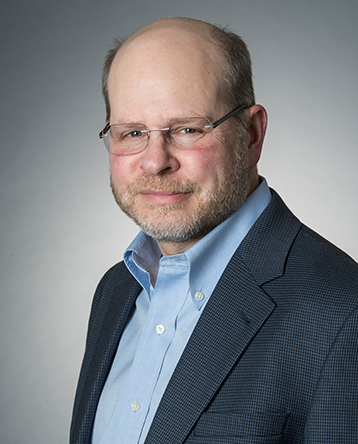
Jonathan Aurnou Research Group
University of California, Los AngelesJonathan Aurnou · Department Chair & Professor
How do rotating convection and magnetoturbulence produce planetary magnetic fields and jet structures? Aurnou’s group conducts laboratory experiments that emulate planetary core and atmosphere flows to observe rotating turbulence and magnetoconvection. The group develops numerical simulations to extend laboratory results and test dynamo and transport hypotheses under planetary parameter regimes. Researchers formulate theoretical models from combined experimental and numerical data to identify mechanisms of heat transfer, jet formation and magnetic field generation. Diagnostic methods include velocimetry, thermometry and magnetics to quantify flow dynamics and to compare with theoretical predictions.
 Independently curated · Unclaimed
Jonathan Cagan Research Group
Carnegie Mellon University
Jonathan Cagan · George Tallman and Florence Barrett Ladd University Professor, Mechanical Engineering
How can computational models and AI improve human design problem solving in engineering practice? The Integrated Design Innovation Group researches engineering design automation by merging AI, machine learning, optimization, and cognitive-science models of designer processes. Projects study hybrid human/AI teams, computational methods for biomechanical system design and diagnosis, and user-centered integrated product development. Researchers develop algorithmic agents, multi-agent simulations, and optimization techniques to represent designer cognition and to assist or evaluate real-time design decision processes. The group combines behavioral experiments, computational modeling, and applied engineering datasets to test and refine computational design methods.
Jonathan Rothstein Research Group
University of MassachusettsJonathan Rothstein · Distinguished Professor
How do non-Newtonian fluids change flow and wetting behavior under shear and extensional deformation during processing for energy and environment? The group performs experimental Newtonian and non-Newtonian fluid mechanics studies to characterize flow responses and material behavior in complex fluids. Researchers measure shear and extensional rheology to determine how molecular architecture controls stress and strain rates in complex fluids. They investigate interface wetting phenomena to link surface interactions with flow, film formation, and coating stability. Laboratory experiments address polymer processing conditions to relate rheological behavior to processing outcomes for materials and polymer systems.
Jorge Rocca Research Group
Colorado State University, Fort Collins
Jorge Rocca · University Distinguished Professor
Rocca investigates what extremely intense light can reveal and create. His research develops compact soft X-ray lasers and high-power laser systems, while studying how intense laser pulses interact with matter. Related directions include laser-generated dense plasmas, extreme ultraviolet sources, and ultra-high-field nanophotonics. CSU’s Laboratory for Advanced Lasers and Extreme Photonics connects source development with experiments in these demanding regimes. The research spans physics and electrical engineering, offering a setting where building advanced laser technology and probing unusual states of matter are closely linked scientific activities.
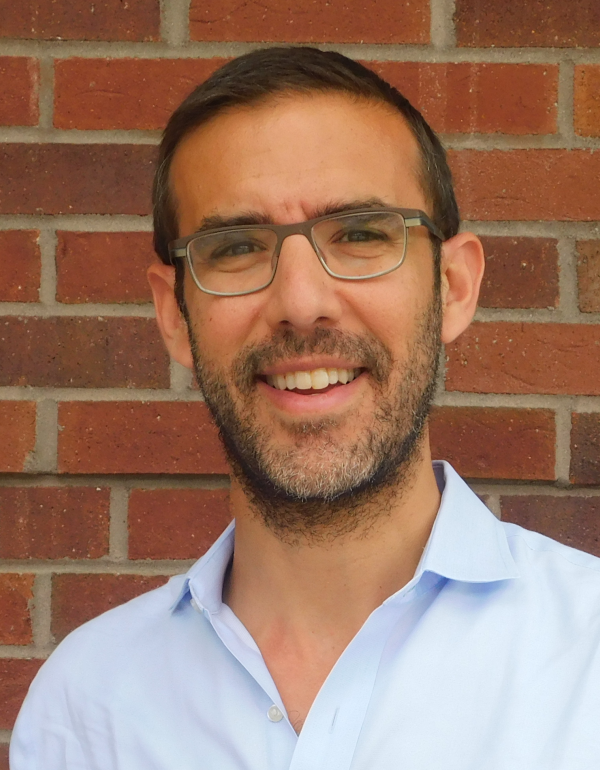
Joshua S. Fu Research Group
The University of Tennessee-Knoxville
Joshua S. Fu · Professor
Fu investigates how climate and environmental change affect systems people depend on. His research connects climate impacts with energy infrastructure, air pollution, water availability, carbon sequestration, and extreme events such as heatwaves, droughts, and floods. Human health provides another application area, while artificial intelligence and machine learning support analyses of climate, health, and atmospheric deposition. The group offers prospective researchers a broad but connected environmental-engineering direction: modeling changing conditions and tracing their consequences across infrastructure, natural resources, and populations rather than treating those impacts as isolated problems.
 Independently curated · Unclaimed
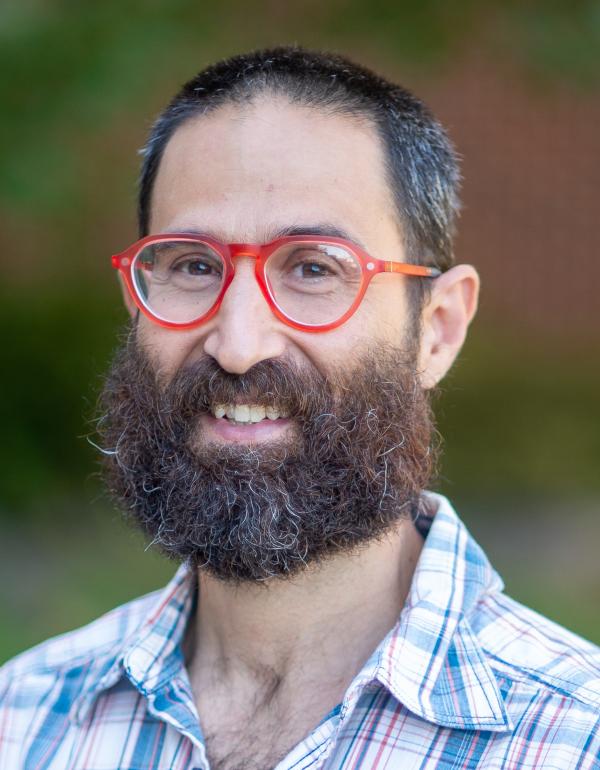
Joshua S. Weitz Research Group
University of Maryland, College Park
Joshua S. Weitz · Professor and Clark Leadership Chair in Data Analytics
How do viruses reshape population and ecosystem outcomes across marine and human-associated systems? The group develops theories and computational models of how viral infections modulate the fates of individuals, populations, and communities to understand ecosystem-scale function. Researchers build and analyze mechanistic and data-driven mathematical models to study viral ecology, bacteriophage therapy, and infectious disease dynamics across scales. Methods include computational simulation, statistical integration of field and lab datasets, and collaborations that link models to marine sampling and clinical or experimental data. The team applies quantitative approaches to predict phage–bacteria coexistence, marine viral impacts, and mechanisms driving infection variability.
 Independently curated · Unclaimed
Joshua Singer Research Group
University of Maryland, College ParkJoshua Singer · Department Chair and Professor
How do individual synapses in the rod bipolar cell pathway shape retina output under low-light conditions? The laboratory studies signaling in a retinal circuit called the rod bipolar cell pathway using recordings of electrical activity from neurons. They investigate synaptic transmission from rod bipolar cells to AII amacrine cells and analyze processing of rod bipolar outputs by AIIs and ganglion cells. Recordings are complemented by anatomical and computational analyses to understand circuit responses to visual stimuli. The group applies these approaches to develop broader principles of how neuron and synapse properties generate circuit behavior.
Joye Research Group
University of Georgia (USA)
Samantha B. Joye · Regents' Professor, Athletic Association Professor of Arts and Sciences
The ocean’s smallest organisms help control processes that reach across the planet. Samantha Joye studies the interactions between microbes, environmental conditions, and biogeochemical cycling in coastal and open-ocean systems. Her group examines how climate change and human disturbances affect those processes, including responses to temperature, salinity, sea level, and storms. Research also reaches extreme environments such as deep-sea hydrothermal vents. The work connects microbial ecology with environmental chemistry to explain how changing conditions alter ocean ecosystem function.
 Independently curated · Unclaimed
Juan Domínguez‑Bendala Research Group
University of Miami
Juan Domínguez‑Bendala · Research Professor of Surgery
Can stem cell differentiation and organotypic pancreatic cultures produce functional insulin‑producing beta cells for type 1 diabetes treatment? The Domínguez‑Bendala Lab develops regenerative strategies including stem cell differentiation into insulin‑producing β‑cells and islet regeneration. The team discovered molecular oxygen’s instructive role to drive β‑cell differentiation and patented enhanced oxygenation culture devices for stem cell cultures. They developed genetic fail‑safe approaches to increase safety of pluripotent stem cell transplantation. The group uses lineage tracing, single‑cell RNAseq, sorted population transplantation, and human pancreatic slice organotypic culture to monitor and test β‑cell regeneration.
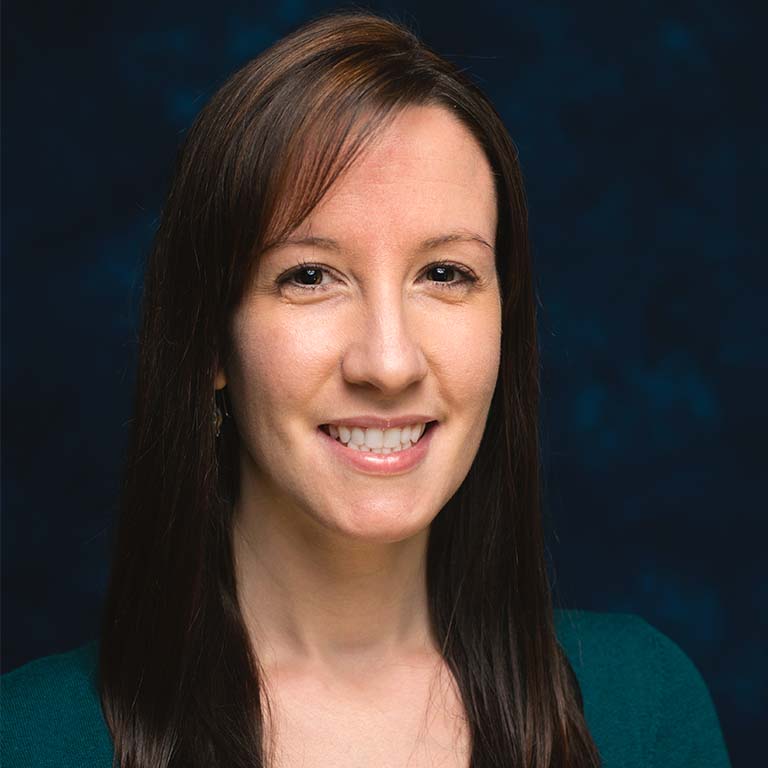
Judith Eisen Research Group
University of Oregon
Judith Eisen · Professor of Biology
A developing nervous system must produce the right cells and connect them to the right partners. Judith Eisen investigates how neuronal diversity emerges, how circuits are wired, and how host-associated microbes and the immune system influence neural development. Her research combines cellular, molecular, genetic, and microbiological manipulations with live imaging in zebrafish. These projects link cell fate and synaptic organization with the surrounding biological environment. The lab asks prospective graduate students to contact Eisen directly to determine whether it is accepting new students.
 Independently curated · Unclaimed
Julia van Kessel Research Group
Indiana UniversityJulia van Kessel · Professor
How does quorum sensing in Vibrio bacteria detect community composition and trigger coordinated behavioral switches in marine environments? The lab investigates molecular, genetic, and biochemical mechanisms that coordinate quorum-sensing developmental switches in Vibrio species using microbial genetics and biochemistry. Researchers apply molecular biology, chemistry, structural biology, transcriptomics, and bioinformatics to dissect signal production, detection, and downstream gene-regulatory responses. The group focuses on marine Vibrio pathogens of fish, shellfish, coral, and humans to link communication mechanisms to ecology and pathogenesis. Rising ocean temperatures and environmental change are studied as drivers that increase Vibrio infections in natural and aquaculture settings, motivating mechanistic studies of communication in environmental niches.
Showing 241–264 of 541 labs