
Menu
Research labs across colleges and universities
Find a lab
worth exploring.
Browse faculty research, publications, teams, and contact details. Unclaimed listings are independently curated from public sources and do not imply endorsement or recruiting availability.
About listings, corrections, and removal ↗541 research-led lab profiles
Browse labs by their listed college affiliationJulie Schneider Research Group
Rush University
Julie Schneider · Professor
Julie Schneider investigates the brain changes that accompany memory loss and dementia in older adults. Her research brings neuropathology together with epidemiology to examine Alzheimer’s disease, vascular conditions, and other contributors to cognitive impairment. She also studies relationships between diet and abilities such as memory, thinking, and problem-solving. As senior neuropathologist at the Rush Alzheimer’s Disease Center, her work connects biological evidence from the brain with patterns observed in aging populations. This approach helps disentangle the multiple processes that can affect cognition late in life.
Kamel Khalili Research Group
Temple UniversityKamel Khalili · Laura H. Carnell Professor
How do viruses disrupt the cells and signaling systems of the brain? Kamel Khalili studies neurodegeneration, abnormal neural-cell growth, and neuroinflammation using neurotropic viruses such as HIV and JC virus. His research investigates gene expression, protein quality control, chromosome instability, and glial-cell functions through molecular and cellular experiments, animal models, and clinical samples. A related effort uses gene editing to investigate removal of viral DNA. The work connects virology with neuroscience and experimental therapeutic strategies, without treating those strategies as established cures.
 Independently curated · Unclaimed
Karen Daniels Research Group
North Carolina State University
Karen Daniels · Distinguished Professor
Why do collections of grains and soft materials deform, develop patterns or fail when their surroundings change? The lab conducts experiments on granular materials, fluids, gels and disordered metamaterials to investigate behavior away from equilibrium. Researchers connect these experimental systems with theoretical approaches to examine the mechanisms controlling transitions between different material behaviors. Experiments explore how failure occurs and how unexpected patterns emerge in materials whose collective behavior depends on many interacting parts. Some studies use simplified experimental systems to examine biological and geological phenomena, while others draw questions from industry and climate change.
 Independently curated · Unclaimed
Karen Eilbeck Research Group
University of Utah
Karen Eilbeck · Professor of Biomedical Informatics
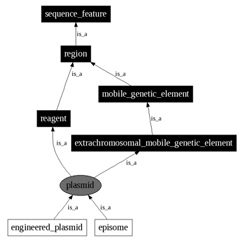
How can structured ontologies improve analysis and sharing of genomic and biological data for precision medicine questions? The lab develops ontologies and ontology-enabled software to manage and analyze genomic and biological data. Researchers apply bioinformatics techniques and computer-science methods to organize biological data so it becomes more amenable to computational analysis. The group builds user interfaces and tools to query and visualize controlled genomic terminology and variant annotations for downstream interpretation. Ongoing work includes development and application of software and ontologies to support precision-medicine analyses of genomic variation.
Karen L. Christman Research Group
University of California, San DiegoKaren L. Christman · Professor, Bioengineering
Can injectable extracellular matrix hydrogels restore tissue structure and function after myocardial infarction using minimally invasive delivery? The lab develops infusible and catheter-deliverable decellularized extracellular matrix materials to target infarcted myocardium and preserve cardiac function. Researchers study immunomodulatory and pro-reparative gene expression responses using spatial and single-nucleus transcriptomics and animal myocardial infarction models. The group engineers enzyme-responsive nanoparticles and MMP-responsive polymeric materials for targeted delivery and controlled retention of therapeutics in injured heart tissue. The group creates vaginal and pelvic muscle extracellular matrix hydrogels to prevent pelvic floor dysfunction and promote skeletal muscle regeneration after birth injury.
 Independently curated · Unclaimed
Karsten Zengler Research Group
University of California, San DiegoKarsten Zengler · Professor In Residence, Pediatrics
How can targeted interventions alter complex microbial communities to improve host health? The lab uses community systems biology to study microbe–microbe and microbe–host interactions with combined experimental and computational approaches. Researchers apply multi-omics, metatranscriptomics, and metatranslatomics to identify mechanisms of competition between pathogens and resident microbiota. The group builds genome-scale metabolic and machine-learning models to predict competition, substrate preferences, and outcomes of microbiome-directed interventions. Experimental pipelines include synthetic microbial communities, skin microbiome transplants, and quantitative omics to design reproducible manipulations of microbial environments.
 Independently curated · Unclaimed
Kate Adamala Research Group
University of Minnesota
Kate Adamala · Associate Professor
Can synthetic cells be built to model life and to serve as programmable bioreactors for biotechnology and space missions? The Adamala group builds and studies synthetic minimal cells—liposomal bioreactors that mimic natural cell functions and can be engineered for new capabilities. Researchers use cell-free protein expression, liposome encapsulation, and RNA engineering to create programmable synthetic cells for metabolic engineering, drug development, and biosensing. The lab applies synthetic cell systems to investigate origin-of-life questions and to develop tools for biomanufacturing and space exploration.
Katharine Page Research Group
The University of Tennessee-Knoxville
Katharine Page · Professor
Page investigates complex functional materials by asking how their structure explains their behavior. Her research uses advances in structural characterization to study both bulk materials and nanoscale systems. Application areas include ferroelectric oxides, energy-conversion materials, nanoscale catalysts, and high-entropy ceramics. The unifying theme is connecting the arrangement of a material’s constituents with the functions that make it useful. For prospective researchers interested in materials chemistry and crystallography, this offers a setting where improving how a structure is measured can open new questions about designing and understanding functional materials.
 Independently curated · Unclaimed
Katherine E. Varley Research Group
University of UtahKatherine E. Varley · Professor
How are epigenetic gene regulation and DNA methylation patterns disrupted in breast cancer cells? The Varley Lab applies next-generation sequencing assays and computational analysis to map gene expression, transcription factor binding, and DNA methylation in breast cancer. The group integrates genomic assays with computational pipelines to discover candidate drug targets and biomarkers for breast cancer treatment. Ongoing projects include creation and application of sequencing-based assays and translational efforts to convert genomic discoveries into clinical tools.
Katia Koelle Research Group
Emory University
Katia Koelle · Professor
How does viral evolution interact with epidemiological spread to shape disease dynamics and immunity? The lab models antigenic and genetic evolution of RNA viruses to link transmission dynamics with herd immunity effects. Researchers develop and fit mathematical and statistical models to sequence and epidemiological data to study constraints on viral adaptation. The group analyzes within-host heterogeneity in viral dynamics to assess how infection history and immune status alter selection pressures. Projects evaluate how control measures like immunization and vector reduction affect epidemiological and evolutionary outcomes.
Kaushik Roy Research Group
The University of Alabama
Kaushik Roy · Assistant Professor
Kaushik Roy's faculty profile is ready for the lab to add a research mission, team information, and current opportunities.
Kavita Bala Research Group
Cornell University
Kavita Bala · Provost Professor of Computer Science
How can visual systems identify materials and lighting from photographs to enable realistic editing and recognition? The group develops datasets and algorithms for material recognition and visual search, including the Materials in Context Database and visual similarity models. Researchers build physically-based and differentiable rendering methods for recovering shape and material properties to support editing and relighting. The group applies remote-sensing and scale-aware recognition techniques to satellite imagery and cloud removal benchmarks for Earth-observation tasks. Methods combine convolutional neural networks, differentiable Monte Carlo rendering, and dataset/benchmark construction to evaluate recognition and inverse-rendering performance.
 Independently curated · Unclaimed
Keke C. Fairfax Research Group
University of UtahKeke C. Fairfax · Associate Professor of Microbiology and Immunology
How does Schistosoma mansoni infection alter immune development and protection against metabolic and inflammatory diseases? The laboratory uses Schistosoma mansoni infection models to study IL-4 driven immunomodulation and its consequences for B and T cell memory. Researchers use IL-4 reporter mice and antigen challenge to dissect IL-4 roles in maintaining follicular dendritic cells, lymphatic endothelial cells, and peripheral lymph node environments. The group performs transcriptional and metabolic profiling of hepatic macrophages to identify changes in phospholipid, cholesterol, and amino-acid pathways linked to infection-induced protection from metabolic disease. Projects include maternal schistosomiasis models to assess prenatal antigen exposure effects on offspring immune responsiveness.
 Independently curated · Unclaimed
Kelsey Prissel Research Group
Purdue University West Lafayette
Kelsey Prissel · Assistant Professor
How did planetary crusts and cores form and interact to produce observed volcanic and geochemical signatures? Kelsey Prissel’s group conducts high-temperature and high-pressure laboratory experiments and isotopic analyses to recreate planetary differentiation processes. They perform geochemical modeling of elemental diffusion, isotopic fractionation, and magma crystallization to interpret experimental results. Petrographic characterization of lunar, meteorite, and terrestrial samples supports synthesis of ground-truth materials for remote sensing. The group also participates in analog mission and field campaigns to prepare instruments and materials for planetary surface exploration.
Kelvin H. Lee Research Group
University of Delaware
Kelvin H. Lee · Gore Professor of Chemical and Biomolecular Engineering
Kelvin Lee’s research connects biotechnology with two practical challenges: manufacturing biological medicines and understanding neurodegenerative disease. The group uses proteomic, genomic, and other systems-biology approaches to investigate how therapeutic proteins and antibodies can be produced more effectively. It also develops stem-cell-based models of the blood-brain barrier to study molecule delivery and disease-related questions. These projects bring chemical engineering together with cellular measurements and biomedical models. His research offers a connection between the molecular details of biological processes and the design of manufacturing or therapeutic-delivery strategies.
Kenneth C. Catania Research Group
Vanderbilt University
Kenneth C. Catania · Stevenson Professor of Biological Sciences
How do mammalian sensory systems organize to support behavior in diverse sensory environments and survival? The lab uses studies of animal behavior to link sensory input to observed actions across mammal species. Researchers investigate peripheral sensory receptor structure and function to determine how receptors transduce environmental stimuli. The group examines the organization of the central nervous system, with an emphasis on neocortex, to map neural circuits underlying sensation. Information from these different approaches is integrated to obtain a broad view of how sensory receptors and nervous systems have evolved to meet ecological challenges.
Kenneth Reardon Research Group
Colorado State University, Fort Collins
Kenneth Reardon · Professor
Reardon combines microbial engineering with measurements of how biological systems operate. His group uses bioreactor analysis, proteomics, applied microbiology, and microbial ecology to investigate bacteria and algae for producing biofuels and other chemicals. Projects also include biosensors and proteomic approaches to understanding microbiomes. His wider research interests connect food, energy, and water production, treating those systems as interdependent. For prospective researchers, the group offers a bridge from molecular measurements to engineered biological processes, where understanding an organism or community supports decisions about sustainable production and monitoring.
Kenneth S. Campbell Research Group
University of KentuckyKenneth S. Campbell · Professor
Kenneth Campbell studies how the heart’s molecular machinery connects to its performance as a whole organ. His group combines biophysical and biochemical experiments with computational modeling to investigate cardiac contractility and heart failure. Research spans sarcomere mechanics, ventricular growth, blood-flow dynamics, and recovery associated with ventricular unloading. A cardiac tissue biobank supports collaborations on genetic and molecular contributors to disease. The program links donated human samples and detailed mechanical measurements with simulations of hearts that change over time, with the long-term aim of improving treatment strategies.
 Independently curated · Unclaimed
Kevin Righter Research Group
University of Rochester
Kevin Righter · Professor of Earth and Environmental Sciences
How did core formation and magma ocean melting control volatile and siderophile element distributions during planet formation? The group conducts experimental petrology that reproduces high pressures and temperatures to study magma ocean crystallization and melting pathways. Researchers experimentally determine trace element partitioning, isotopic tracer behavior, and redox state to constrain mantle differentiation mechanisms. The lab performs geochemical and petrographic analyses of meteorites and OSIRIS-REx Bennu samples to reconstruct asteroid alteration and formation pathways. He is building a laboratory at Rochester to simulate planetary interiors and run high pressure and temperature experiments connecting results to planetary compositions.
Kevin Skadron Research Group
University of Virginia (Main campus)Kevin Skadron · Harry Douglas Forsyth Professor of Computer Science
How can memory be augmented to perform computation directly to reduce data movement and improve throughput for data-intensive workloads? His group develops new processing-in-memory architectures and evaluates them (e.g., Fulcrum, Gearbox, Sieve, DRAM-CAM, DRAM-AP) to explore performance and design trade-offs. The researchers design new automata and regular-expression processing hardware and runtimes through the UVA Center for Automata Processing (CAP) to enable high-throughput pattern matching and monitoring. The team builds programming models, APIs, and compiler support to simplify mapping applications to heterogeneous and PIM systems. They also create simulation frameworks and benchmark suites, including the PIMeval simulation framework and PIMbench benchmark suite, for quantitative evaluation.
Kim Binsted Research Group
University of Hawai’i at Mānoa
Kim Binsted · Professor
A successful space mission depends on people functioning together as well as on its technology. Binsted’s research interests include artificial intelligence, human computer interfaces, and long duration human space exploration. Her HI-SEAS research has examined life in an isolated Mars analog habitat on Mauna Loa. Studies investigated crew dynamics, morale, stress, food, and performance during extended confinement. This work explores how crew selection and support can influence team functioning, connecting computing and human behavior with the practical challenges of sustained exploration far from Earth.
Konstantinos Arfanakis Research Group
Rush UniversityKonstantinos Arfanakis · Professor
Konstantinos Arfanakis develops ways to see and measure brain changes associated with aging and dementia. His research spans MRI acquisition, image reconstruction and analysis, brain atlases, and imaging performed both in living participants and in donated brain tissue. Connecting MRI measurements with neuropathology helps investigate imaging biomarkers for age-related disease. He leads imaging research at Rush and also holds a biomedical engineering appointment at Illinois Tech. The work bridges imaging physics, computational analysis, and the biological interpretation of signals from the aging brain.
Krupali Uplekar Krusche Research Group
University of Notre Dame
Krupali Uplekar Krusche · Associate Professor of Architecture
How can high-definition digital documentation preserve and reveal architectural form and construction details at complex heritage sites? The DHARMA lab uses high-definition surveying lasers and GigaPan photography to create precise 3-D documentation of monuments and urban settings. Researchers combine laser scans with hand measurements and photogrammetry to produce blueprints and detect subtle structural deterioration for conservation and repair. The team compared laser-derived measurements with historical reconstructions to reassess original temple column spacing, using frieze text spacing and foundational alignment as corroborating evidence. Students and faculty develop deliverables—exhibits, apps, books, and 3-D portals—based on rigorous optical surveying and analysis.
 Independently curated · Unclaimed
Kunihiko (Sam) Taira Research Group
University of California, Los Angeles
Kunihiko (Sam) Taira · Professor / Vice Chair Industry Relations and Outreach
How can data-driven models enable control of unsteady fluid flows for practical engineering systems? The Taira Lab develops high-performance computational fluid dynamics models that combine fluid mechanics and dynamical systems theory to analyze flow structures. The group applies network science and data science to identify coherent flow mechanisms and reduced-order representations useful for flow control design. Researchers use large-scale numerical simulation and high-performance computing to test control strategies and to derive interpretable models of unsteady aerodynamic forces. Experimental and computational validation are used to evaluate control performance and to connect mechanisms to engineering applications.
Showing 265–288 of 541 labs