
Menu
University research directory
Research labs at
Texas A&M University.
Compare 5 listed faculty-led profiles, explore their research interests, and follow the evidence in their selected work. These listings are a starting point for discovery and do not establish recruiting availability.
Explore the research before reaching out
Review each lab’s official website and recent publications. Compare the methods used, the questions being asked, and the practical requirements of any published opening. Unclaimed profiles are independently curated; the university has not approved or endorsed them.
How to compare research labs ↗Official university website ↗5 research-led lab profiles
Browse labs by their listed college affiliation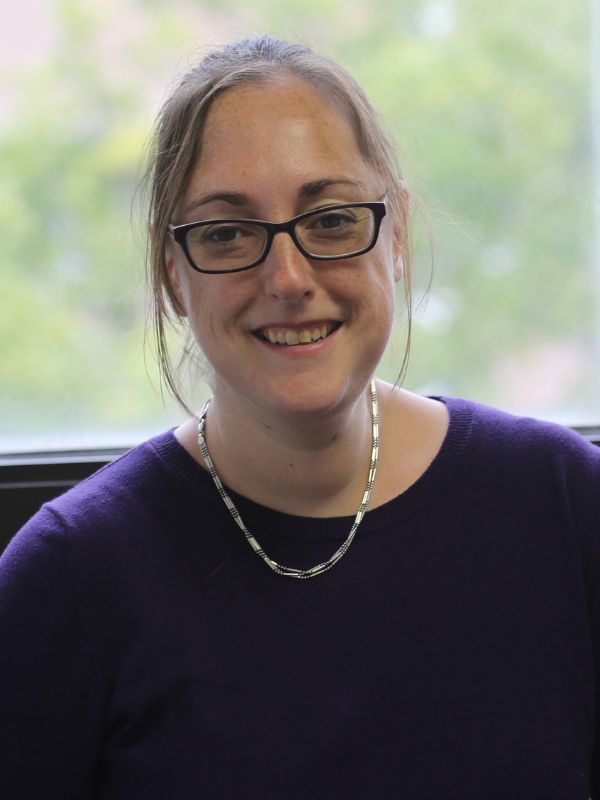 Independently curated · Unclaimed
Angela Mitchell Research Group
Texas A&M University
Angela Mitchell · Associate Professor
How do gram-negative bacteria strengthen their outer membrane permeability barrier during stress to resist antibiotics? The Mitchell Lab uses genetics and biochemistry to measure barrier changes and identify mechanisms that strengthen the outer membrane under stress. Researchers interrogate roles of specific membrane and periplasmic proteins in OM maintenance and adaptation using genetic suppressor analysis and biochemical assays. The group links OM barrier alterations to antibiotic resistance and pathogenesis through targeted functional experiments. Ongoing projects probe envelope stress responses and phospholipid transport mechanisms that determine membrane permeability.
 Independently curated · Unclaimed
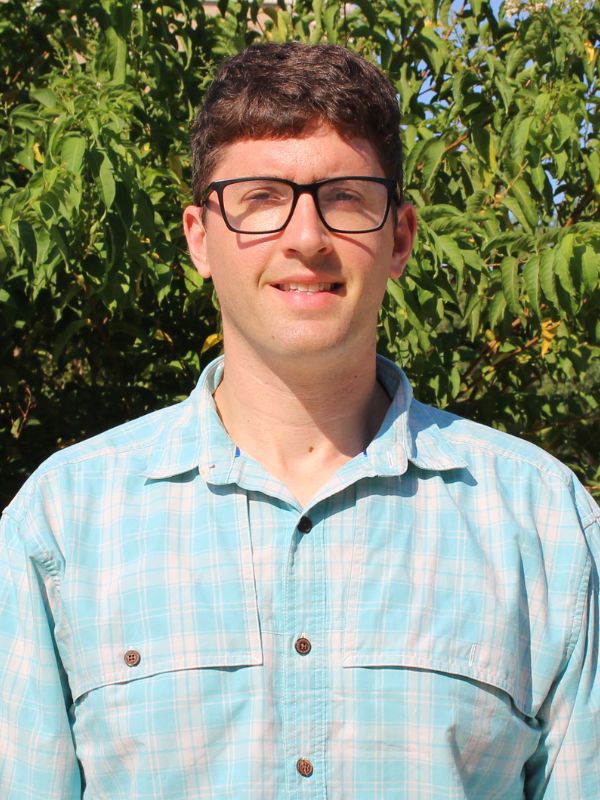
Jared Bard Research Group
Texas A&M UniversityJared Bard · Assistant Professor
How do cells read the molecular grammar of mRNA to produce specific, regulatable proteins during stress? The Bard Lab studies stress-induced translational reprogramming and stress-induced biomolecular condensation in cells. The group uses infection by human pathogenic viruses such as Chikungunya virus as a model to study how viruses disperse and co-opt stress granules. Researchers investigate molecular mechanisms by which viral reorganization affects host and viral translation using integrative biophysical, biochemical, and high-throughput tools. The lab applies these methods to cancer cell stress-resistance models to understand how stress granules contribute to resistance to chemotherapy.
 Independently curated · Unclaimed
Manish Shetty Research Group
Texas A&M UniversityManish Shetty · Assistant Professor
How can catalytic materials be designed to convert waste plastics and abundant feedstocks into valuable chemicals sustainably? The research program designs and tests catalysts for plastics upcycling and tandem reactions such as methanolysis and transfer hydrogenolysis of PET using experimental catalysis and reaction kinetics. Researchers perform density functional theory and computational catalysis studies to modulate surface–adsorbate interactions for ammonia synthesis and other transformations. The group investigates catalyst deactivation mechanisms and reaction pathways for polyethylene hydrogenolysis with spectroscopy and mechanistic experiments. Work develops catalyst design principles for CO2, CH4 and biomass valorization toward sustainable chemical manufacturing.
Monica Jinwoo Kang Research Group
Texas A&M UniversityMonica Jinwoo Kang · Assistant Professor
What mathematical structures reveal how quantum gravity encodes low-energy observables and entanglement? The group constructs invariants and leverages dualities to compute correlations and entanglement in quantum field theory and quantum gravity using techniques from conformal and supersymmetric field theory. Researchers develop operator-algebraic and algebraic-geometric methods to study non-perturbative aspects of quantum field theories that lack Lagrangian descriptions. The group applies quantum information concepts and quantum error-correcting structures to analyze holography and gravitational emergence. Work combines lattice gauge theory, string-theory tools and semiclassical gravity to derive rigorous mathematical results about quantum gravity.
 Independently curated · Unclaimed
Ricardo Gutierrez-Osuna Research Group
Texas A&M UniversityRicardo Gutierrez-Osuna · Professor, Computer Science & Engineering
How can wearable sensors and speech signals be combined to monitor health noninvasively in everyday settings? The PSI Lab develops multimodal physiological datasets and models for non-invasive blood glucose estimation using physiological sensors and machine learning. The group builds low-latency speech-processing and anonymization models that disentangle segmental and prosodic factors with signal-processing and end-to-end neural approaches. Researchers apply chemometrics and signal analysis to extract biomarkers from wearable and physiological data for digital health applications. The lab leverages machine learning, speech processing and wearable sensors to detect and predict physiological states relevant to health.
Showing 1–5 of 5 labs