
Menu
University research directory
Research labs at
University of Texas at Austin.
Compare 5 listed faculty-led profiles, explore their research interests, and follow the evidence in their selected work. These listings are a starting point for discovery and do not establish recruiting availability.
Explore the research before reaching out
Review each lab’s official website and recent publications. Compare the methods used, the questions being asked, and the practical requirements of any published opening. Unclaimed profiles are independently curated; the university has not approved or endorsed them.
How to compare research labs ↗Official university website ↗5 research-led lab profiles
Browse labs by their listed college affiliation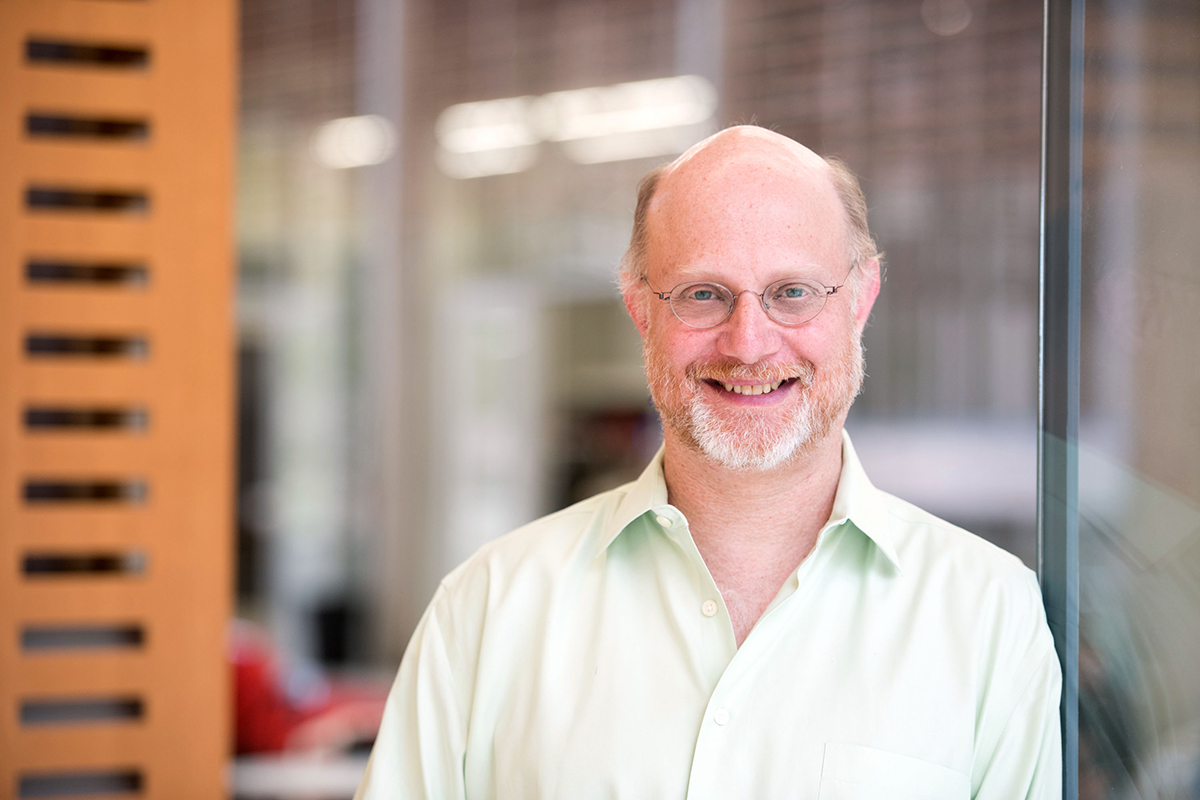 Independently curated · Unclaimed
David Zuckerman Research Group
University of Texas at Austin
David Zuckerman · Professor and Regents Chair
Can computation achieve the advantages of randomized algorithms when high-quality randomness is unavailable? Zuckerman's research designs and analyzes randomness extractors and pseudorandom generators to produce high-quality randomness from weak sources. He develops two-source extractor algorithms that combine two defective randomness sources to create robust randomness for algorithms. The group studies conversions of randomized algorithms into deterministic or robust randomized forms, using extractor constructions and pseudorandomness tools. Researchers apply these techniques to complexity theory, coding, network constructions, and hardness-of-approximation questions to understand randomness's role in computation.
 Independently curated · Unclaimed
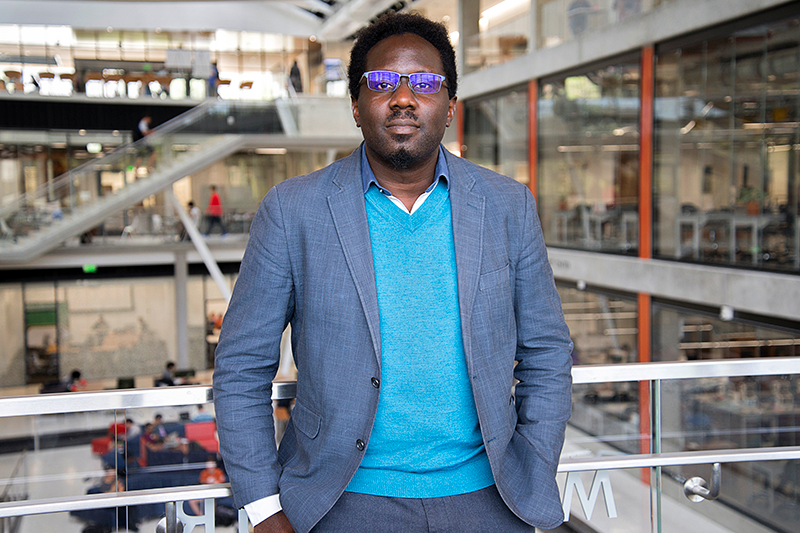
Deji Akinwande Research Group
University of Texas at AustinDeji Akinwande · Professor
Can atomically thin materials enable ultra-low-power wearable sensing and memory devices for continuous health monitoring? The group demonstrated continuous cuffless monitoring using graphene bioimpedance tattoos for arterial blood pressure measurement. Researchers develop nonvolatile resistance switching devices called Atomristors in transition metal dichalcogenide atomic sheets to provide atomic-scale memory. The lab reported the first silicene field-effect transistors operating at room temperature to explore new two-dimensional semiconductor device platforms. The team advances flexible graphene-based electronics and wearable sensors, including a clinically accurate wearable blood pressure monitor and graphene electronic tattoo sensors.
 Independently curated · Unclaimed
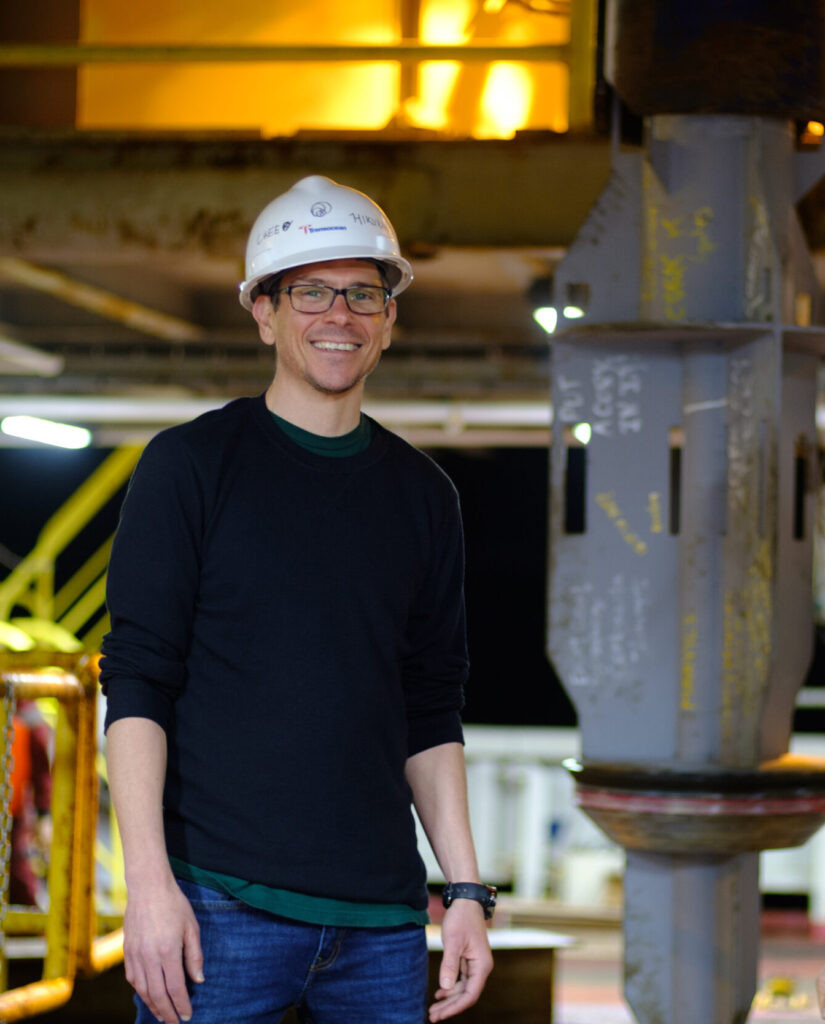
Demian M. Saffer Research Group
University of Texas at AustinDemian M. Saffer · Professor, Department of Earth and Planetary Sciences
How do fluids and deformation at subduction plate boundaries control slow earthquakes and seismic behavior? Demian Saffer's research examines subduction zones using scientific drilling and borehole monitoring to observe slow slip and related processes. The group conducts ocean-drilling expeditions as co‑chief scientists to install observatories and collect in situ data on fault zones. Laboratory and field studies probe fault and sediment mechanics and pore‑fluid interactions to infer frictional behavior of plate interfaces. Researchers integrate geophysical observations, borehole measurements, and experimental petrophysics to relate hydrological and mechanical processes to earthquake occurrence.
 Independently curated · Unclaimed
Dev Niyogi Research Group
University of Texas at AustinDev Niyogi · Professor, Department of Earth and Planetary Sciences
How can urban design and land‑surface processes reduce risks from extreme heat, heavy rain, and urban storms? Niyogi leads the TExUS Lab to study extreme weather and urban sustainability, combining observations and modeling to improve prediction of heavy rainfall, urban thunderstorms, hurricanes, and heat extremes. The group develops and evaluates land‑surface and urban parameterizations to assess how urban and agricultural landscapes modify local hydroclimate. Researchers translate scientific analyses into decision tools and portals to support climate‑ready planning for coastal cities and agricultural systems. The lab combines observational, modeling, and applied decision‑support work to mitigate weather hazards.
 Independently curated · Unclaimed
Işıl Dillig Research Group
University of Texas at AustinIşıl Dillig · Department Chair and Professor
How can automatic program synthesis and verification make software safer and easier to build? Dillig's research develops program synthesis algorithms that generate code from specifications and examples to automate routine programming tasks. The group builds program verification and automated logical reasoning techniques to prove absence of classes of errors and security vulnerabilities. Researchers design domain-specific languages and type systems and apply automated theorem proving to scale verification and synthesis tools. The lab pursues interdisciplinary projects linking program analysis with AI, databases, security, and systems.
Showing 1–5 of 5 labs