
Menu
Research labs across colleges and universities
Find a lab
worth exploring.
Browse faculty research, publications, teams, and contact details. Unclaimed listings are independently curated from public sources and do not imply endorsement or recruiting availability.
About listings, corrections, and removal ↗541 research-led lab profiles
Browse labs by their listed college affiliationYuan Liu Research Group
Florida International University
Yuan Liu · Associate Professor
Liu studies how cells repair oxidative damage to DNA and what happens when those processes fail. Her laboratory focuses on DNA base excision repair, a pathway that addresses damaged bases and strand breaks. Research connects repair enzymes and their cofactors with genomic and epigenomic instability in diseases including cancer and neurodegeneration. FIU also describes an interest in using repair biology to improve analysis of degraded DNA in forensic samples. The group provides a specific bridge between biochemical repair mechanisms, disease-related genetic stability, and possible applications in molecular detection.
Yuehe Lin Research Group
Washington State University
Yuehe Lin · Professor
Lin engineers functional nanomaterials for problems spanning biological measurement, environmental monitoring, and energy conversion. His research includes immunosensors, paper-based and microfluidic biosensors for detecting biomarkers, and materials for imaging and drug delivery. Other directions investigate water monitoring and treatment, fuel cells, batteries, supercapacitors, and electrochemical catalysis. The common thread is designing and characterizing a material so that its nanoscale properties support a useful device or reaction. This offers a research bridge between analytical chemistry and materials engineering, with several concrete application areas rather than a single generic nanotechnology theme.
 Independently curated · Unclaimed
Yuqi Zhou Research Group
The University of Alabama
Yuqi Zhou · Assistant Professor
Yuqi Zhou's faculty-led research profile covers Distributed Systems, Human-Computer Interaction, Robotics, and Wearable Technologies.
Yuri Bazilevs Research Group
Vanderbilt University
Yuri Bazilevs · Professor of Civil and Environmental Engineering
Can AI‑enabled, physics‑based simulation accelerate engineering design and analysis across scales and industries? Bazilevs develops isogeometric analysis and high‑performance computational mechanics methods for structural analysis, fluid–structure interaction, and design‑through‑analysis workflows. The research applies advanced simulation to aerospace composites, naval and undersea engineering, and multidisciplinary engineering problems using HPC methods. At Vanderbilt he is charged with building an AI‑enabled center (SCALES) to integrate physics‑based simulation and machine learning for interdisciplinary engineering research and graduate education. The group pursues algorithm development and large‑scale simulation to improve design accuracy and computational efficiency.
Zach Eilon Research Group
University of California, Santa Barbara
Zach Eilon · Professor
How do seismic waves reveal three-dimensional variations in Earth structure beneath tectonic regions? Research applies seismic tomography and inverse methods to image subsurface velocity structure and anisotropy. Projects use tomographic inversions to map attenuation and anisotropic signatures that constrain deformation and composition. Researchers develop and apply inverse methods to improve resolution and quantify uncertainties in seismic models. Methods include seismic waveform analysis and tomographic imaging to interpret geophysical structure and tectonic processes.
 Independently curated · Unclaimed
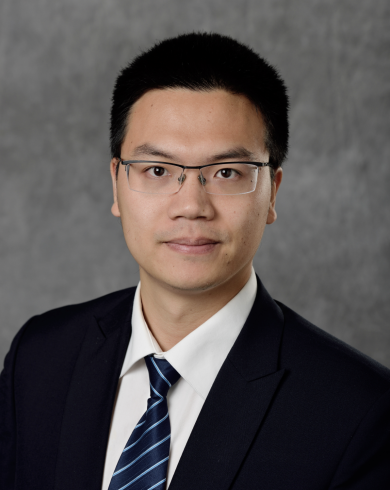
Zhao‑Jun Liu Research Group
University of Miami
Zhao‑Jun Liu · Professor of Surgery
How can gene‑ and stem‑cell therapies enhance therapeutic angiogenesis and modulate vascular inflammation? The Liu Lab develops gene‑ and stem cell‑based therapies for therapeutic angiogenesis in regenerative medicine and studies homing signals for endothelial progenitor and mesenchymal stem cells to ischemic, wound and tumor tissues. The group investigates molecular mechanisms of atherosclerosis and vascular inflammation to identify therapeutic targets. In cancer biology, researchers examine Notch signaling dysregulation in tumor and stromal cells to develop targeted therapies for melanoma.
 Independently curated · Unclaimed
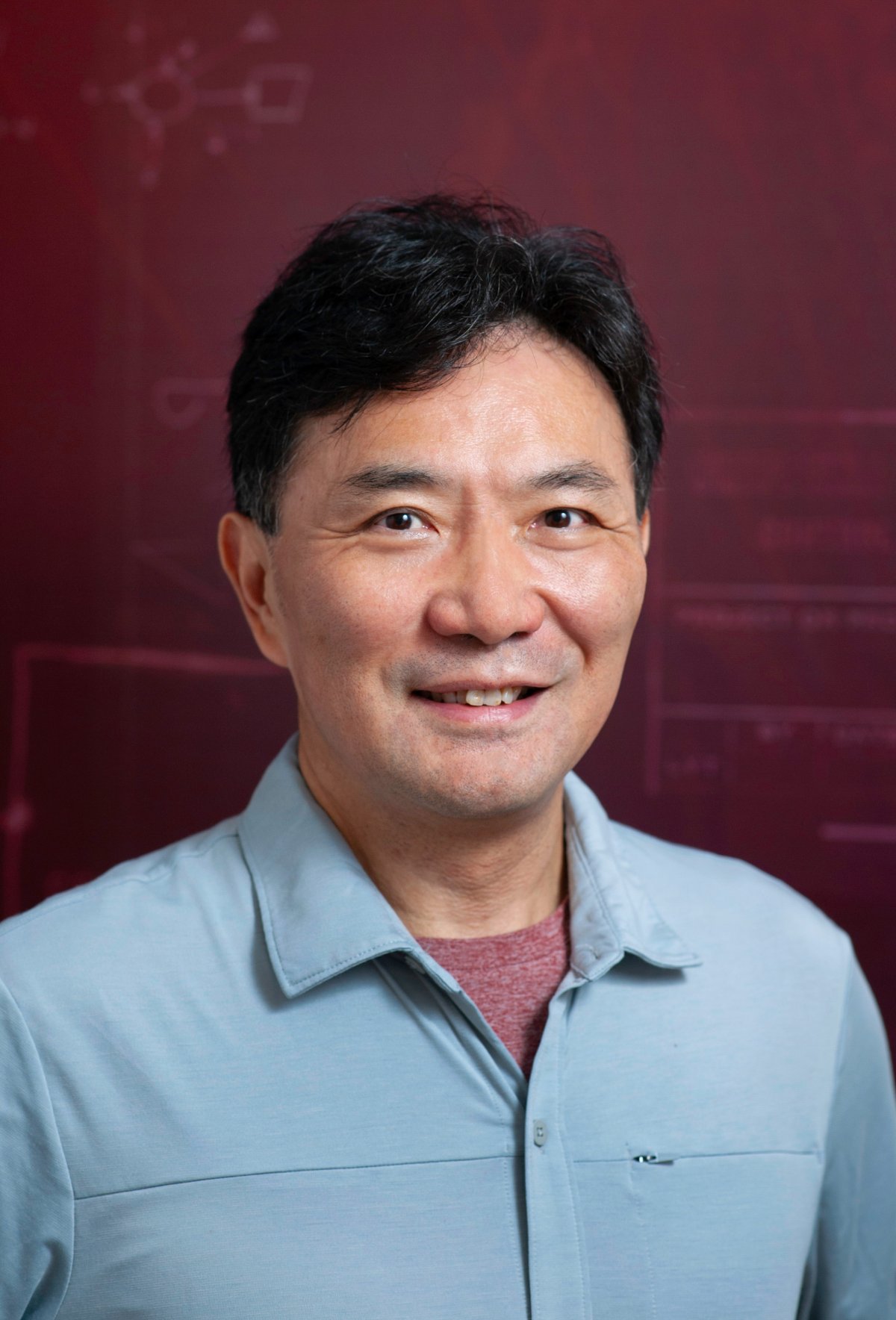
Zhaojian Li Research Group
Michigan State University
Zhaojian Li · Red Cedar Distinguished Professor, Mechanical Engineering
Can robots pick and sort apples reliably in unstructured orchard environments using integrated mobile manipulation systems? The group is the PI and lead developer for an Automated and Integrated Mobile System (AIMS) project to develop an efficient robotic apple harvester funded through a USDA Specialty Crop Research Initiative. The researchers design cloud-enabled vehicle control and sensing methods to address connectivity, control and privacy in connected and automated vehicles as described in the CAREER project. The team builds soft multi-arm robotic manipulators (SMART) and applies learning-based controllers to enable safer, compliant human-robot collaboration. The group applies learning and control of robot systems combined with vehicle dynamics and optimal control to improve autonomous mobility and robotic manipulation.
 Independently curated · Unclaimed
Zhi-Li Zhang Research Group
University of Minnesota
Zhi-Li Zhang · Professor, Qwest Land Grant Chair in Telecommunications
How can next-generation networks and AI be combined to support resilient, application-aware services like autonomous driving? The Computer Networking, Mobile, and AI Research Lab builds service-oriented, application-aware, scalable and secure 5G/NextG networked systems. The group develops AI/ML algorithms to enable intelligent software-defined networking, edge/cloud systems and Digital Twins. Researchers design and experimentally evaluate architectures for collaborative autonomous driving, metaverse applications, and IoT with cross-layer performance and security considerations. Work combines formal modeling, analysis, implementation, and real-world evaluation to measure and optimize networked system behavior.
 Independently curated · Unclaimed
Zhichao Cao Research Group
Michigan State UniversityZhichao Cao · Assistant Professor, Computer Science and Engineering
How can long-range, low-power IoT networks be designed for reliable sensing in agricultural soils and wild fields? The group develops LoRa-enabled, space-air-ground integrated networks and FarmEye for large-scale agricultural data collection to support long-term sensing. Researchers build ultra-sensitive signal detection and Deep-Range low-power methods for extending IoT communication range while preserving energy efficiency. The team integrates soil-aware transmission control (Kairos) and passive sensing platforms to enable robust cross-soil LoRa performance and soil nutrient sensing. The lab applies edge intelligence and geo-distributed federated learning (GeoFL) to enable efficient on-device model training across agricultural deployments.
Zhifeng Ren Research Group
University of Houston
Zhifeng Ren · Professor
Turning wasted heat into useful electricity is one focus of Zhifeng Ren’s materials research. His work investigates nanostructured thermoelectric materials whose thermal and electrical properties can be tuned for energy conversion. Other directions include catalysts for generating hydrogen and oxygen from water, materials with high thermal conductivity for managing heat, and superconductors. The research connects nanoscale structure and material characterization with practical energy challenges, offering a meeting point for condensed matter physics, nanotechnology, and the engineering of more efficient energy systems.
Ziqiang Wang Research Group
Boston College
Ziqiang Wang · Professor of Physics
When electrons interact strongly, a material can develop collective properties that are difficult to explain by treating the particles independently. Wang studies the theory of correlated electron materials, including high temperature superconductors, cobaltates, and ruthenates. His research also addresses magnetism, heavy fermion systems, and quantum spin systems. Further interests include unconventional superconductivity, emergent electronic states, and phases with topological order. Work on quantum Hall systems and graphene extends these questions to mesoscopic materials, connecting theoretical descriptions of interacting electrons with the diverse states that quantum matter can support.
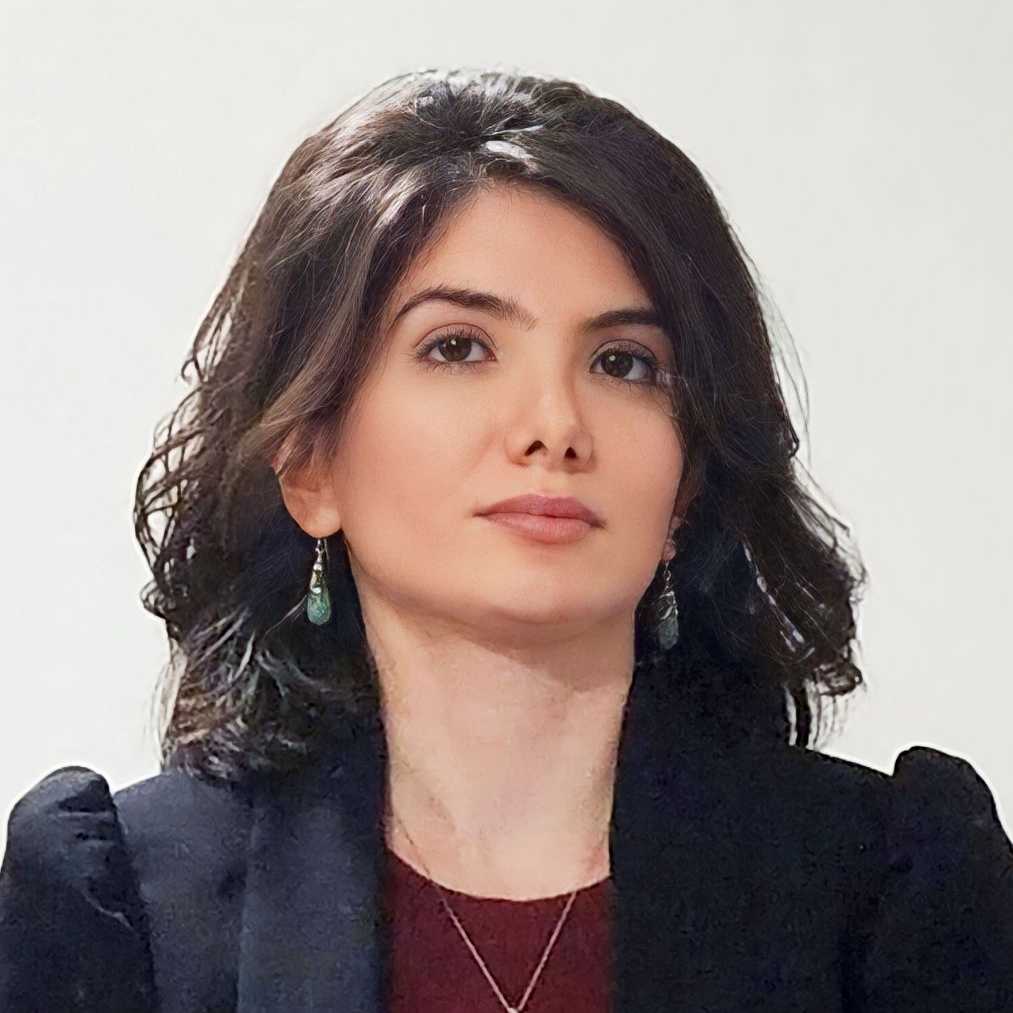
Ziv Bar-Joseph Research Group
Carnegie Mellon University
Ziv Bar-Joseph · FORE Systems Professor of Computer Science; Ray & Stephanie Lane Computational Biology Department; Machine Learning Department
How do computational methods reveal interactions and dynamics in complex biological systems across time? The Systems Biology Group develops computational methods for understanding interactions, dynamics and conservation of complex biological systems using approaches that span experimental design to systems-level analysis. The group builds algorithms inspired by biological distributed systems to improve distributed computing and to infer information-processing principles in biology. Projects include development of methods for experimental design and for reconstruction of dynamic biological networks from high-throughput temporal data. Researchers apply machine learning and bioinformatics to integrate static and temporal datasets to model biological system behavior.
 Independently curated · Unclaimed
Zohreh Davoudi Research Group
University of Maryland, College Park
Zohreh Davoudi · Associate Professor
How can quantum simulation and lattice methods solve strongly interacting nuclear and hadronic systems computationally? The research group develops and applies effective field theories and lattice QCD techniques to determine few-body interactions and hadronic contributions relevant to nuclear and particle physics. They create and benchmark frameworks for quantum simulation of lattice gauge theories and nuclear effective field theories using analog and digital quantum platforms. Researchers design algorithms and engineering approaches for implementing these problems on trapped-ion and other quantum-simulator hardware. The program aims to reduce sign-problem barriers and enable real-time and dense-matter simulations.
Showing 529–541 of 541 labs