
Menu
Research labs across colleges and universities
Find a lab
worth exploring.
Browse faculty research, publications, teams, and contact details. Unclaimed listings are independently curated from public sources and do not imply endorsement or recruiting availability.
About listings, corrections, and removal ↗541 research-led lab profiles
Browse labs by their listed college affiliation Independently curated · Unclaimed
Christy F. Landes Research Group
University of Illinois at Urbana-Champaign
Christy F. Landes · Professor of Chemistry
How do single molecules and particles reveal heterogeneous structure–function relationships in biological and synthetic systems? The research group develops experimental data acquisition and analysis methods to optimize information retrieval in single-molecule and single-particle spectroscopies. The group characterizes biological examples of heterogeneous structure–function relationships, including protein dynamics at interfaces, using single-molecule spectroscopy and imaging. The researchers identify, understand, and optimize heterogeneous structure–function relationships in synthetic systems using spectro-electrochemistry and nanoparticle plasmonics. The group combines experimental and theoretical methods to increase information content and interpret low signal-to-noise single-molecule data.
Chuanbing Tang Research Group
University of South Carolina-ColumbiaChuanbing Tang · Carolina Distinguished Professor
Chuanbing Tang’s group designs polymers for sustainability, energy, and antimicrobial applications. Research develops biobased plastics from renewable resources and investigates how molecular engineering can improve their thermal and mechanical properties. Metal-containing polymers support other directions, including membranes for alkaline fuel cells and materials that respond to mechanical stimuli. Antimicrobial molecules and polymers are explored as ways to strengthen or extend antibiotic activity against resistant bacteria. The work connects controlled polymer synthesis with practical material challenges, bringing renewable feedstocks and functional molecular design into the same research program.
Chun Liu Research Group
Illinois Institute of Technology
Chun Liu · Chair and Professor of Applied Mathematics
Complex fluids and biological transport processes require mathematical descriptions that connect behavior across scales. Liu investigates nonlinear partial differential equations, variational methods, and multiscale modeling to address these systems. His listed projects include moving interfaces, diffusion, ionic fluids, and ion channels. Research connects the mathematical structure of models with applications in biophysics and materials science. These directions examine how continuum descriptions represent systems with interacting components, linking foundational questions about equations to physical problems involving flow, charge transport, and material organization.
 Independently curated · Unclaimed
Claire F. Gmachl Research Group
Princeton UniversityClaire F. Gmachl · Eugene Higgins Professor of Electrical and Computer Engineering
How can compact mid-infrared lasers be engineered to detect trace gases and biomarkers for environmental and health monitoring? The group develops high-performance quantum cascade lasers with innovative cavity and active-region designs that expand output power, spectral coverage, and tunability. Researchers design and fabricate novel semiconductor devices and semiconductor metamaterials to tailor emission properties and enhance detector selectivity in the mid-infrared. Experimental projects use optical emission spectroscopy and other characterization methods to quantify ion concentrations and validate device performance in sensing applications. By integrating lasers, materials engineering, and detection systems the group targets mid-infrared sensing applications in environment, health, and security contexts.
 Independently curated · Unclaimed
Clark L. Gray Research Group
University of North Carolina at Chapel Hill
Clark L. Gray · Professor
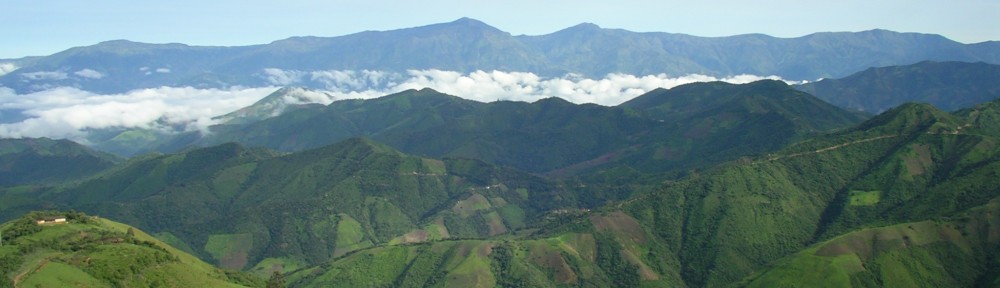
How do environmental changes influence rural livelihoods and migration decisions in developing regions? The research applies survey, statistical and demographic methods to link environmental variation with migration and household well-being. Researchers analyze population–environment interactions and use quantitative survey approaches to estimate how resource and climate changes shape livelihoods. The group investigates indigenous livelihoods and land use in the Ecuadorian Amazon through field-based socio-environmental studies and demographic analyses. They develop and teach methods to assess social vulnerability to climate change using spatial and statistical techniques.
Claudia Turro Research Group
Ohio State University (Main campus)Claudia Turro · Dr. Melvin L. Morris Professor
Can light-activated metal complexes be controlled to selectively release therapeutics or drive solar-fuel reactions under visible or near-IR illumination? The Turro group investigates excited-state control and dynamics of mono- and dinuclear transition metal complexes using photophysical measurements and photochemical assays to study energy transfer, charge separation, recombination, and ligand dissociation. Projects include designing complexes that are nontoxic in the dark but cytotoxic upon irradiation for photochemotherapy and photo-induced ligand dissociation to enable targeted drug delivery. The group also develops complexes that both harvest broad-spectrum sunlight and act as photosensitizers or catalysts for hydrogen generation under red and near-IR light.
Claussen Research Group
Iowa State University
Jonathan Claussen · Professor of Mechanical Engineering
Could a sensor monitor a crop or water supply where the problem actually occurs? Jonathan Claussen develops sensors and nanotechnology for agriculture and environmental monitoring, including printed electronics, plant-based wearables, probe sensors, and lab-on-a-drone platforms. Applications include nutrient and fertilizer detection, pesticide spray monitoring, pathogen identification, and water-quality assessment. His broader research investigates carbon nanomaterials and interfaces with biological agents. The work connects materials, fabrication, and biosensing around practical measurements outside conventional laboratory settings.
Coastal Systems Ecology Lab
University of Hawai’i at Mānoa
Megan J. Donahue · HIMB Director and Researcher
Reef communities vary across space, and those differences matter when assessing their resilience. Donahue’s Coastal Systems Ecology Lab studies marine ecology in the Pacific Islands, using quantitative modeling to investigate populations and communities. Projects examine coral demography, connections among reef communities, and environmental influences on the erosion of reef structures by living organisms. The group also investigates spatial variation in coral disease. Its research connects ecological mechanisms with coastal ecosystem health, providing information relevant to local management decisions and forecasts of ecosystem change.
Collaborative Bioinformatics Research Lab
The University of Alabama at BirminghamAarna · Research lead
The goal of the Collaborative Bioinformatics Research Lab is to provide high-quality modern Bioinformatics research solutions for data analyses, workflow development and consultations.
 Independently curated · Unclaimed
Collaborative Haptics and Robotics in Medicine (CHARM) Lab
Stanford University
Allison M. Okamura · Richard W. Weiland Professor of Engineering; Professor of Mechanical Engineering
How can a robot communicate through touch? Allison Okamura’s CHARM Lab designs the devices, models, and control methods that make physical interaction useful in robotics and medicine. Its projects connect wearable haptic garments, surgical teleoperation, soft robots, and training environments. Haptiknit explores knitted structures with distributed stiffness for wearable feedback; loop-closure grasping investigates how a robot can hold objects strongly and gently. Researchers combine mechanical design, fabrication, control, and studies of human interaction to understand both what a device does and how a person experiences it.
 Independently curated · Unclaimed
Complex Systems Lab
University of PennsylvaniaDani Smith Bassett · J. Peter Skirkanich Professor, University of Pennsylvania
What can the pattern of connections tell us about how a brain learns or changes state? Dani Smith Bassett’s Complex Systems Lab uses network science, mathematical modeling, and neuroimaging to investigate that question. Its research treats interactions among brain regions as a system whose architecture shapes its dynamics. Selected work includes a framework for network neuroscience and an MRI study of connectivity and blood-flow changes during sedation and recovery of consciousness. The lab connects physics, engineering, and neuroscience, giving newcomers a concrete starting point for studying how structure and activity relate across the brain.
Computational Biology Laboratory
George Mason UniversityAmarda Shehu · Professor of Computer Science
How can algorithms help explain a molecule’s structure, motion, and function? Amarda Shehu studies computational structural biology, biophysics, and bioinformatics, including probabilistic search and optimization for protein modeling. Her broader AI research develops frameworks for understanding complex biological and engineered systems, with projects involving protein language models and property-controlled molecule generation. The work connects foundational machine learning with scientific questions about biomolecules. It offers a concrete research match for interests in AI for science, molecular modeling, and algorithm design.
Computer Networking Research Group
University of Connecticut
Bing Wang · Professor
Computer networks must remain useful when devices, users, and traffic patterns change. Wang leads UConn’s Computer Networking Research Group, working across networking, ubiquitous computing, streaming, management, security, and performance evaluation. Her listed projects include detecting and diagnosing faults in wireless networks, using smartphone sensing for health applications, and investigating programmable network management. These directions bring system modeling together with practical networking questions, including how to interpret noisy sensing data and how to manage infrastructure that supports connected devices and services.
Concurrency Research Group
University of Hawai’i at MānoaHenri Casanova · Professor
Testing a distributed computing system can become expensive before its design is even settled. Casanova’s Concurrency Research Group develops simulation models, algorithms, and systems for parallel and distributed computing. Research includes scheduling parallel applications and simulating the platforms on which they run. The group’s work on SimGrid addresses distributed applications operating in heterogeneous environments. By connecting application behavior with models of computing resources, this research provides ways to investigate how complex systems perform and compare design choices through simulation.
Cordes Lab
Temple UniversityErik Cordes · Professor and Chair of Biology
Deep-sea ecosystems can be difficult to discover and even harder to protect. Erik Cordes studies deep-ocean ecology, including coral reefs, natural hydrocarbon seeps, and hydrothermal vents. His group uses seafloor mapping, predictive models, and submersible surveys to locate and examine coral communities, and develops conservation and restoration approaches for damaged habitats. The work connects ocean exploration with ecological stewardship. It is a research match for interests in marine biodiversity, deep-sea communities, and understanding environmental effects in ecosystems beyond the reach of sunlight.
 Independently curated · Unclaimed
Cristian Román-Palacios Research Group
University of ArizonaCristian Román-Palacios · Assistant Professor
How do lineage relationships explain patterns of species richness across regions and time? The group constructs and analyzes large phylogenetic trees to test drivers of biodiversity using species-level datasets and comparative methods. Researchers develop statistical and machine-learning workflows to infer paleoclimatic variables from proxy datasets and to reconstruct past climates for testing species’ responses. The lab applies data mining and biostatistical pipelines to quantify how historical and recent climate change affect species survival probabilities across taxa. The team implements open-source computational tools and reproducible workflows to run large-scale biodiversity and paleoclimate analyses efficiently.
 Independently curated · Unclaimed
D.G. Webster Research Group
Dartmouth College
D.G. Webster · Professor of Environmental Studies
What social-ecological processes prepare systems to design effective environmental governance? The research program studies precursors to governance and processes that make social-ecological systems ready for policy design. The program uses computational and agent-based modeling to study water quality management and regulatory feedbacks in systems such as the Chesapeake Bay watershed. The program led interdisciplinary projects including Fishscape (tropical tuna modeling) and NSF CNH grants to model human and estuarine dynamics. The program develops an institutional diagnostics toolkit to assess governance readiness and guide policy design.
Dacheng Ren Research Group
The University of Tennessee-Knoxville
Dacheng Ren · Professor
Ren studies bacterial communities that make infections difficult to prevent and treat. His research examines biofilms, dormant cells, and interactions between bacteria and material surfaces. Projects develop antifouling materials, microbial-control strategies, and safer medical devices. A recent UT Knoxville report describes active surface structures designed to prevent bacteria from establishing biofilms without relying on antibiotics. The group links fundamental bacterial physiology with engineered surfaces and translational biomaterials, offering a concrete research challenge: can the material around a medical device help control infection before a persistent bacterial community takes hold?
 Independently curated · Unclaimed
Dan Boneh Research Group
Stanford UniversityDan Boneh · Professor of Computer Science and Electrical Engineering
Can cryptographic proofs scale to verify large model computations without revealing model parameters? The group develops succinct zero-knowledge and folding-based SNARK constructions to reduce proof size and verification cost for large computations. Researchers design homomorphic and lattice-based encryption schemes and residue-number-system techniques to enable arithmetic on encrypted large integers. They prototype verifiable computation and authenticated-data systems for scalable image and web security, combining IOPs and accumulators to enable integrity checks at scale. The lab evaluates web, mobile, and blockchain security, producing protocols for privacy-preserving airdrops and accountable threshold signatures.
 Independently curated · Unclaimed
Daniel M. Suter Research Group
Purdue University West Lafayette
Daniel M. Suter · Professor, Associate Department Head for Faculty Affairs and Undergraduate Student Success
How do neuronal growth cones detect mechanical and chemical cues to direct axonal growth and regeneration? The Suter lab uses Aplysia and zebrafish models with quantitative live-cell imaging to measure growth cone dynamics. Projects include assays of reactive oxygen species in neuronal development, mechanosensing studies, zebrafish spinal cord injury drug screens, and in vivo axonal bulk cytoskeletal flow measurements. They combine cell biological, biophysical, molecular, and biochemical techniques to probe mechanisms underlying growth cone motility. The lab applies these experimental methods to develop treatments that enhance axonal regeneration after nervous system injury.
Database Lab
University of California, Riverside
Vassilis J. Tsotras · Distinguished Professor and UC Presidential Chair
Data about moving objects and changing systems require databases that account for both space and time. Tsotras studies database management, indexing and access methods, temporal and spatial temporal data, and evolving database designs. His interests include querying physical trajectories, sensor data, complex objects, and patterns using hardware accelerators. Research also addresses schema evolution, dissemination, and scalable data management through systems such as ASTERIX. These directions connect the organization of changing information with the algorithms and system designs needed to retrieve and manage it effectively.
David A. Bennett Research Group
Rush University
David A. Bennett · Robert C. Borwell Professor of Neurological Sciences
David Bennett’s research follows aging over time to understand why cognition changes and why some people develop dementia. He leads studies including the Religious Orders Study and the Rush Memory and Aging Project, connecting community-based observations with genomics, imaging, biomedical measurements, and neuropathology. The broader research program examines Alzheimer’s disease, Parkinson’s disease, stroke, sleep, decision-making, and well-being. This multidisciplinary approach links the lived experience of aging with biological mechanisms, providing resources for investigating risk, resilience, and potential strategies for preventing or treating neurological disease.
David B. Pisoni Research Group
Indiana UniversityDavid B. Pisoni · Distinguished Professor
How do humans perceive and process spoken language and speech sounds across development and clinical contexts? Research programs investigate human speech perception, spoken word recognition, and language processing using behavioral and clinical studies. The lab conducts clinical research on cochlear implant outcomes to understand variability in speech and language development in implanted children and adults. Researchers study perceptual development in infants and children and applied problems such as effects of noise and synthesized speech on communication in demanding environments. Ongoing collaborations span basic, applied, and clinical research to connect laboratory studies of speech perception with real-world auditory communication.
 Independently curated · Unclaimed
David C. Catling Research Group
University of WashingtonDavid C. Catling · Professor
How do planetary surfaces and atmospheres co-evolve to create and sustain habitable conditions on worlds like Earth and Mars? The group analyzes spacecraft data from Mars missions to study planetary surfaces and atmospheric processes relevant to habitability. Researchers model the coupled evolution of planetary surfaces, atmospheres, climate, and biogeochemical cycles to explain Earth's atmospheric oxygenation and life's co-evolution. The group participates in the Virtual Planetary Lab to evaluate planetary habitability using comparative planet and exoplanet frameworks and modelling methods. They investigate origins-of-life questions through projects in the Simons Collaboration on the Origin of Life combining theory and planetary context.
Showing 97–120 of 541 labs